
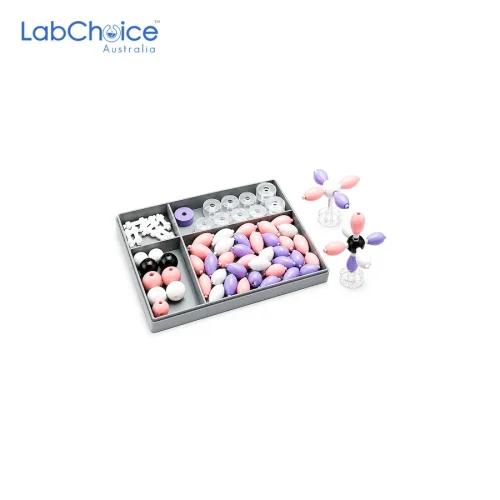
Atomic Orbital Molecular Model Set, 14 Model Kit
AUD 90.90 (Ex GST)
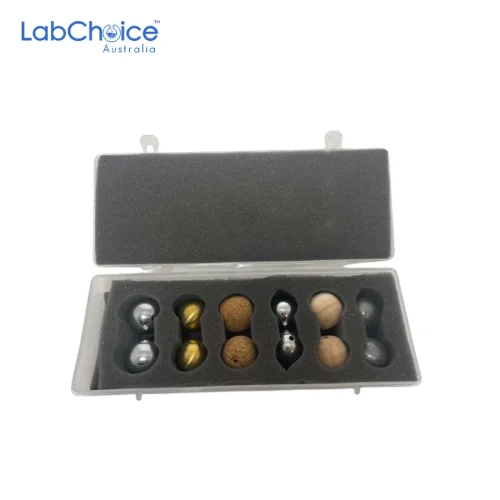
Density Ball Sets, 25 mm, Set of 6 and 12
From AUD 40.50 (Ex GST)
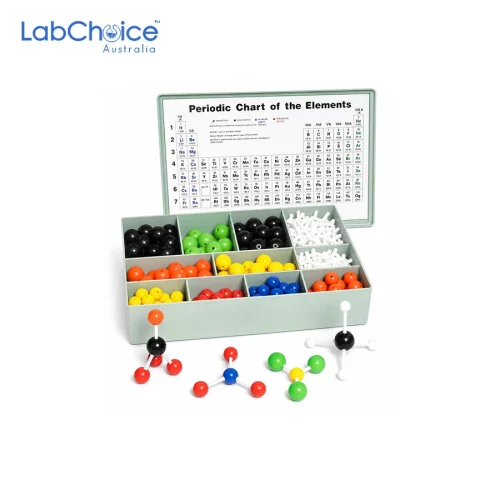
Junior Atomic Model Set, 37 Lugs and 75 Balls
AUD 64.50 (Ex GST)
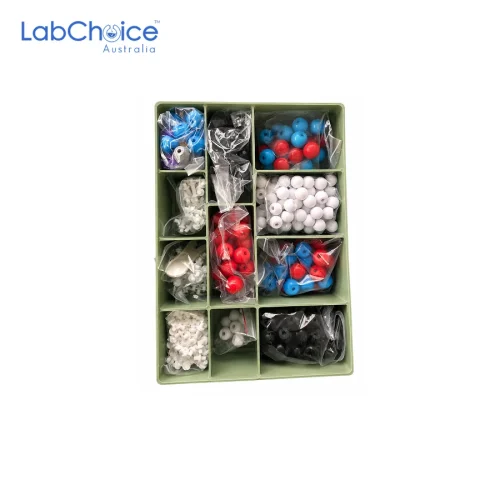
Molecular Model Set, Biochemistry Teacher Set
AUD 420.50 (Ex GST)
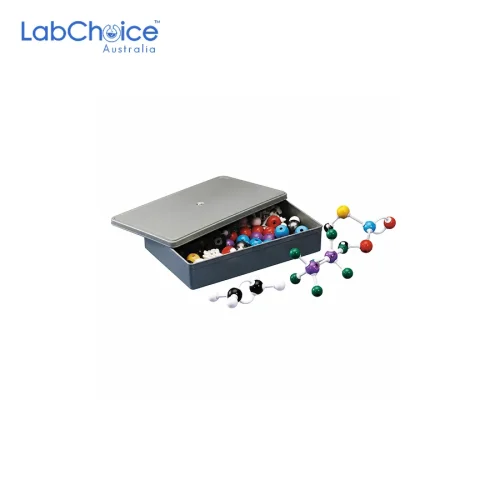
Molecular Model Set, Cholesterol, C₂₇H₄₆O
AUD 120.50 (Ex GST)
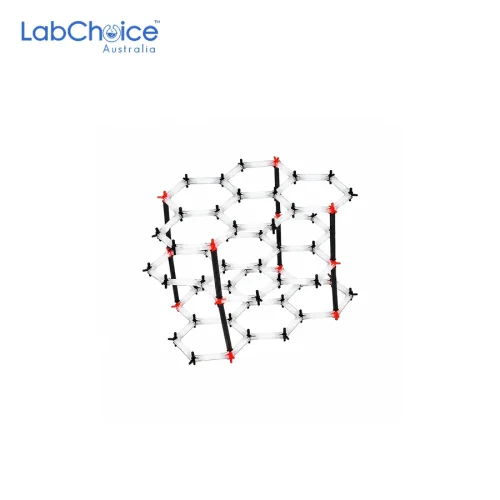
Molecular Model Set, Diamond
AUD 37.90 (Ex GST)
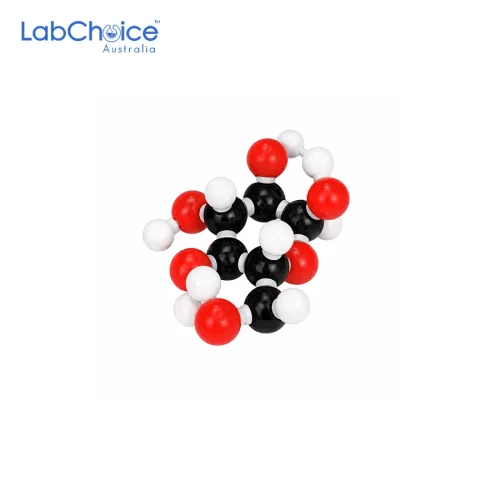
Molecular Model Set, Glucose, C₆H₁₂O₆
AUD 37.90 (Ex GST)
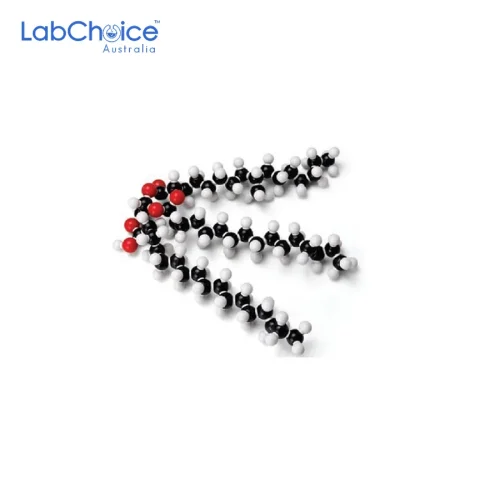
Molecular Model Set, Glyceryl Tristearate Fat, C₅₇H₁₁₀O₆
AUD 189.90 (Ex GST)
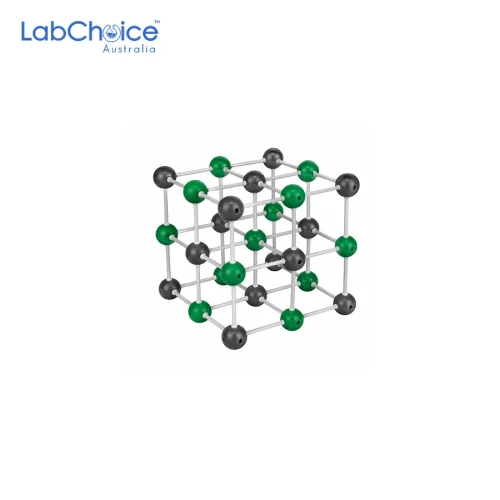
Molecular Model Set, Graphite
AUD 38.50 (Ex GST)
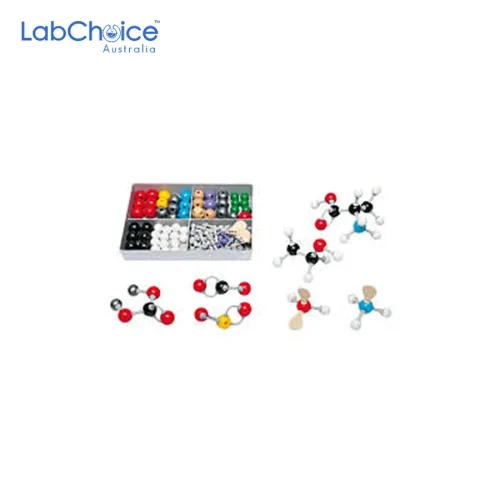
Molecular Model Set, Inorganic / Organic Student Set
AUD 95.90 (Ex GST)
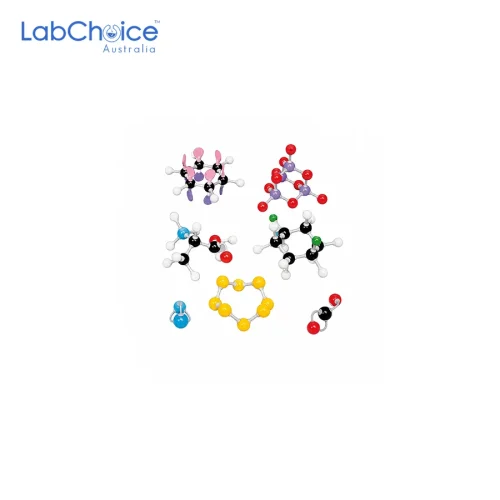
Molecular Model Set, Inorganic / Organic Teacher Set
AUD 420.90 (Ex GST)
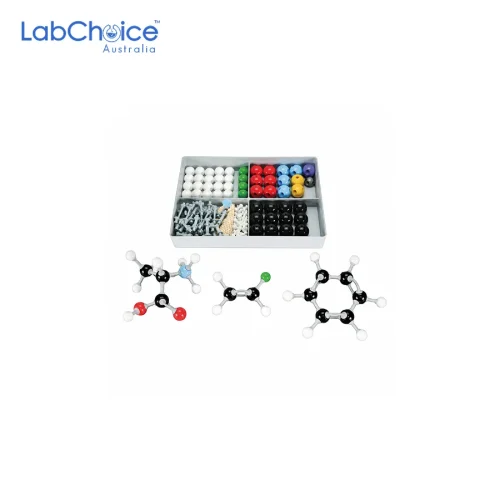
Molecular Model Set, Organic Student Set
AUD 54.90 (Ex GST)
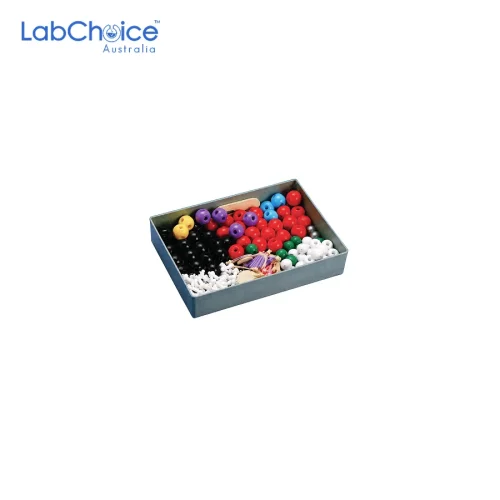
Molecular Model Set, Organic Teacher Set
AUD 139.90 (Ex GST)
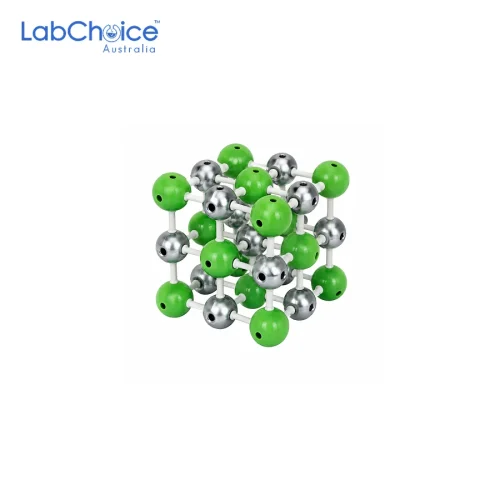
Molecular Model Set, Sodium Chloride, 36 Atoms
AUD 38.50 (Ex GST)
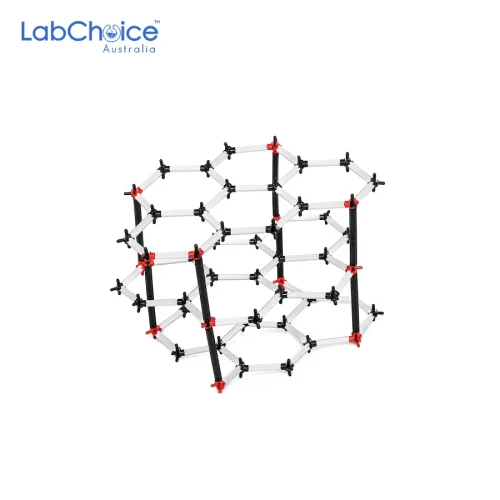
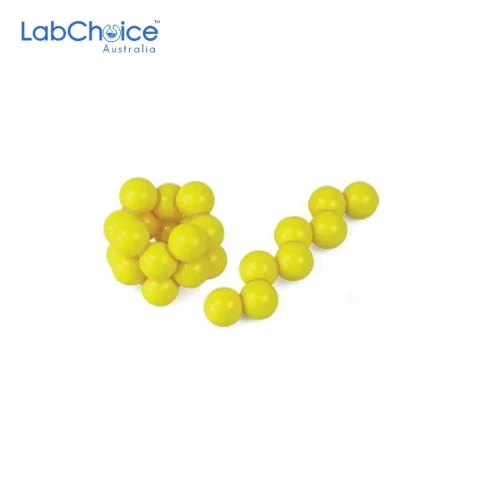
Molecular Model Set, Sulphur
AUD 50.50 (Ex GST)
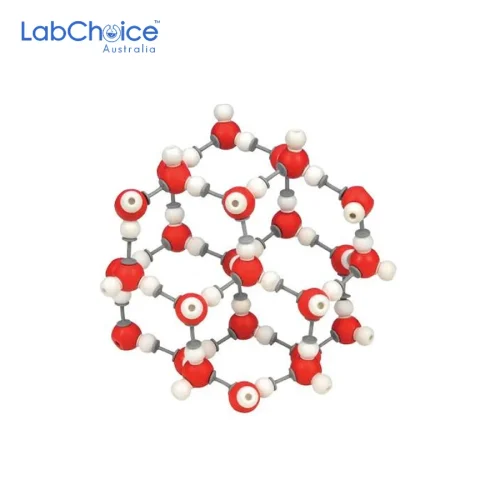
Molecular Model Set, Water / Ice, H₂O
AUD 42.50 (Ex GST)
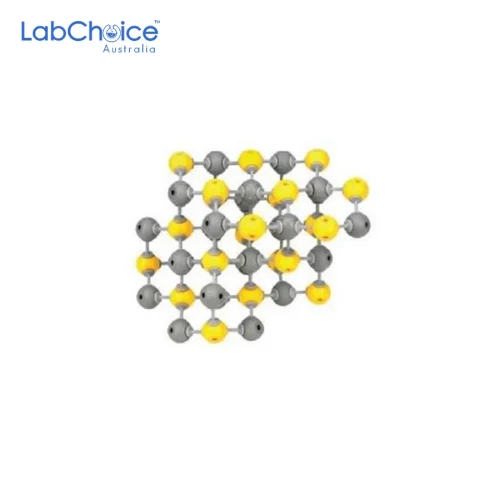
Molecular Model Set, Zinc Sulphide
AUD 42.90 (Ex GST)
Molecular & Density Ball Sets are practical science teaching resources used to demonstrate molecular structure, chemical bonding, crystal arrangements and differences in material density. The range includes atomic orbital models, organic and inorganic molecular model kits, crystal lattice models and density ball sets for classroom and laboratory demonstrations.
Molecular model sets use coloured atoms and connectors to help students visualise three-dimensional structures that can be difficult to understand from two-dimensional formulas alone. The range includes models for glucose, cholesterol, sucrose, sodium chloride, graphite, diamond, sulphur, water or ice and other organic and inorganic structures.
Density ball sets support practical lessons comparing materials of different densities. Students can relate mass and volume to density and observe how different materials behave under the same experimental conditions. ISO 80000-4 provides recognised quantities and units for mechanics, including mass density, while ISO 80000-9 covers quantities and terminology used in physical chemistry and molecular physics.
Where density experiments involve polymer materials, ASTM D792 provides a recognised method for determining density and relative density of plastics by displacement methods. This ASTM reference applies only where the material and experimental method fall within its scope and should not be presented as compliance for the complete teaching set.
For LabChoice Australia customers, Molecular & Density Ball Sets provide useful teaching options for schools, universities and science laboratories covering atomic structure, molecular geometry, crystal structures, chemical bonding and density investigations.