
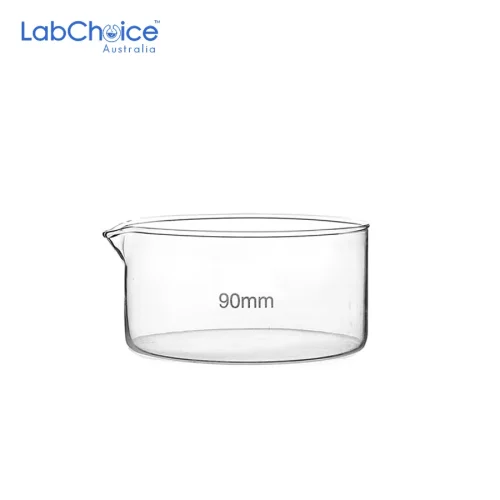
Borosilicate Glass Crystallizing Dishes with Spout
From AUD 13.90 (Ex GST)
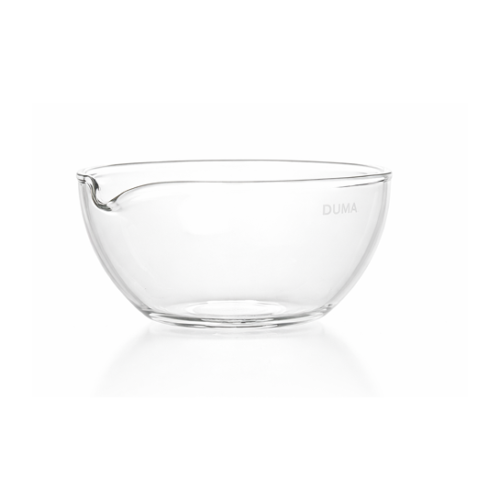
Evaporating Dishes, Laboratory Glass Dish Range for Solvent Removal
From AUD 9.90 (Ex GST)
Laboratory Glass Dishes are open laboratory vessels used for holding, concentrating, evaporating and observing compatible liquid samples. This category includes Crystallising Dishes with Spout for recrystallisation work and Evaporating Dishes for controlled solvent removal. Their clear glass construction allows the sample level, crystal formation and residue development to be observed throughout the procedure.
Crystallising Dishes have a broad, open shape that exposes the solution to the surrounding air and supports gradual solvent evaporation. As solvent is removed, the solution becomes more concentrated and crystals may begin to form under suitable experimental conditions. The pouring spout helps with controlled transfer or decanting after crystallisation. MIT identifies solvent evaporation as a practical method for increasing solution concentration until crystallisation begins.
Evaporating Dishes are used to remove solvent from compatible solutions and to concentrate dissolved material. Their shallow form provides a relatively wide exposed surface, supporting efficient evaporation when used with a suitable heating or ambient evaporation method. Heating rate, solvent properties and the required final concentration should be considered to avoid splashing, overheating or loss of the sample.
Both dish types should be used with a heating method suitable for the confirmed glass material. The exact glass grade, maximum operating temperature, thermal-shock resistance and chemical compatibility should be checked before use. Sudden temperature changes, impact and heating damaged glassware can cause breakage. Evaporation work should remain under observation, particularly when heat is applied. Manufacturer guidance for laboratory glassware also recommends close monitoring during evaporation procedures.
Flammable, volatile, corrosive or hazardous solvents require an approved laboratory method, suitable ventilation and control of ignition sources. Open solvent evaporation should only be carried out where the laboratory risk assessment and chemical safety information permit it. Users should inspect each dish for cracks, chips, surface damage or contamination before adding a sample or applying heat.
ISO 718 provides test methods for the thermal-shock resistance and thermal-shock endurance of laboratory glassware. ASTM E438 covers glass types commonly used in laboratory apparatus. If a specific dish is confirmed by the manufacturer as BORO 3.3 borosilicate glass, ISO 3585 provides the relevant material-property reference. These standards should not be presented as confirmed product compliance claims without supporting manufacturer documentation.
For LabChoice Australia customers, Laboratory Glass Dishes provide practical options for schools, universities, research laboratories, quality control facilities and chemistry laboratories carrying out compatible recrystallisation, solvent evaporation, solution concentration and specimen-handling procedures.