
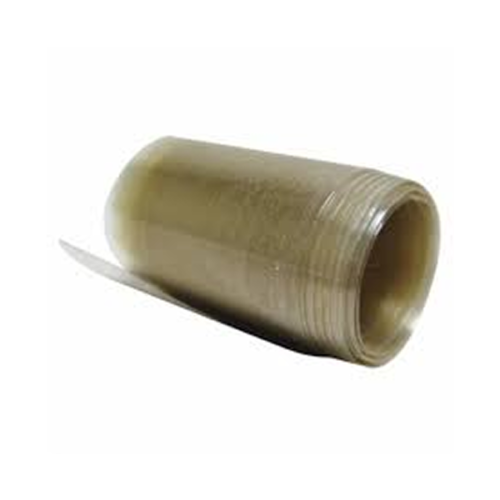
Visking Dialysis Tubing, Laboratory Membrane Tubing for Diffusion Work
From AUD 134.50 (Ex GST)
Dialysis Tubing is a semi-permeable membrane used for diffusion, osmosis, and separation experiments in laboratory, education, and research environments. Commonly supplied as Visking tubing, it is widely used to demonstrate selective permeability, molecular transport, and concentration gradients in practical biology and chemistry experiments. The tubing allows small molecules, ions, and solvents to pass through while retaining larger macromolecules, making it suitable for controlled diffusion studies and sample preparation workflows.
In teaching laboratories, dialysis tubing is frequently used for osmosis demonstrations, enzyme experiments, food testing models, and membrane transport studies. It enables clear visualisation of diffusion processes, helping students understand concepts such as equilibrium, osmotic pressure, and molecular size exclusion. In laboratory applications, it may also be used for buffer exchange, desalting, and sample separation tasks depending on the molecular weight cut-off (MWCO) of the tubing supplied.
For quality and compliance reference, ISO 9001 is a widely recognised standard for quality management systems, supporting consistent manufacturing and process control where supplier certification is available. ISO 10993 is a relevant standard series for biological evaluation of materials used in medical and laboratory applications, including considerations for biocompatibility where applicable to membrane materials. ASTM E96 is a recognised standard test method for water vapour transmission of materials, which provides a relevant reference for permeability-related performance of membrane-type materials. These standards should be referenced only where supported by the manufacturer’s technical documentation and product specifications.
For LabChoice Australia customers, Dialysis Tubing provides a reliable and practical solution for diffusion experiments, membrane studies, and laboratory separation workflows. It supports hands-on learning and controlled laboratory processes across schools, universities, and research environments.