
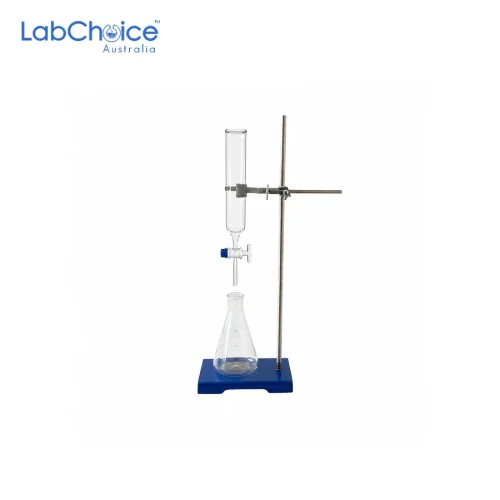
Percolation for Herbal Alcohol Extract, BORO 3.3 Glass
From AUD 90.90 (Ex GST)
Percolation for Herbal Alcohol Extract, BORO 3.3 Glass is a laboratory-scale extraction apparatus used to pass a compatible alcohol-based solvent gradually through prepared herbal material. The controlled downward flow allows soluble compounds to move from the plant material into the liquid extract, which is collected in a suitable receiving flask below the percolator.
Before extraction, the herbal material is normally prepared to a suitable particle size and evenly packed inside the glass percolation column. The solvent is added from the top and allowed to wet the material thoroughly before collection begins. Packing should be firm enough to support regular solvent contact, but not so tight that the material blocks the flow path.
The lower stopcock allows the user to regulate the discharge rate and collect the extract in controlled portions. A steady flow can support more consistent contact between the solvent and the packed material. The required extraction time, solvent concentration, plant-to-solvent ratio and flow rate will depend on the herbal material and the laboratory method being followed.
The apparatus is manufactured from BORO 3.3 borosilicate glass, which provides clear visibility, low thermal expansion and recognised chemical durability under compatible conditions. The transparent body allows users to observe solvent penetration, packed-bed movement, liquid level and the appearance of the collected extract. ISO 3585 defines the properties of borosilicate glass 3.3, while ISO 4803 covers borosilicate glass tubing used in laboratory apparatus.
ASTM E438 covers glass types used in laboratory apparatus and provides a recognised material reference for low-expansion borosilicate glass. Where the apparatus includes interchangeable glass joints, stopcocks or connected components, the joint dimensions and compatibility should be checked before use. ASTM E676 provides specifications for interchangeable taper-ground joints used in laboratory equipment.
Alcohol-based solvents can be volatile and flammable. Percolation should be carried out in a suitably ventilated laboratory, away from flames, hot surfaces and other ignition sources. The apparatus should be held securely with appropriate stands and clamps, and the receiving flask should remain stable throughout collection.
Before starting the extraction, users should inspect the glass column, stopcock and receiving vessel for cracks, chips, blocked passages or loose connections. The selected herbal material, solvent, contact time and extraction conditions should be confirmed through an established laboratory method. This apparatus should not be described as producing a medicinal, therapeutic or food-grade extract unless the complete process has been validated for that purpose.
For LabChoice Australia customers, Percolation for Herbal Alcohol Extract, BORO 3.3 Glass provides a practical setup for universities, research laboratories, botanical testing facilities, chemistry laboratories and educational environments carrying out controlled small-scale herbal extraction and solvent-percolation work.