
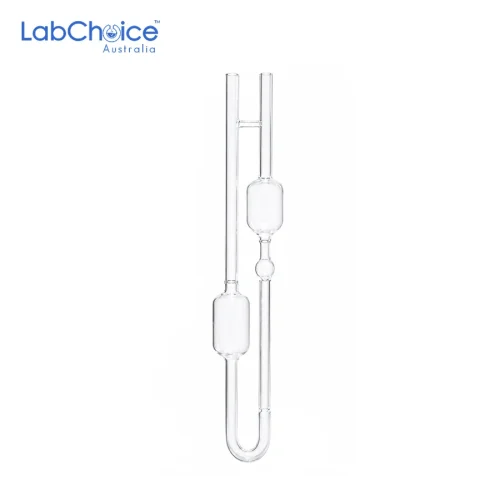
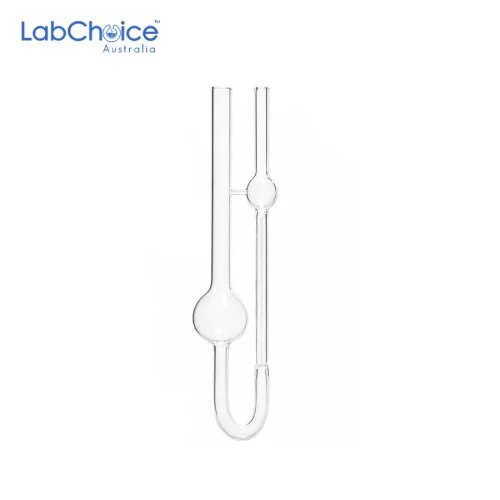
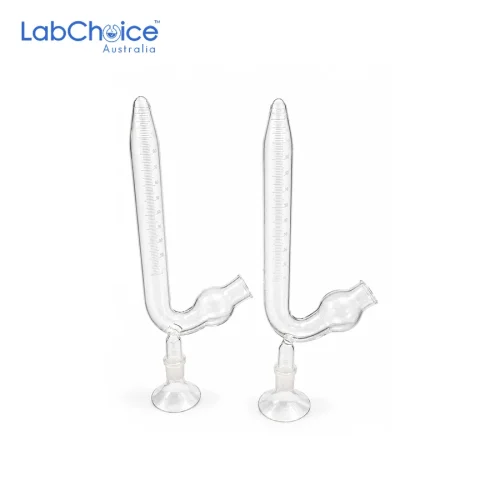
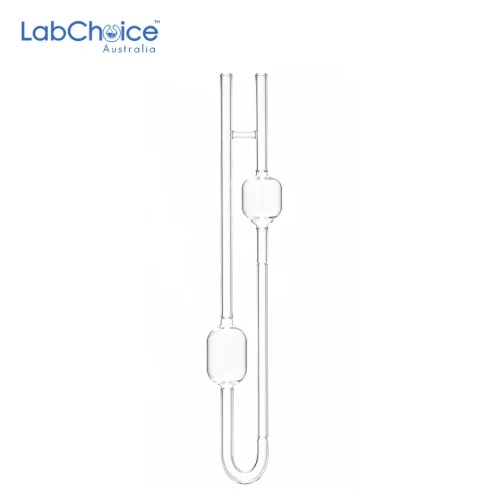
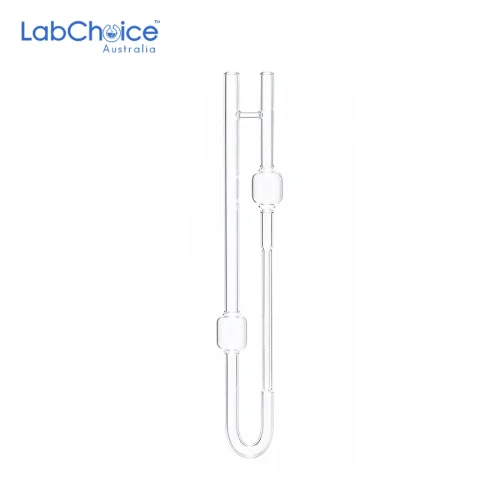
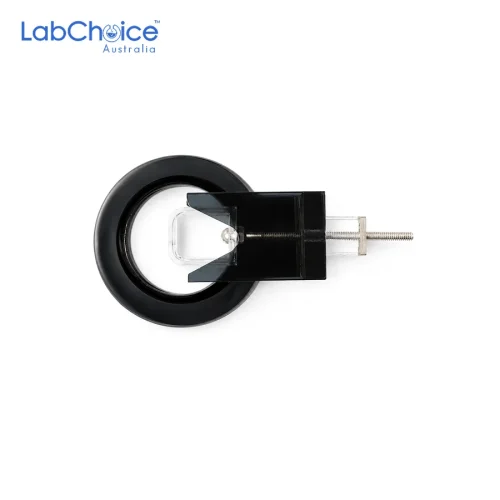
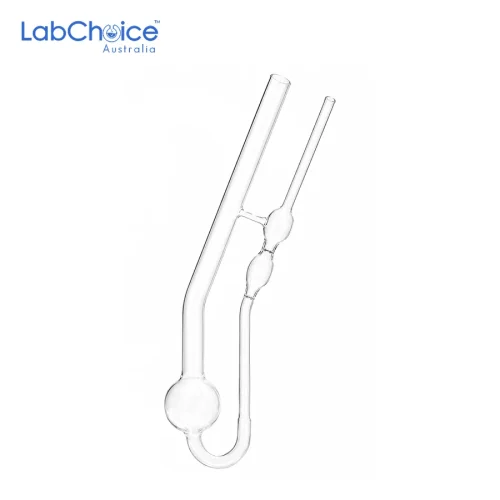
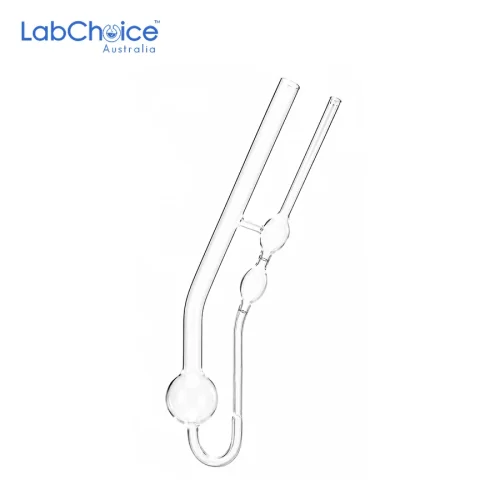
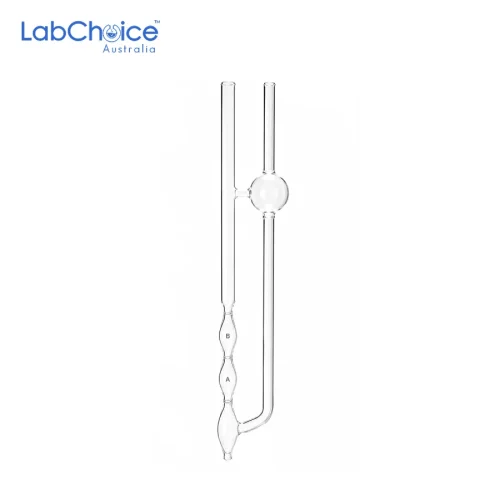
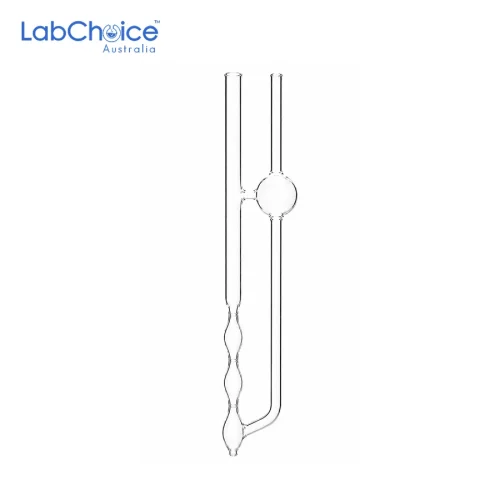
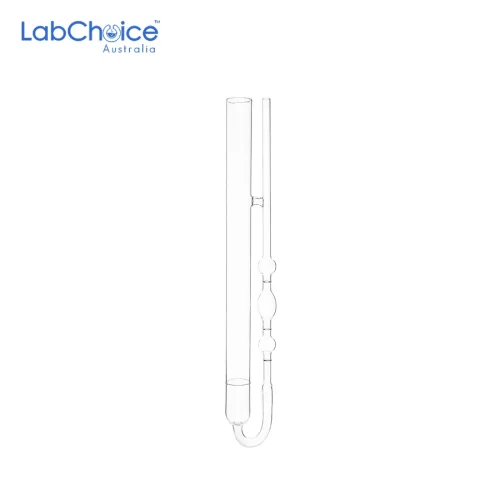
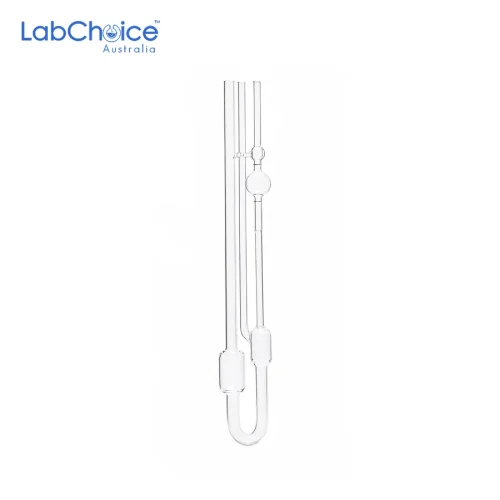
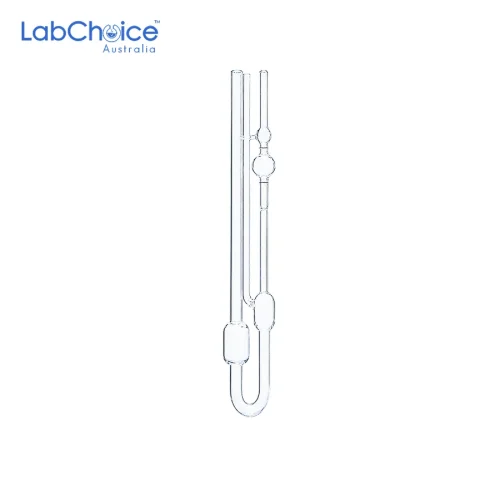
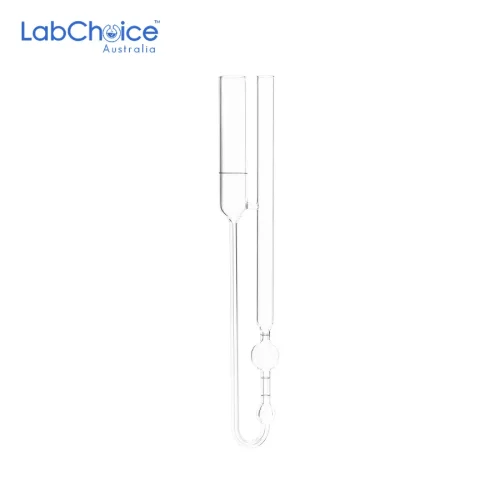
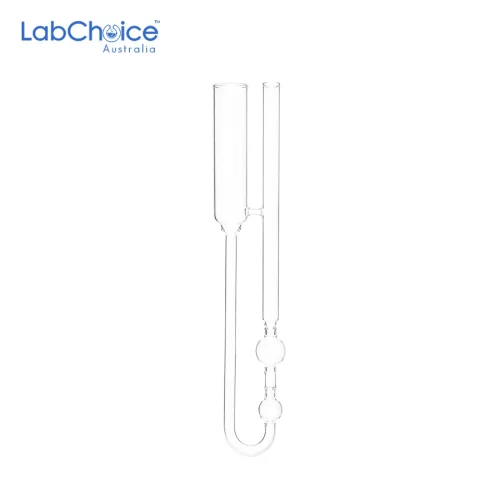
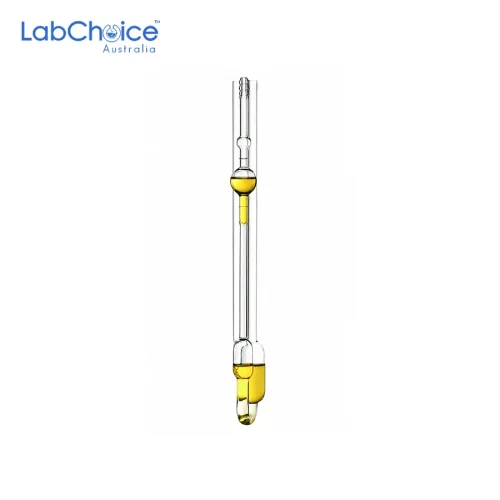
Viscometers are laboratory instruments used to measure the flow behaviour and kinematic viscosity of compatible liquids. The range includes Ostwald, U-Tube, Cannon-Fenske, Cannon-Manning, suspended-level, reverse-flow and Ubbelohde designs, along with selected calibrated and non-calibrated models for different test methods.
Glass capillary viscometers work by measuring the time taken for a defined volume of liquid to flow through a narrow capillary under controlled conditions. Different designs suit transparent or opaque liquids, different viscosity ranges and specific measurement procedures. Correct viscometer size, capillary range, calibration status and test temperature should be confirmed before use.
Many models in the range are manufactured from BORO 3.3 glass, while selected products are supplied calibrated at 40°C or with individual calibration information. Temperature control is especially important because viscosity can change significantly with temperature, so the viscometer should be used with a suitable constant-temperature bath where required by the method.
ISO 3105 covers specifications and operating instructions for modified Ostwald, suspended-level and reverse-flow glass capillary viscometers. ISO 3104 describes determination of kinematic viscosity using calibrated glass capillary viscometers. ASTM D446 covers glass capillary viscometer specifications and operation, while ASTM D445 provides a recognised method for determining the kinematic viscosity of transparent and opaque liquids. These standards should only be stated as confirmed product compliance where supported by manufacturer documentation.
For LabChoice Australia customers, the Viscometer range provides practical options for research laboratories, quality control, petroleum testing, education and industrial laboratories carrying out compatible viscosity measurements.