
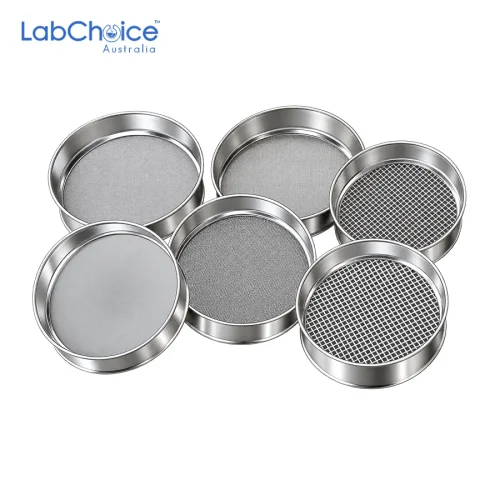
8 Inch ASTM Test Sieve with 302 Grade Stainless Steel Frame and Wire Mesh
From AUD 159.90 (Ex GST)
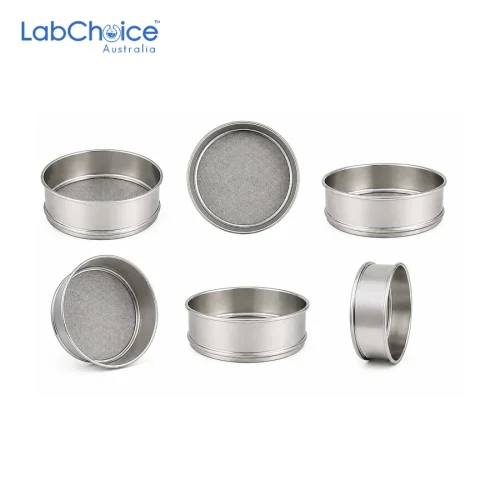
ASTM Test Sieve, 4 Inch, 304 Frame with 316 Mesh
From AUD 89.90 (Ex GST)

ASTM Test Sieve, 8 Inch Brass Frame, Stainless Steel 302 Mesh
From AUD 99.50 (Ex GST)
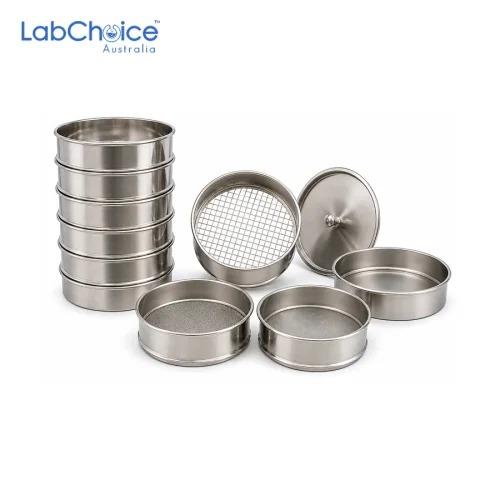
ASTM Test Sieves, 316 Stainless Steel, 8 Inch
From AUD 234.90 (Ex GST)
The 8 Inch Test Sieve with 304 Grade Stainless Steel Frame and Wire Mesh is designed for separating and classifying powders, grains, aggregates and other compatible particulate materials by particle size. It can be used individually or combined with additional sieves to create a stacked sieve analysis setup.
During testing, the sample is placed on the wire mesh and moved manually or with a compatible sieve shaker. Smaller particles pass through the mesh openings, while larger particles remain above. The selected mesh aperture determines the particle fraction being separated, so the required opening size should be confirmed before ordering.
The 304 stainless steel frame provides a durable, corrosion-resistant structure for routine laboratory and quality control work. Before each test, the mesh should be checked for damage, blockage or distortion, and the sample quantity should remain suitable for the sieve diameter and test method.
ISO 3310-1 covers the technical requirements and testing of metal wire cloth test sieves. ISO 2591-1 outlines the general principles of test sieving, including equipment, procedure and reporting. ASTM E11 covers woven wire sieve cloth and the design and construction of test sieves. These standards should only be presented as confirmed product compliance where manufacturer documentation is available.
For LabChoice Australia customers, this 8 Inch Test Sieve provides a practical option for research laboratories, construction material testing, soil analysis, education, manufacturing and routine particle-size quality control.