
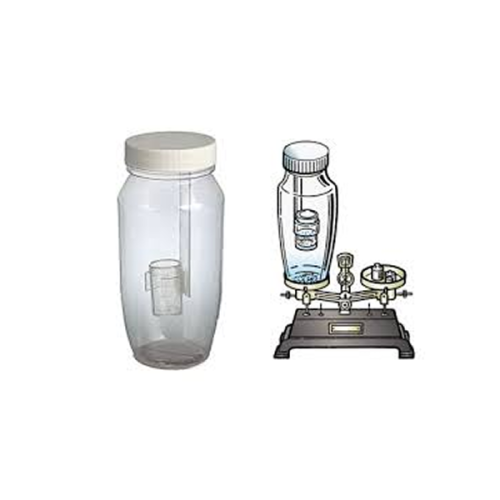
Law of Conservation of Mass Apparatus Bottle
AUD 64.90 (Ex GST)
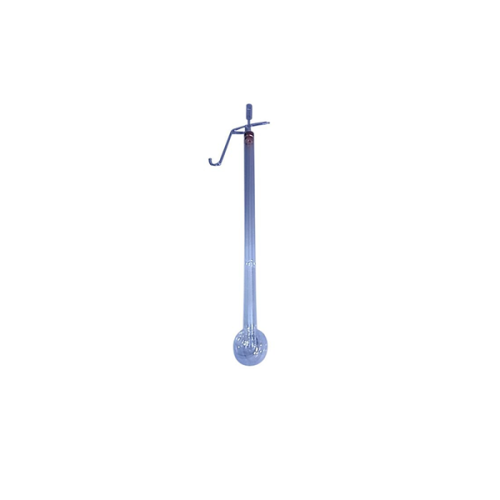
Chemistry Demonstration Apparatus includes practical teaching equipment used to present chemistry principles through clear, observable experiments. This category includes the Law of Conservation of Mass Apparatus Bottle and the Volatile Liquid Molecular Weight Apparatus, Vapour Behaviour Demonstration Set.
The Law of Conservation of Mass Apparatus Bottle allows students to compare the total mass of an experimental system before and after a selected physical or chemical change. Keeping the materials contained helps students observe that changes inside the apparatus do not necessarily change the total measured mass. Results will still depend on the balance, weighing method and care taken during the demonstration.
A suitable laboratory balance should be used for measurements before and after the experiment. The same apparatus position, weighing container and measurement procedure should be maintained throughout the activity. ASTM E898 provides recognised guidance for calibrating non-automatic weighing instruments, while ISO 80000-4 covers names, symbols, definitions and units used for mechanical quantities, including mass.
The Volatile Liquid Molecular Weight Apparatus is used to demonstrate how a suitable liquid behaves when converted into vapour. During a compatible experiment, measurements such as vapour mass, apparatus volume, temperature and pressure can be used to estimate the molar mass of the liquid.
Careful observation is important because incomplete vaporisation, retained air, vapour loss, condensation and temperature changes can influence the calculated result. The chosen liquid, heating method and experimental conditions should be suitable for the apparatus and approved for the teaching environment.
ISO 80000-5 provides recognised terminology, symbols and units for thermodynamic quantities. ISO 80000-9 covers quantities used in physical chemistry and molecular physics, including terminology relevant to amount of substance and molar mass. These standards support correct scientific language and unit presentation in laboratory instructions and student worksheets.
Both apparatus sets should be checked for damaged glass, loose fittings or blocked openings before use. Demonstrations involving volatile liquids require suitable ventilation, controlled heating and careful management of ignition sources. Reactions should not be carried out in a sealed arrangement unless the complete apparatus and method are specifically intended for the expected pressure.
For LabChoice Australia customers, Chemistry Demonstration Apparatus provides practical teaching equipment for schools, universities, training laboratories and science education facilities covering conservation of mass, vapour behaviour, molar mass calculations and measurement-based chemistry experiments.