
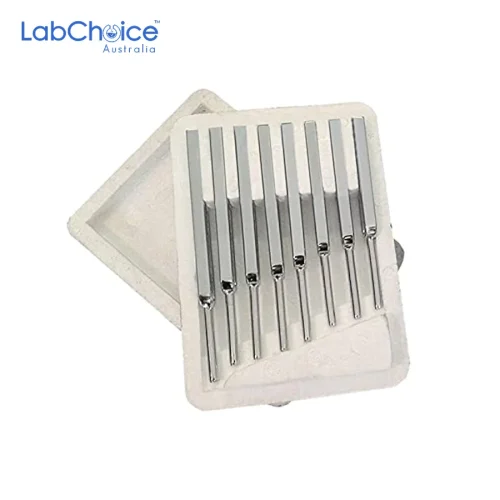
Chrome Plated Tuning Fork Set of 8 in Foam Case
AUD 33.90 (Ex GST)
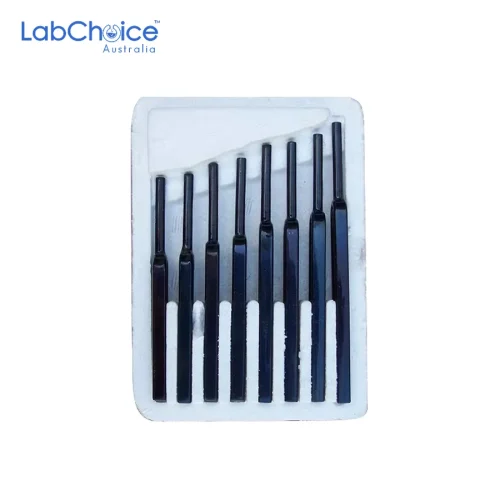
Tuning Fork Set of 8, Blued Steel in Case
AUD 33.90 (Ex GST)
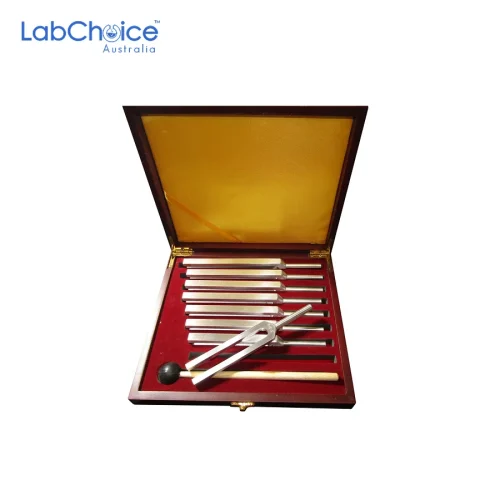
Tuning Fork Set, 8 Pieces with Wooden Case and Hammer
AUD 118.50 (Ex GST)
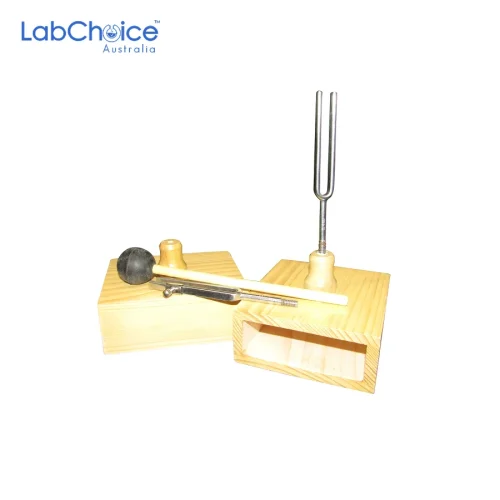
Tuning Forks on Resonance Boxes, Pair, 2 × 426.6 Hz
AUD 49.90 (Ex GST)
Tuning Forks are classroom sound demonstration tools used to teach frequency, vibration, resonance, pitch, and wave behaviour in physics and general science lessons. This category includes tuning fork sets and resonance box models, giving teachers a practical way to demonstrate how a vibrating object produces sound and how different frequencies can be heard and compared.
In a classroom experiment, a tuning fork can be struck gently and held near the ear, near a resonance box, or close to an air column to demonstrate how vibration transfers energy through air as sound. Resonance box models help make the sound clearer by increasing the audible response, which is useful when demonstrating pitch, frequency matching, and resonance to a group of students. OpenStax explains that a tuning fork can drive resonance in an air column when the frequency matches the natural frequency of that system.
Tuning fork sets are especially useful because they allow students to compare different tones side by side. This helps connect the sound they hear with the frequency value marked on the fork, supporting clearer lessons on pitch, harmonics, standing waves, and acoustic resonance. NIST identifies hertz as the SI unit of frequency, equal to one cycle per second, which is the standard measurement language used when teaching sound frequency.
For best classroom practice, tuning forks should be struck on a suitable rubber pad or approved surface rather than on hard bench tops, as this helps protect the fork and produce a cleaner tone. They should be stored carefully after use so the prongs remain straight and the tone remains consistent for repeated demonstrations.
For LabChoice Australia customers, Tuning Forks provide a practical sound demonstration range for schools, physics departments, science classrooms, and teaching laboratories that need reliable equipment for explaining vibration, resonance, pitch, frequency, and sound wave behaviour.