
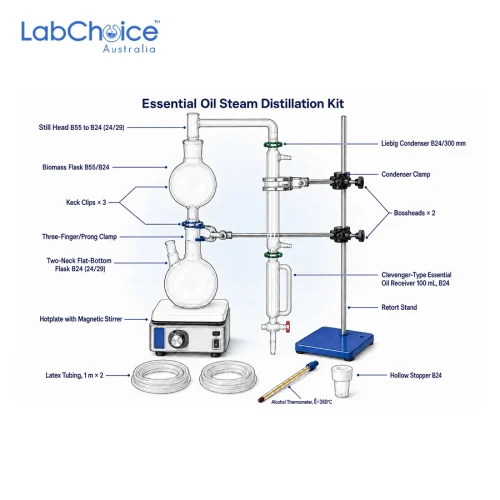
Steam Distillation Kit For Oil Essential, BORO 3.3
- Steam distillation kit for extracting essential oils from botanical material using steam separation
- BORO 3.3 borosilicate glass for strong thermal performance and chemical resistance in routine lab use
- Supports clean collection of volatile oil fraction and hydrosol during distillation runs
- Suitable for teaching demonstrations, R&D trials, and small-scale essential oil workflows
- Designed for repeatable setup, easy cleaning, and reliable results across distillation cycles
From AUD 648.90 (Ex GST)
This product has multiple variants. The options may be chosen on the product page
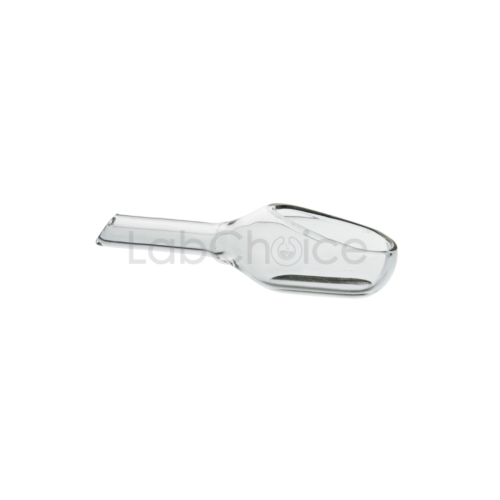
Weighing Measuring Scoop, BORO 3.3 Glass
- BORO 3.3 borosilicate glass weighing and measuring scoop for precise lab handling
- Suitable for transferring powders, crystals, and small solid samples
- Clear glass design allows easy visibility of sample quantity during use
- Good chemical resistance for routine laboratory weighing and preparation tasks
- Smooth formed surface helps with clean transfer and easy cleaning
- Reusable glass scoop for schools, universities, research, and industrial labs
- Ideal for sample prep, reagent handling, and general bench work in Australian laboratories
From AUD 14.90 (Ex GST)
This product has multiple variants. The options may be chosen on the product page
Weighing Measuring Scoop, BORO 3.3 Glass is designed for holding, portioning and transferring powders, crystals, granules and other compatible dry laboratory materials. Its open scoop shape allows a sample to be collected from a container and placed onto a balance, weighing vessel or other suitable laboratory surface with better control than direct pouring.
For routine weighing, the clean and dry scoop can be placed on the balance before the instrument is tared. The required material is then added gradually until the desired mass is reached. The balance measures the sample mass, while the scoop acts as the sample holder and transfer tool. Accurate results still depend on the balance capacity, readability, calibration status and the weighing procedure used. NIST guidance on electronic balances discusses the importance of selecting a balance with performance suitable for the measurement being carried out.
The glass construction provides a clear surface that can be visually checked for remaining particles, moisture or contamination before and after use. This is particularly useful when handling laboratory powders and solid reagents where material carryover between samples may affect subsequent work. The scoop should be cleaned using a method that is compatible with both the glass and the material being handled.
BORO 3.3 borosilicate glass is characterised by low thermal expansion and defined chemical durability properties. ISO 3585 specifies the properties of borosilicate glass 3.3, while ASTM E438 covers glass types commonly used in laboratory apparatus, including low-expansion borosilicate glass. These standards provide useful material references for laboratory glassware.
The product name includes the term measuring scoop, but the scoop should not be treated as a calibrated volumetric device unless graduations, capacity tolerances or calibration documentation are supplied by the manufacturer. It is primarily suited to portioning, weighing and transferring materials rather than making certified volume measurements.
Before use, the scoop should be inspected for cracks, chips, sharp edges or other visible damage. Glass scoops should be handled carefully and protected from impact. Users should also confirm that the sample material, cleaning agent and operating conditions are compatible with the product. Direct flame exposure, forceful scraping and sudden temperature changes should be avoided unless specifically permitted by the manufacturer.
ISO 3585 and ASTM E438 should only be stated as confirmed product compliance standards when supporting manufacturer documentation is available. Without this documentation, they are best presented as recognised references for BORO 3.3 glass properties and laboratory apparatus materials.
For LabChoice Australia customers, the Weighing Measuring Scoop, BORO 3.3 Glass provides a practical reusable tool for schools, universities, research laboratories, quality control facilities, pharmaceutical laboratories and industrial testing environments handling compatible powders, crystals, granules and solid reagents.