Buy the Right Mixer with Clear Supplier Specifications
A vortex mixer can look like a simple piece of bench equipment, but the right choice depends on far more than its size or colour. For laboratories, schools and industrial testing facilities, the mixer needs to suit the tubes, liquids and daily tasks already in use. We recommend asking for clear specifications before adding any unit to an equipment order.
A good vortex mixer supplier should make it easy for you to compare what each model can actually do. That means knowing whether it will hold your common tube formats, manage your usual sample volumes and cope with the way your team works. Clear details help prevent a mixer arriving only to find that it is too limited, too powerful, too slow or missing the attachment you need.
Images and broad claims about “laboratory quality” do not tell the full story. When we help buyers review laboratory equipment, we encourage a like-for-like comparison of technical details, not just appearance or a low upfront figure. Spring is a practical time for Australian schools and laboratories to plan ahead for upcoming teaching, testing and research workloads, before end-of-year demands fill the bench space and the calendar.
The first question is how you need the vortex mixer to operate. Different workflows call for different controls, so a supplier should state whether the unit offers touch operation, continuous operation or variable speed control.
Touch operation is handy when you need to mix one tube quickly. You press the tube onto the mixing head, the unit runs, and it stops when you lift the tube away. Continuous operation suits hands-free work, particularly when you are preparing several samples in sequence. Variable speed gives you more control when mixing different liquid types and tube sizes.
Before ordering, look for specifications covering:
- Available operating modes, including touch and continuous running
- Minimum and maximum speed in revolutions per minute
- Whether speed can be adjusted during use
- How the mixer performs under different sample loads
- The type of orbital motion created by the mixing head
Speed range matters because not every sample responds in the same way. A thin buffer may mix readily at a lower setting, while a resuspended pellet, stain or thicker liquid may need a different speed and mixing action. We suggest considering the full range of samples your team handles, rather than choosing a unit based only on one regular task.
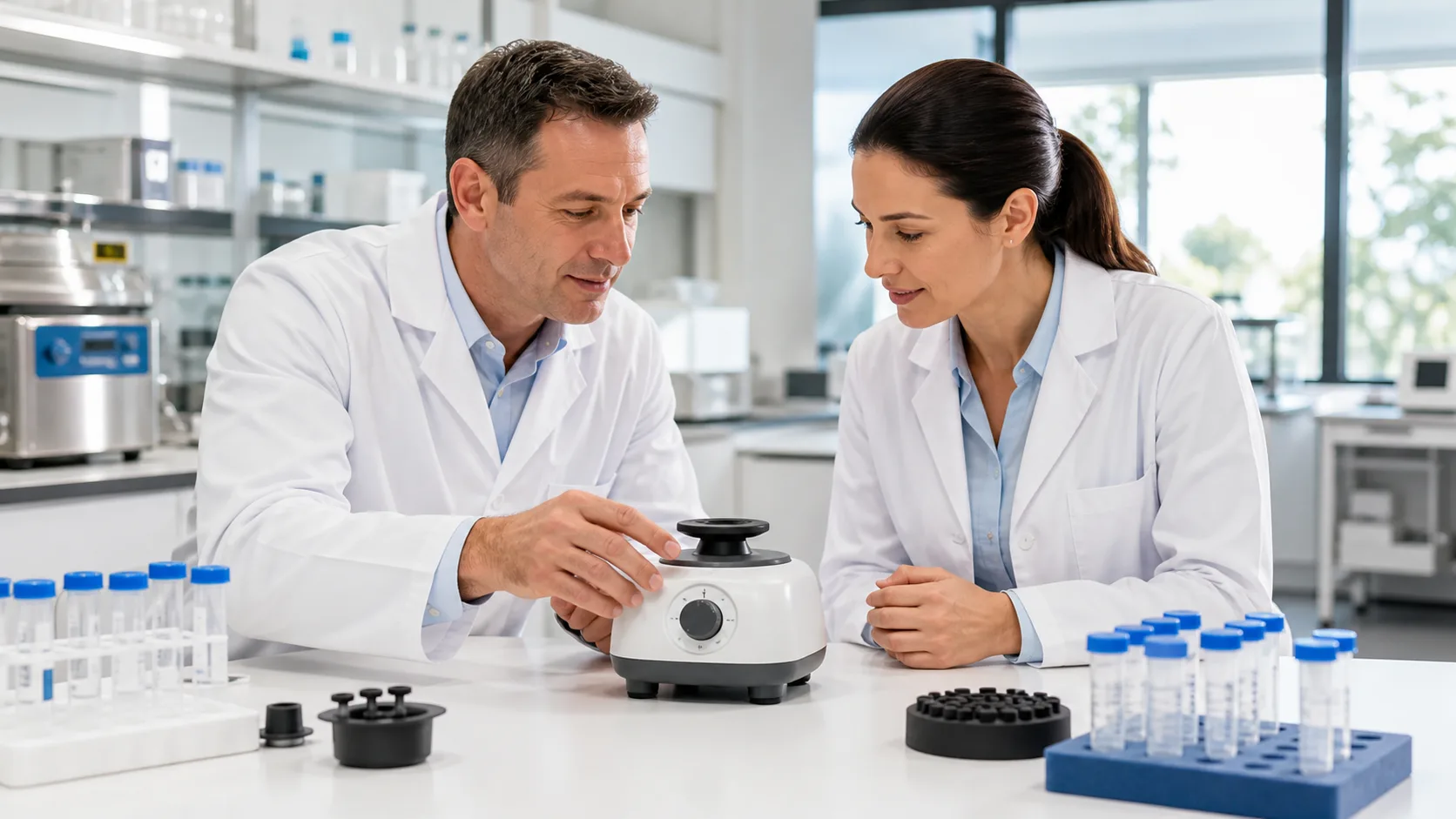
Compatibility deserves just as much attention. Your vortex mixer supplier should identify supported tube diameters, maximum mixing capacity, available platforms and interchangeable attachments. Some workflows may need a standard cup head for individual tubes, while others may benefit from attachments for microtubes, centrifuge tubes, flasks or multiple tubes at once. Matching the mixer to the formats you use most often makes everyday preparation smoother and helps avoid unnecessary interruptions.
Verify Construction, Safety, and Compliance Details
A stable mixer is safer and more pleasant to use than one that wanders across the bench during high-speed operation. We recommend reviewing the materials used in the housing, base, feet and mixing head. A weighted base and non-slip feet can help keep the unit steady, especially in a busy teaching laboratory or testing area where bench space is shared.
Construction details also give you a clearer idea of how the mixer may fit into its intended environment. For example, schools may prefer surfaces that are easy to clean, straightforward controls and a build suited to supervised student use. Research and industrial teams may place more emphasis on repeated use, attachment changes and consistency across routine sample preparation.
Electrical details should never be left to guesswork. For Australian use, the supplier should clearly state voltage compatibility, plug type, power requirements and whether a suitable power adaptor is included. Confirming this before purchase can prevent setup issues when the equipment arrives.
It is also sensible to request information on:
- Overload protection and other stated safety features
- Spill resistance and cleaning considerations
- Ventilation requirements, if any
- Recommended operating temperature ranges
- Applicable electrical or laboratory equipment standards
These points are not just paperwork. They help you decide whether a mixer is suitable for the room, users and work pattern you have in mind. Where a specification is unclear, we recommend treating that as a question to resolve before the order is finalised.
Compare Service, Stock, and Long-Term Ownership Needs
Technical specifications tell you what the vortex mixer can do, but supply details tell you whether it can support your schedule. A dependable vortex mixer supplier should communicate stock availability in Australia, expected dispatch timing, delivery options and any lead times that apply to specialised accessories or replacement parts.
This becomes especially relevant when equipment is needed for a planned class, a recurring testing cycle or a new laboratory setup. A mixer may suit your workflow on paper, yet the order can still be difficult to manage if the matching platform or replacement mixing head is not available when needed. We suggest checking the full setup, not only the main unit.
Warranty and support information should be equally clear. Before ordering, ask what the warranty covers, how faults are assessed, what the return process involves and whether assistance is available locally. These details help your team plan for an unexpected issue without guessing what happens next.
Think about ownership as a whole. A unit that lacks the right attachment, has limited speed settings or cannot accommodate common tubes may create extra work later. Replacement heads, compatible platforms, cleaning needs and possible downtime all belong in a sensible comparison. The most suitable choice is usually the one that fits the real workflow with the fewest compromises.
Request a Specification-Ready Quote Before Ordering
Before requesting product information, prepare a short list of what you need the mixer to handle. Include your common sample types, tube formats, expected daily use, preferred operating modes and delivery timing. Then compare the answers you receive against the same checklist, including speed range, accessory compatibility, construction, Australian electrical suitability, safety details, warranty terms and stock status.
For spring purchasing plans, a little preparation can make the next teaching, testing or research cycle easier to manage. Clear specifications give you a sound basis for choosing equipment that suits the work on your bench, rather than relying on assumptions once the order has already arrived.
Choose Equipment That Supports Your Workflow
At LabChoice Australia, we can help you compare practical options from a vortex mixer supplier alongside the accessories needed for a stable bench setup. Our range makes it simpler to match supporting equipment to your laboratory’s day-to-day requirements. For tailored product guidance, contact us and our team will assist with your selection.