1
Sep
Reducing Plastic Waste in Laboratories: Strategies for Sustainable Science
Laboratories worldwide are major contributors to plastic waste, with research showing they generate up to ten times more...
No Comments
1
Sep
Green Lab Certification: What Australian Laboratories Need to Know
As sustainability becomes a global priority, laboratories are being recognised not just for their research but also for...
No Comments
1
Sep
Carbon Neutral Labs: How Universities Are Building Net-Zero Science Facilities
As Australia pushes towards net-zero emissions by 2050, universities and research institutions are leading the way with carbon...
No Comments
1
Sep
Water Conservation in Labs: Reducing Waste in Cooling and Washing
Water is one of the most overused resources in laboratories. From cooling condensers in chemistry experiments to washing...
No Comments
1
Sep
Green Chemistry in Education: Teaching Sustainability in Australian Schools
Science education is no longer just about teaching reactions and formulas — it’s also about instilling sustainable practices....
No Comments
1
Sep
Waste Segregation in Laboratories: Building a Recycling-Friendly Workflow
Waste management is one of the most overlooked sustainability practices in laboratories. From plastics and glass to solvents...
No Comments
1
Sep
Glass vs Plastic Pipettes: Which Supports Sustainable Laboratory Practices?
Pipettes are one of the most widely used tools in laboratories, from classrooms to advanced...
No Comments
1
Sep
Green Procurement in Science: Choosing Sustainable Labware Suppliers
Procurement is more than just purchasing — it shapes the environmental footprint of laboratories. From glassware to consumables,...
No Comments
1
Sep
Laboratory Energy Efficiency: How Green Labs Reduce Carbon Footprints
Laboratories are among the most energy-intensive facilities in the world, consuming 3–5 times more energy per square metre...
No Comments
1
Sep
Eco-Friendly Sterilisation: Autoclaving vs Chemical Disinfection in Green Labs
Sterilisation is essential in laboratories, ensuring that equipment, media, and consumables remain free of microorganisms. But how labs...
No Comments
Lab Filtration Troubleshooting: Fix Slow Flow, Clogging, Breakthrough
Stop Wasting Time on Filtration That Doesn't Work Slow filtration, clogged filters and random contamination can derail a full day in...
Beaker Care Checklist: When to Retire Chipped, Scratched, or Etched Glassware
Beaker condition has a direct impact on safety, data quality and budgets in every Australian lab, school and field site....
Selecting Lab Plasticware That Survives Real-World Australian Use
Selecting Lab Plasticware That Survives Real-World Australian Use Lab plasticware looks simple on a page, but the real test is how...
Precision Under Heat: BORO 3.3 Lab Glassware for Distillation Work
Precision Under Heat for Australian Distillation Work Good distillation work lives or dies by the quality of the glass. When you...
BORO 3.3 vs. Soda-Lime Glass: Compatibility for Lab Processes
Choose the Right Glass for Safer, Smoother Lab Work Choosing between BORO 3.3 and soda-lime glass is not just a catalogue-decision....
Understanding Which Lab Consumables Get Replaced the Fastest
Every lab uses certain items day in and day out. Gloves, tips, wipes, and other consumables might not grab attention...
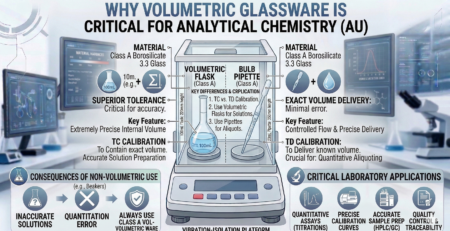
Volumetric Glassware Accuracy: Calibration, Cleaning, Damage, Replacement
Protecting Your Results with Accurate Volumetric Glassware Accurate volumetric glassware sits right at the heart of good science. A tiny volume...
Common Laboratory Apparatus Failures That Distort Your Results
Common Laboratory Apparatus Failures That Distort Your Results Small faults in laboratory apparatus can quietly bend your data without anyone noticing....
Choosing Laboratory Glassware for Accurate Thermal Performance
Thermal Accuracy Starts with the Right Glassware Accurate temperature control in the lab is not just about the hotplate setting or...
Choosing Lab Plasticware That Matches BORO 3.3 Performance
Matching Plasticware to Glassware Performance, Not Price Choosing lab plasticware is not just about saving glass from breaking. In a busy...
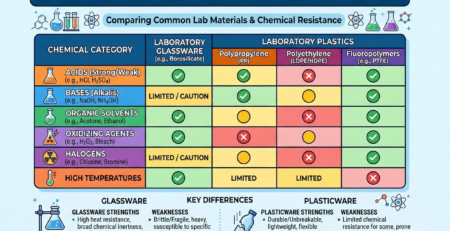
Chemical Compatibility of Laboratory Plastics vs Glassware (AU)
Chemical compatibility is not a minor detail. It determines whether your container stays intact, whether your sample remains uncontaminated, and...