9
Sep
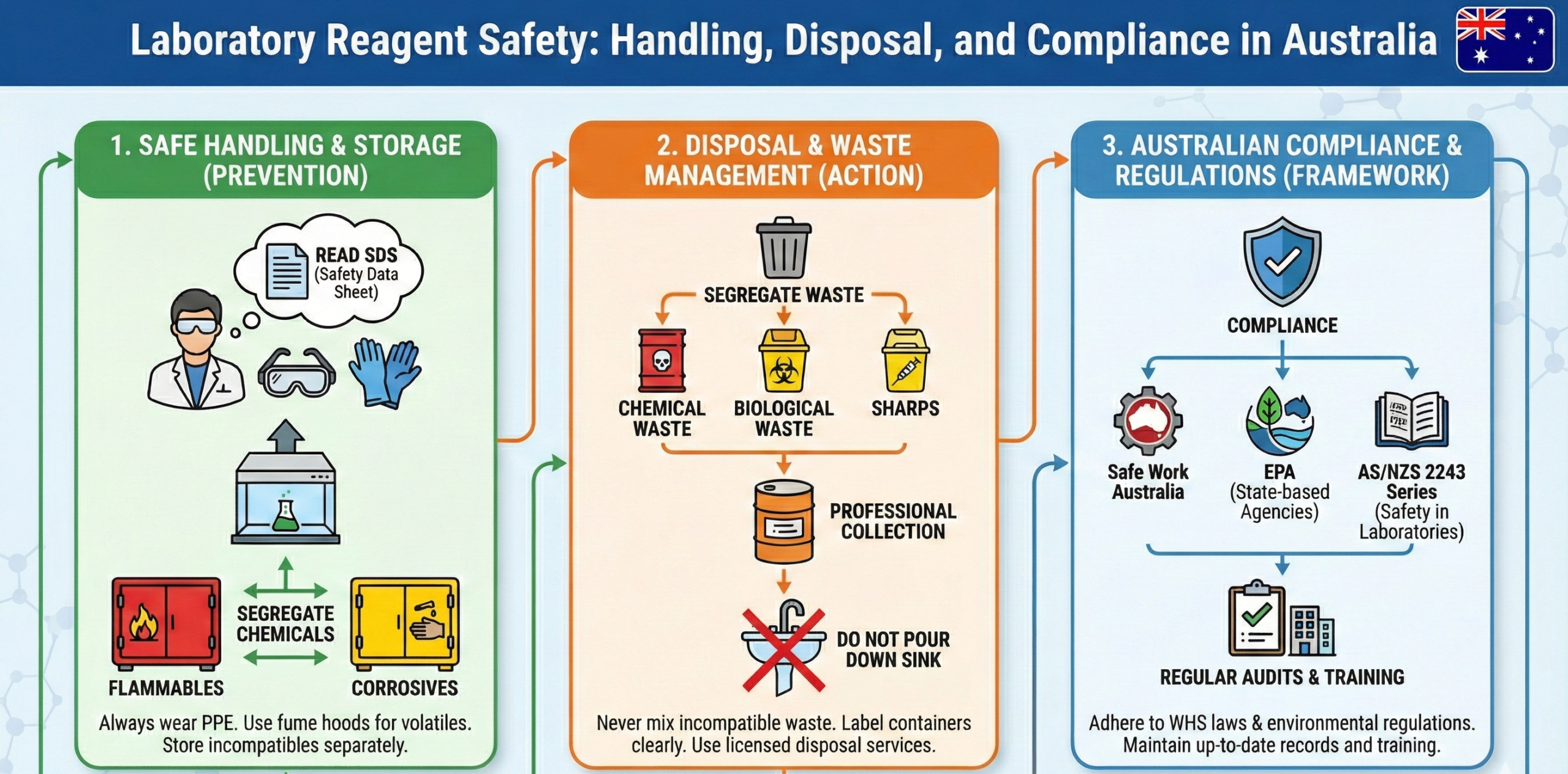
Laboratory Reagent Safety: Handling, Disposal, and Compliance in Australia
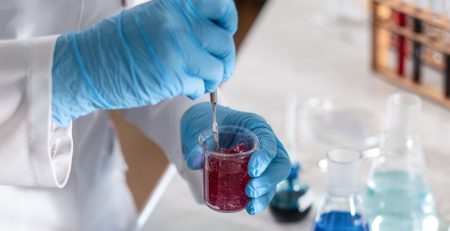
Laboratory reagents are essential for education, research, and diagnostics โ but they can also present serious safety risks...
No Comments
9
Sep
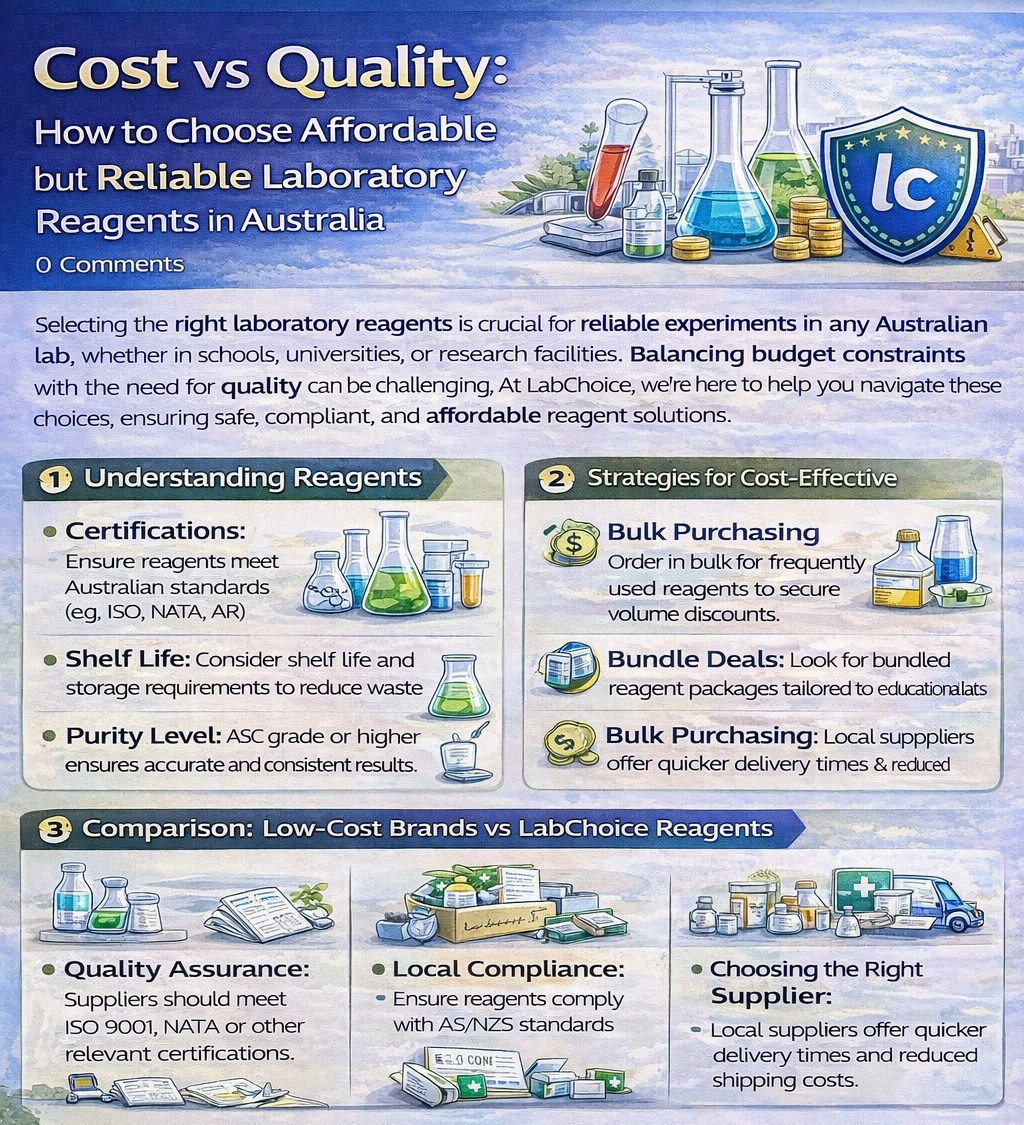
Cost vs Quality: How to Choose Affordable but Reliable Laboratory Reagents in Australia
Laboratory budgets are often stretched between equipment, consumables, and staff training. Reagents make up a significant portion of...
No Comments
9
Sep
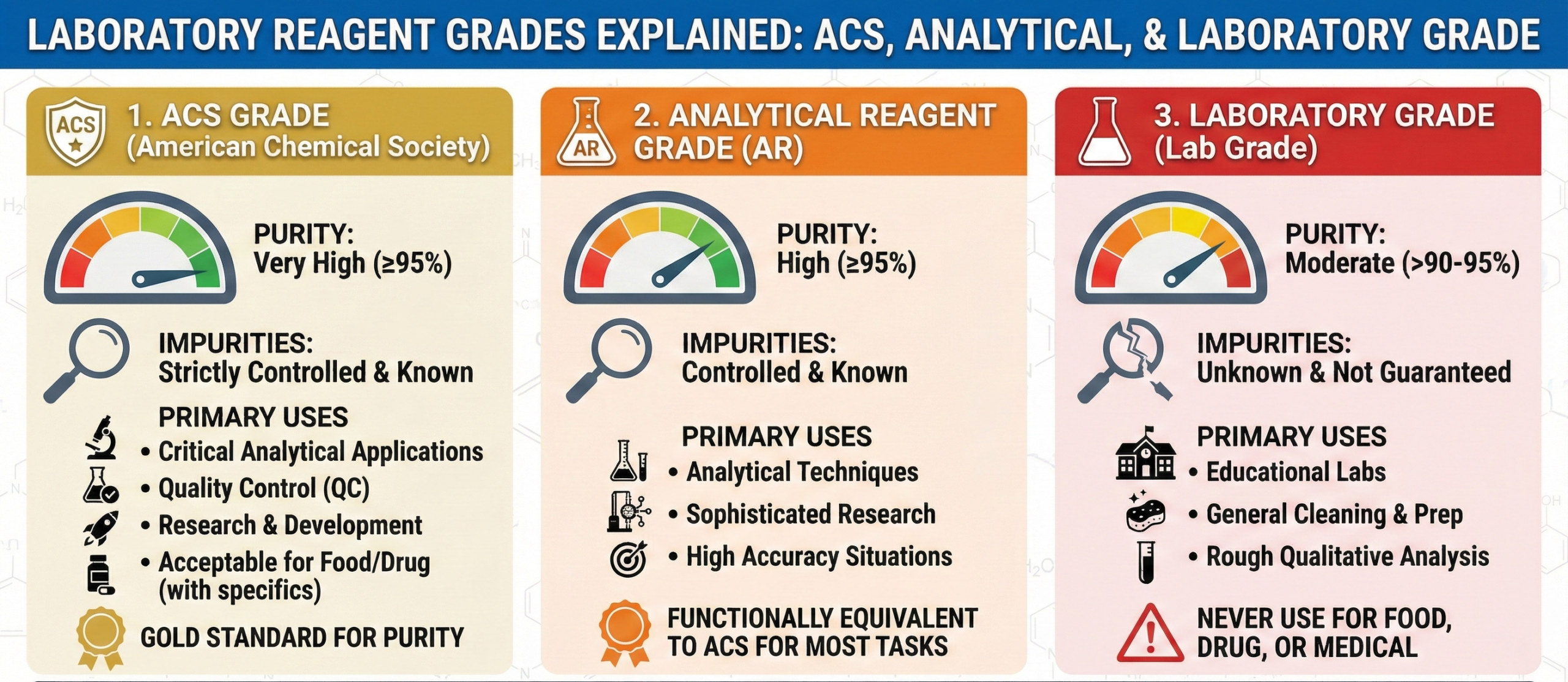
Laboratory Reagent Grades Explained: Analytical, ACS, and Laboratory Grade
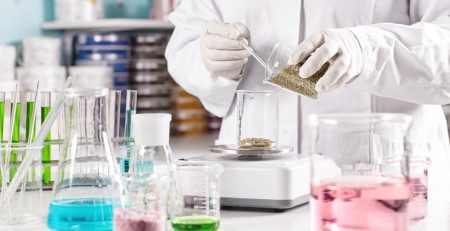
The quality of laboratory reagents directly impacts the accuracy, reproducibility, and safety of scientific work. From high school...
No Comments
9
Sep
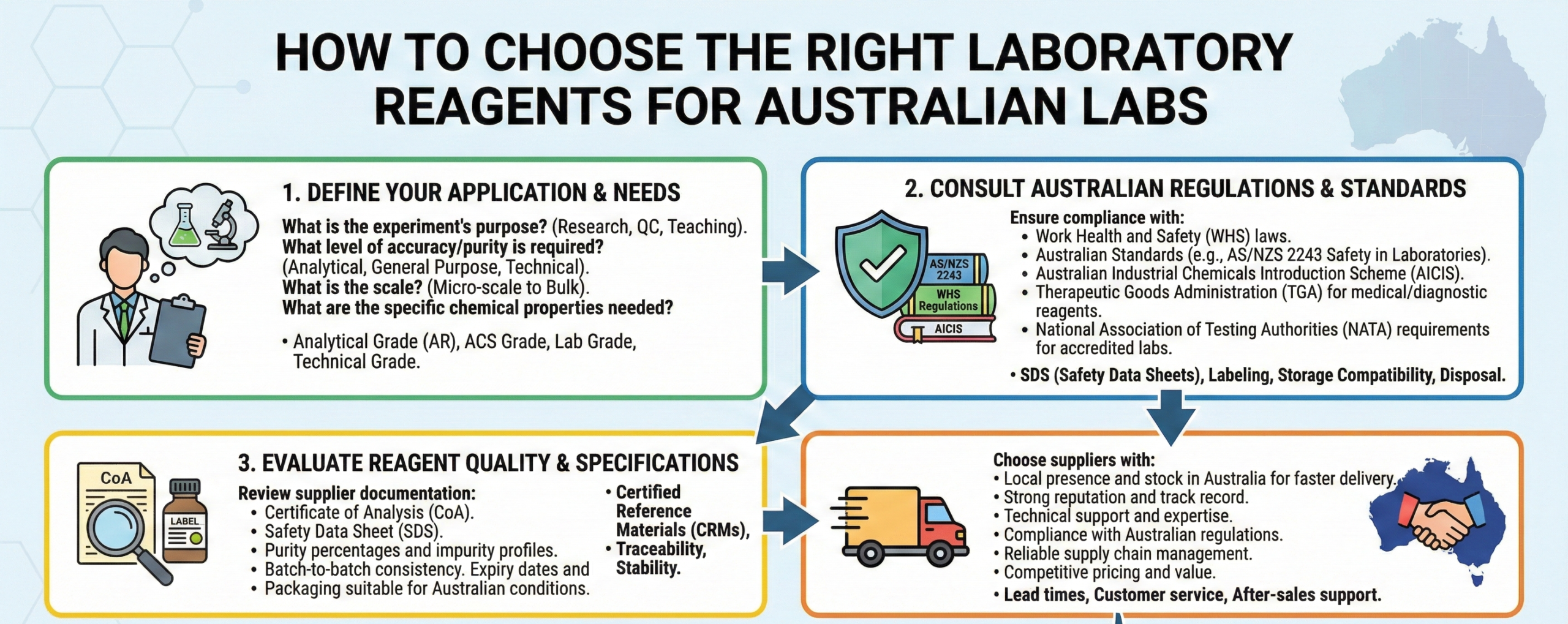
How to Choose the Right Laboratory Reagents for Australian Labs
Laboratory reagents are the foundation of every experiment. From simple teaching demonstrations to complex molecular diagnostics, the reliability...
No Comments
9
Sep
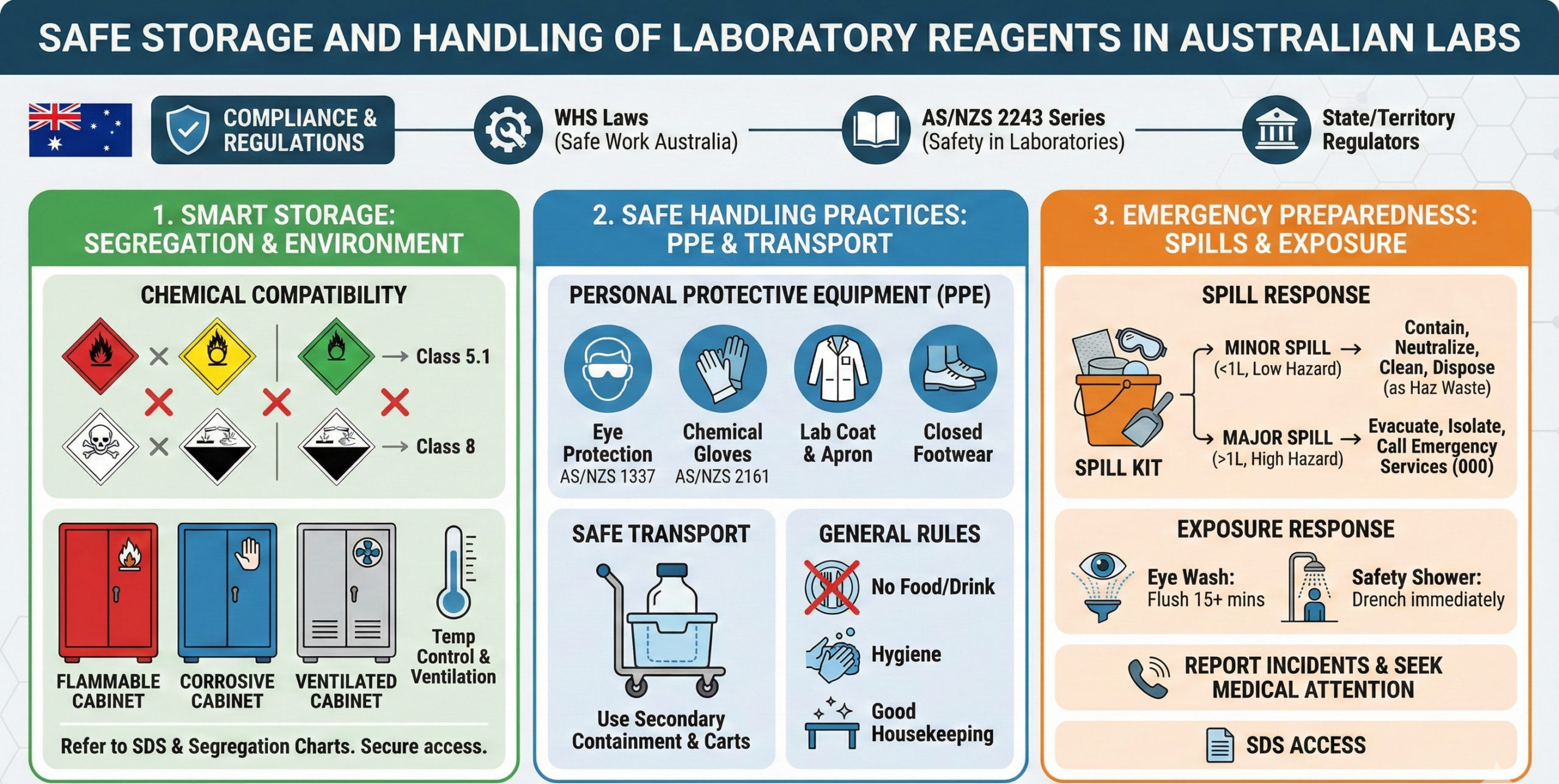
Safe Storage and Handling of Laboratory Reagents in Australian Labs
Laboratory reagents are essential for education, research, and diagnostics โ but they also present significant safety risks if...
No Comments
9
Sep
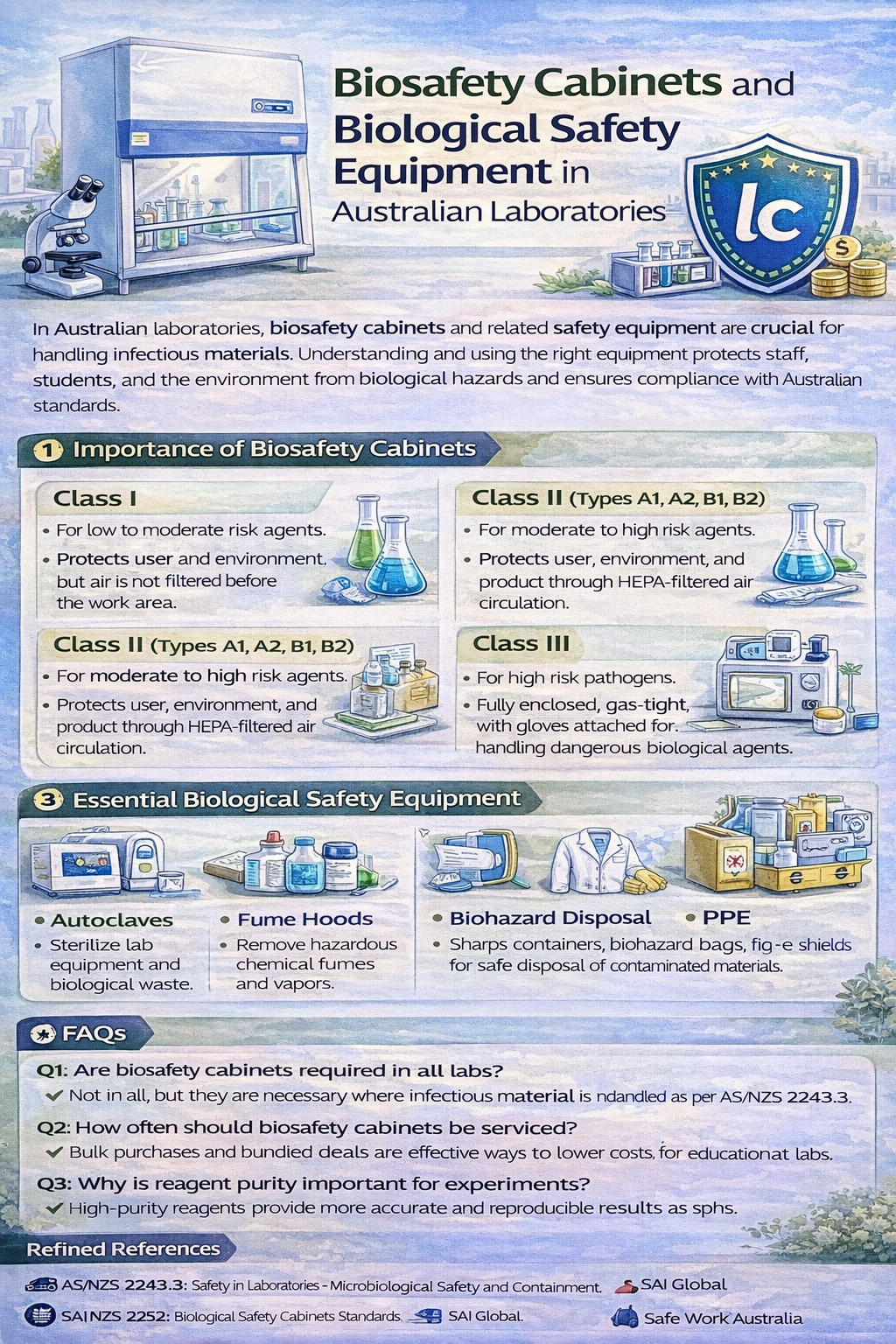
Biosafety Cabinets and Biological Safety Equipment in Australian Laboratories
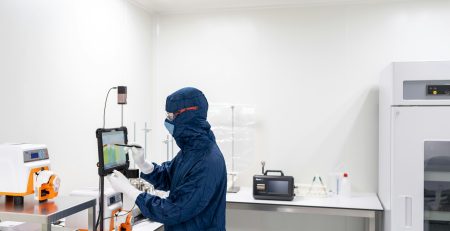
Biological hazards are a serious concern in laboratories working with microorganisms, cell cultures, and clinical samples. Protecting staff,...
No Comments
9
Sep
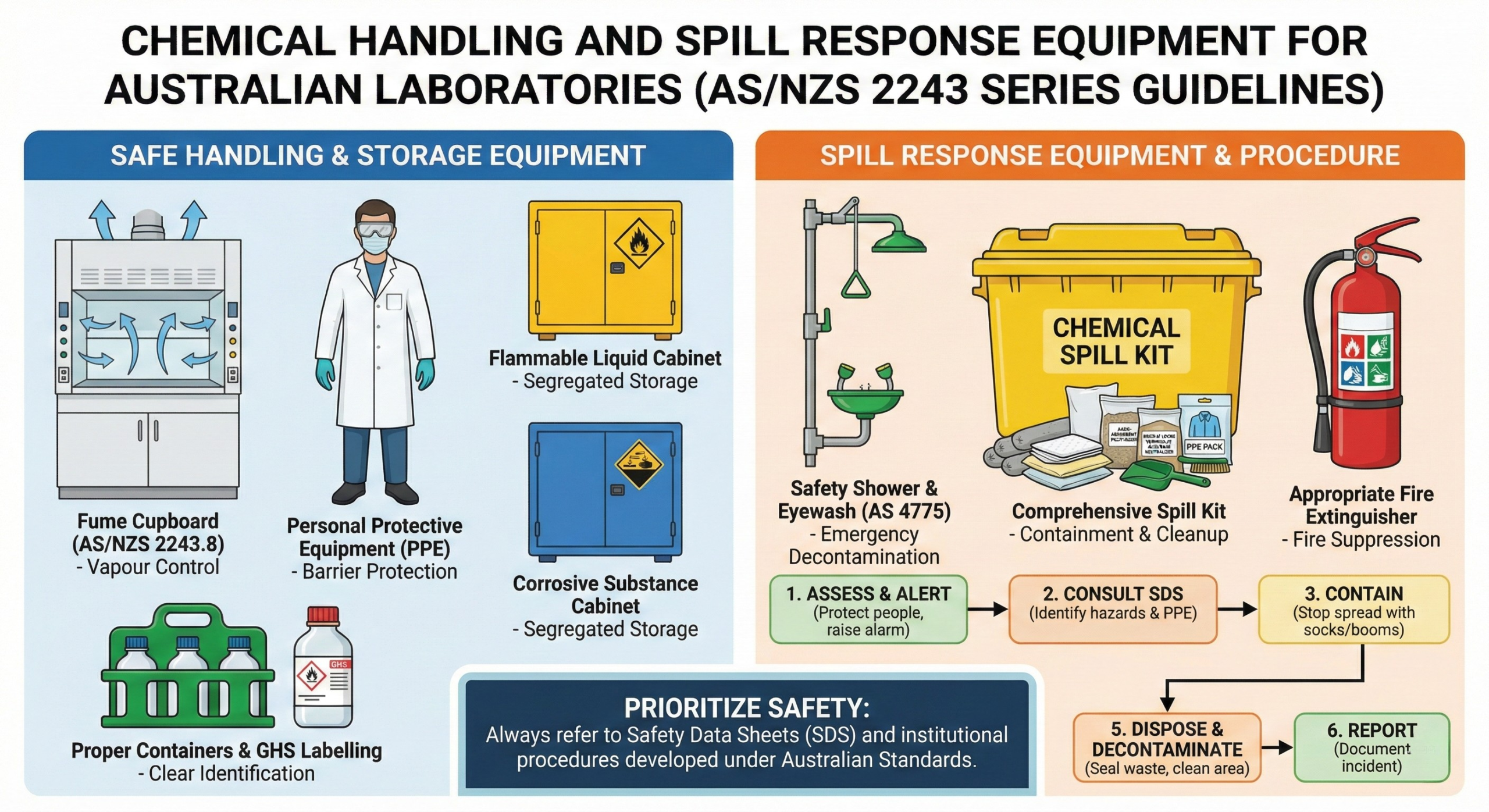
Chemical Handling and Spill Response Equipment for Australian Laboratories
Chemical hazards are one of the greatest risks in laboratories. Even a small spill can cause injuries, damage...
No Comments
9
Sep
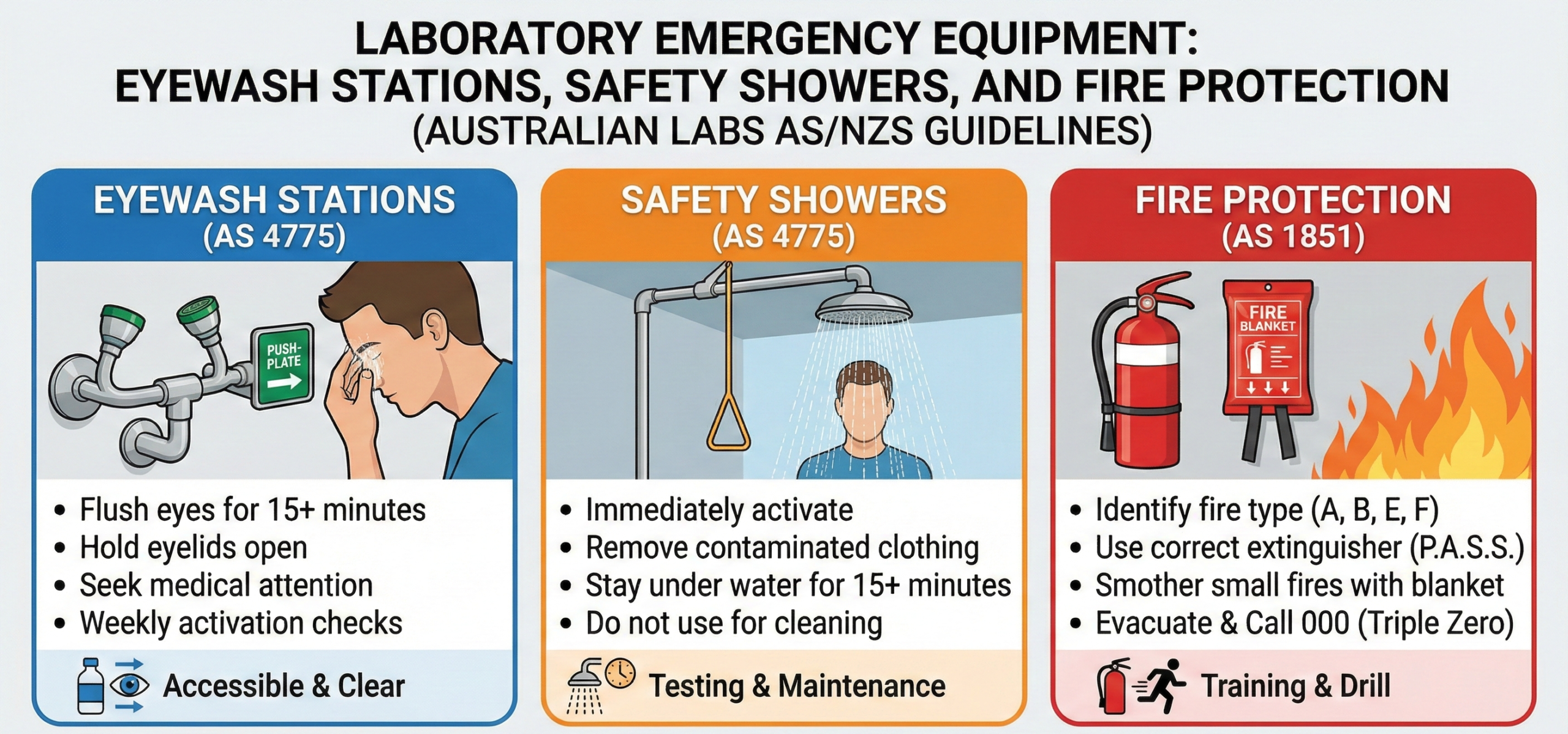
Laboratory Emergency Equipment: Eyewash Stations, Safety Showers, and Fire Protection in Australian Labs
Emergencies in the laboratory can happen without warning โ from chemical splashes to fires. Preparedness is key, and...
No Comments
9
Sep
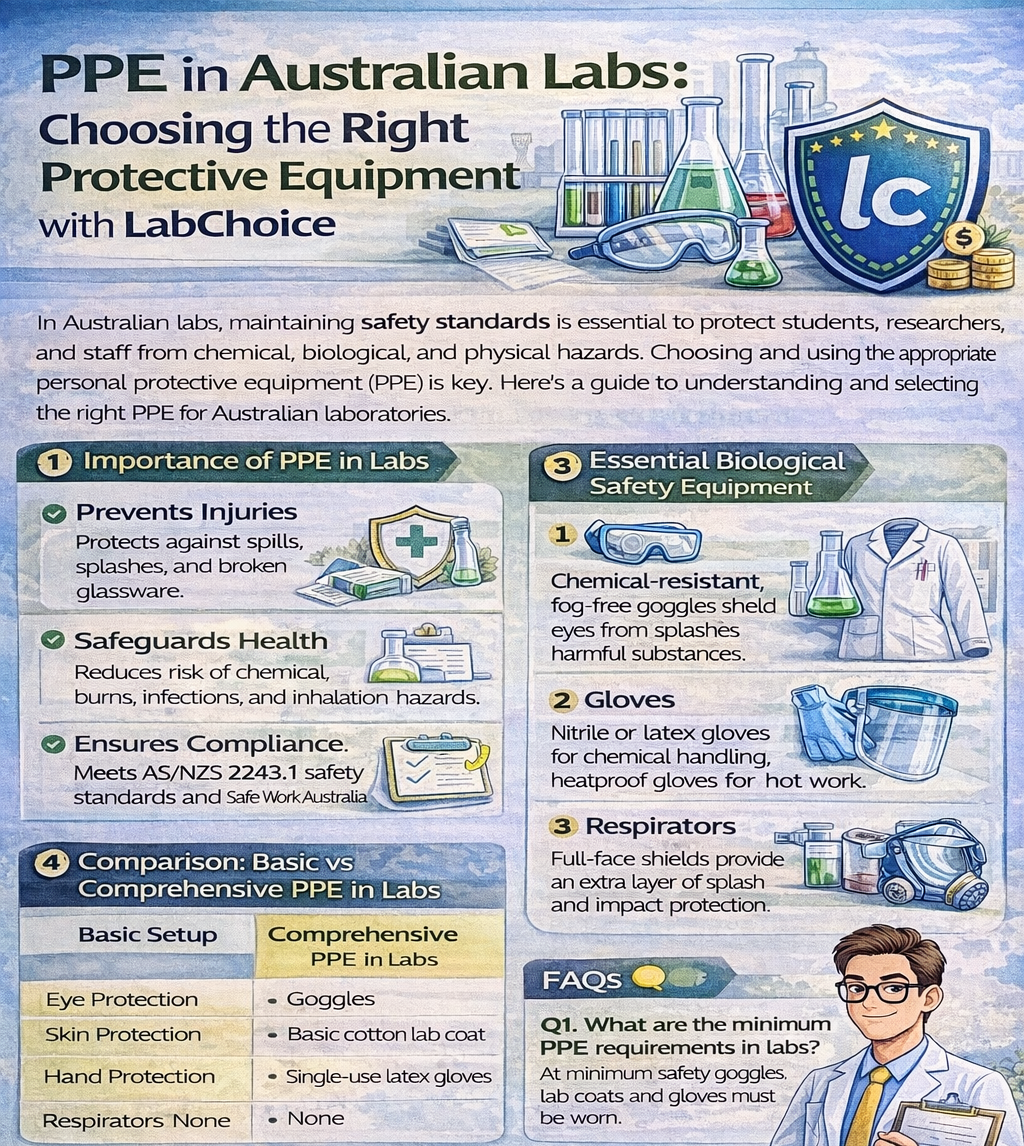
PPE in Australian Labs: Choosing the Right Protective Equipment with LabChoice
Personal Protective Equipment (PPE) forms the frontline defence in any laboratory. From handling corrosive chemicals to working with...
No Comments
9
Sep
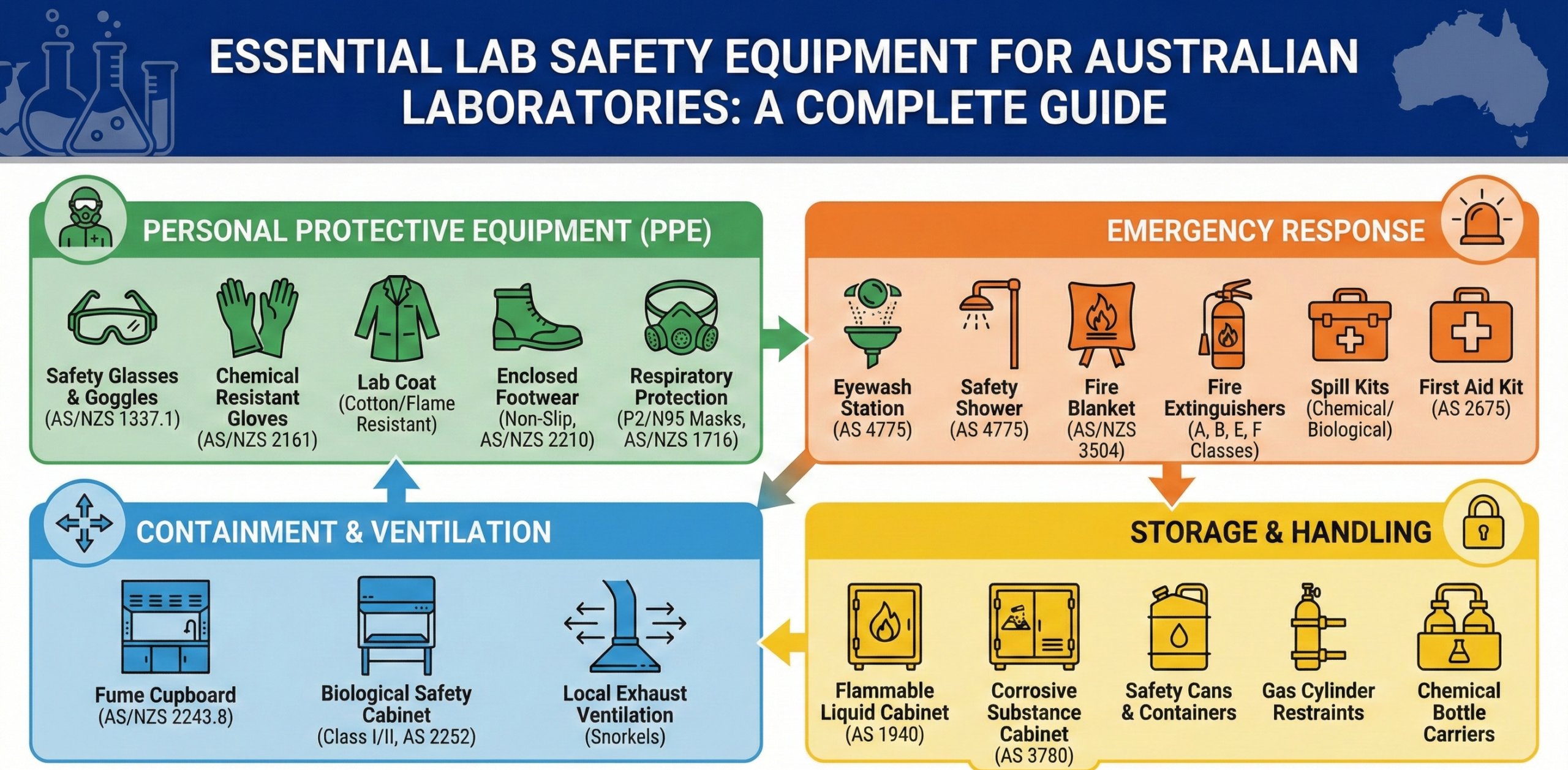
Essential Lab Safety Equipment for Australian Laboratories: A Complete Guide
Laboratories are environments of discovery and innovation, but they also present inherent risks. From chemical spills to biohazard...
No Comments
Understanding Which Lab Consumables Get Replaced the Fastest
Every lab uses certain items day in and day out. Gloves, tips, wipes, and other consumables might not grab attention...
Chemical Compatibility of Laboratory Plastics vs Glassware (AU)
Chemical compatibility is not a minor detail. It determines whether your container stays intact, whether your sample remains uncontaminated, and...
Why Volumetric Glassware Is Critical for Analytical Chemistry (AU)
Analytical chemistry depends on one thing more than most people realise: known, repeatable volumes. If your volumes drift, your concentrations...
How to Choose the Right Laboratory Apparatus for Everyday Tasks
Getting everyday lab work done quickly and safely depends a lot on the gear we use. When test results feel...
How to Spot Misleading Eco Claims in Labware: A Practical Buyer Guide (AU)
โSustainableโ, โeco-friendlyโ, and โgreenโ labware claims are everywhere, but many are vague, unverified, or designed to sound better than they...
Choosing the Right Glassware for Organic Chemistry Labs (Australia)
Organic chemistry labs depend on clean reactions, controlled heating, reliable seals, and repeatable workups. The right glassware does more than...
Low Waste Filtration Setup: Reusable Glass Filtration Workflows for Consistent Results (AU)
Filtration is one of the highest-frequency tasks in wet chemistry, materials, and teaching labs. It is also one of the...
What to Check Before Reordering Lab Supplies in Australia
Reordering lab supplies in Australia might sound simple, but getting it right takes more than just checking whatโs in the...
Greener Distillation: Condenser Selection to Reduce Water Use in Routine Runs
Routine distillation can quietly waste a lot of water, especially when condensers are run on continuous tap flow โjust to...
Right Size, Right Result: Choosing Beaker and Flask Sizes to Cut Heating Time and Waste
Choosing the correct beaker or flask size is one of the simplest ways to reduce heating time, solvent...
Thermal Shock Explained: Simple Rules to Prevent Glass Breakage in Daily Lab Work
Thermal Shock Explained Thermal shock is one of the most common reasons laboratory glassware breaks, even when the glass looks...