
1
Oct
Should You Upgrade to a Benchtop Centrifuge for Daily Samples
Should You Upgrade to a Benchtop Centrifuge for Daily Samples
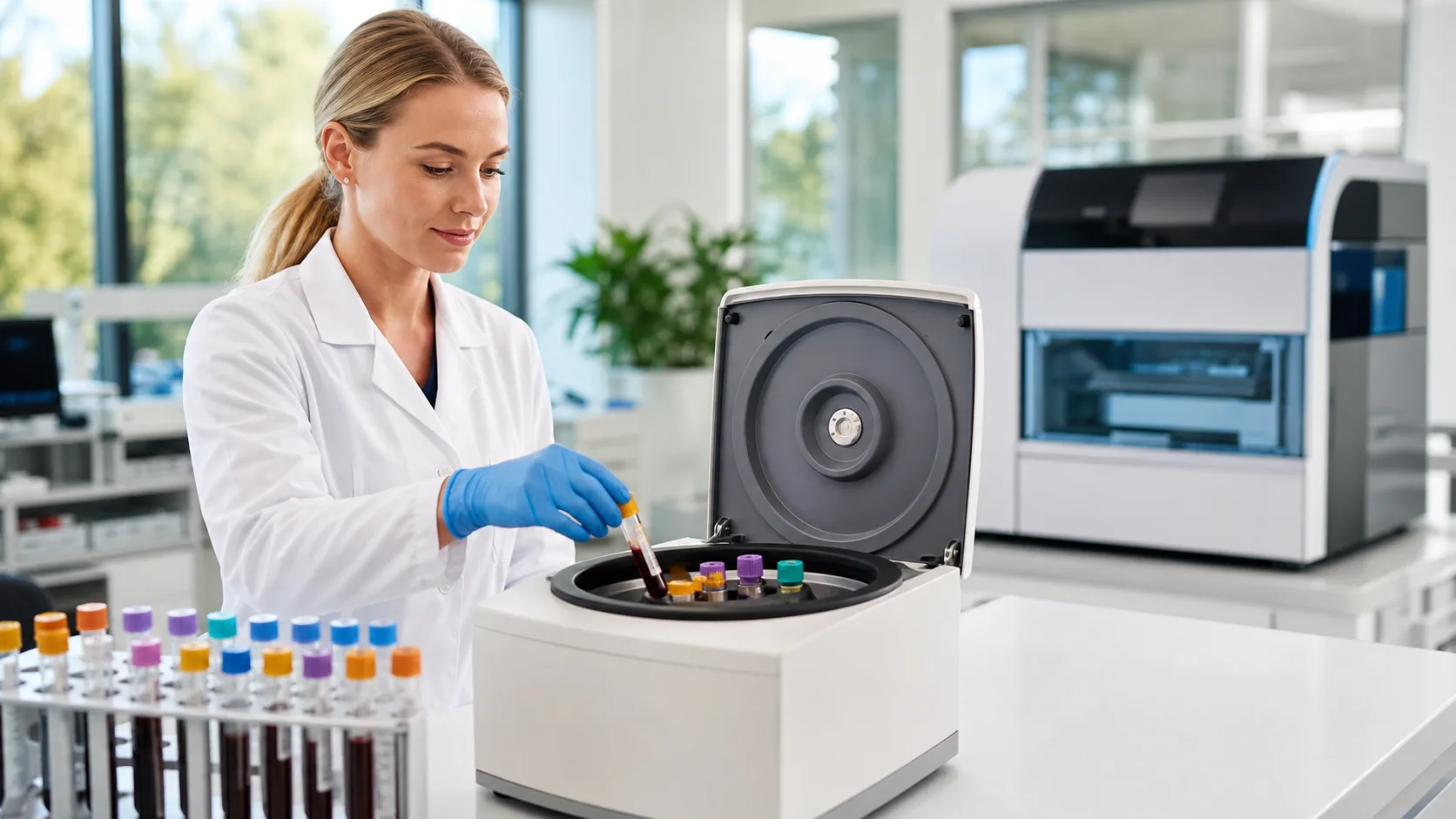
A centrifuge that cannot keep up with daily work can slow down an entire laboratory. Whether you are separating, clarifying, pelleting or preparing samples, waiting for a shared unit affects turnaround times and makes routine jobs feel harder than they need to be.
At LabChoice Australia, we know that the best equipment choice is rarely about choosing the biggest or fastest option. For many research, education, testing and industrial laboratories, a well-matched benchtop centrifuge can bring more consistency to daily processing while fitting comfortably into the available workspace. The key is to look closely at what your team actually runs each day.
Recognise When Daily Workflows Need an Upgrade
The need for an upgrade often appears in small frustrations that happen again and again. A centrifuge may still operate, yet no longer suit the volume, tube types or pace of your laboratory routine.
We often suggest looking for signs such as:
- Long queues around a shared centrifuge
- Repeated spin cycles needed to complete one batch
- Inconsistent separation or unclear pellets
- Difficulty balancing different tube sizes
- Downtime caused by ageing parts or unreliable performance
Capacity problems do not only affect how quickly samples move through the lab. When staff need to wait their turn, rearrange their work around one machine or rush a balancing step, there is more room for avoidable mistakes. Repetitive work should feel orderly, not like a daily race for equipment access.
For smaller laboratories, teaching spaces and teams with a dedicated sample stream, a benchtop centrifuge in Australia can be a sensible way to spread work across the bench. Rather than sending every sample to one central unit, teams can process suitable samples closer to where preparation takes place. This can make the workflow easier to manage during busy periods.
Match Capacity and Rotor Design to Sample Demand
Before selecting a centrifuge, we recommend mapping out a normal day as well as your busiest day. Consider how many samples arrive at once, whether processing peaks at set times and whether upcoming projects, classes or testing schedules could increase demand.
Choosing only for today’s workload can lead to another bottleneck sooner than expected. A little room for realistic growth can help your laboratory stay flexible without taking up unnecessary bench space.
Tube compatibility should guide the decision just as much as capacity. Different workflows may call for microcentrifuge tubes, PCR tubes or strips, blood collection tubes, conical tubes or other specialist containers. The rotor and any required adapters need to suit the formats your team uses regularly, not just the occasional sample type.
Rotor design also changes how samples are handled. At a high level, fixed-angle rotors hold tubes at an angle and can suit routine microtube work and rapid pelleting. Swing-out rotors allow tubes to move into a horizontal position during spinning, which may be useful where horizontal separation or particular tube configurations are needed.
A practical review might include:
- Daily and peak sample numbers
- Current and expected tube formats
- Rotor capacity and compatible adapters
- Whether fixed-angle or swing-out operation suits the protocol
- Space for future changes in workload
By matching the rotor to routine demand, you can avoid spending valuable time changing setups or dividing batches more often than necessary.
Prioritise Controls That Protect Samples and Staff
Maximum speed is easy to compare, but it should not be the only feature driving your decision. We recommend comparing the maximum relative centrifugal force, timer range, display readability and controls that help staff repeat common protocols accurately.
Acceleration and braking settings deserve attention too. Fast starts and stops may suit some tasks, while gentler settings can help reduce disturbance to pellets or layered samples. If staff run the same sample types every day, clear controls and repeatable settings can make training and routine operation simpler.
Safety features are equally important when choosing a benchtop centrifuge in Australia. Depending on the model and laboratory requirements, features worth considering may include:
- Secure lid locking during operation
- Imbalance detection
- Automatic shut-off functions
- A housing that is easy to wipe down
- Rotor systems suited to approved tube types
Sample protection also matters. Heat-sensitive, fragile or high-value samples may need more control than a basic spin cycle provides. Refrigeration may be relevant for some workflows, while controlled acceleration and deceleration can support samples that should not be disturbed suddenly. We encourage teams to match these needs to their own approved procedures before choosing equipment.
Plan Your Purchase During Spring
October is a useful time to review equipment needs in Australian laboratories. Spring can bring end-of-year project deadlines, final teaching periods, higher testing demand and planning for summer staffing changes or shutdowns. Waiting until a centrifuge becomes a daily problem can leave little room to compare options carefully.
Early planning also gives your team time to check the practical details. Bench space, electrical access, ventilation needs and any commissioning requirements should be considered before equipment arrives. It is also wise to allow for procurement lead times, especially if a specific rotor configuration or tube compatibility is required.
A simple comparison checklist can keep the purchase focused on real workflow needs:
- Daily volume and peak processing periods
- Required tube sizes and rotor compatibility
- Speed and relative centrifugal force requirements
- Safety controls, cleaning needs and noise level
- Maintenance expectations and available budget
At LabChoice Australia, we recommend keeping this checklist close when comparing laboratory equipment. It helps move the discussion away from headline specifications and back to the practical questions that affect staff every day.
Take the Next Step Towards Smoother Sample Processing
The right upgrade should support your laboratory’s real routine, rather than simply offering the highest available speed or largest capacity. Reviewing current pain points can show where delays begin, whether that is a shortage of rotor positions, incompatible tube formats, unreliable controls or a centrifuge that is always in use.
Start by identifying the samples, volumes and protocols that create the most waiting. With those details clear, you can compare centrifuge options against the way your team works, the space you have available and the level of control your sample preparation requires.
Find Equipment That Fits Your Daily Workflow
At LabChoice Australia, we can help you assess a benchtop centrifuge in Australia that supports reliable, efficient sample processing. Our range is suited to laboratories balancing routine workloads with practical bench space requirements. For tailored product guidance, contact us to discuss your application and equipment needs.

RELATED
Posts
8
Sep
Centrifuge Types and Their Uses in Australian Laboratories: A Comprehensive Guide by LabChoice Australia
Centrifuges are indispensable in modern Australian laboratories, enabling efficient separation of biological samples, chemical mixtures, and industrial materials. Understanding the various types...
read more