Smooth, Consistent Cell Mixing Starts Here
Reliable cell mixing should not feel like guesswork. If you have ever had cultures behave differently from one day to the next, even though the protocol stayed the same, the shaking method is often the quiet troublemaker in the background.
Hand-shaking and simple rocking trays can cause inconsistent mixing, cell stress, spills, and higher contamination risk. A digital orbital shaker gives you controlled, repeatable motion so your cells, plates, and samples get the same treatment every single time. For teaching labs, research groups, medical testing, food testing, and industrial QC, that kind of consistency is now a basic lab need, not a luxury.
As we move toward spring in Australia, many labs start to ramp up new projects, restart paused cell lines, or gear up for more teaching classes. It is the perfect time to check if your current mixing setup is holding back culture growth or slowing assay prep. Here, we will walk through what to look for in a digital orbital shaker and how to fit it smoothly into the way your lab already works.
How Digital Orbital Shakers Improve Cell Culture Outcomes
An orbital shaker moves your flasks or plates in a small circle. This circular path keeps liquid flowing gently over cells, avoids sharp stops and starts, and helps maintain a stable environment inside the vessel. Compared with back-and-forth motion or manual shaking, orbital motion is usually kinder to cell membranes and helps keep cells in suspension without rough shear.
This kind of gentle, even mixing supports:
- Better gas exchange at the surface
- More uniform nutrient distribution
- Less clumping in suspension cultures
- More consistent growth between flasks or plates
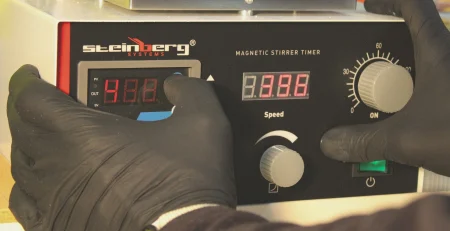
Digital control then takes things a step further. Instead of guessing a speed knob, you can set an exact value and repeat it any time. Timers reduce the risk of leaving a shaker running too long. Some models also pair safely with incubators so you can keep stable shaking inside a controlled-temperature space.
Across different sectors, that accuracy makes a big difference. In education labs, students can repeat the same speed and time settings across classes. In research and medical labs, delicate mammalian cells and stem cells depend on tight control. In food and industrial labs, microbial cultures, ELISA plates, and extraction tubes all need consistent mixing to support clear, repeatable results.
Key Features to Compare Before You Buy
Before choosing a digital orbital shaker, it helps to match the hardware to the way your team actually works each day, not just to one favourite protocol.
Start with capacity and footprint. Think about:
- Plate size and shape, including any incubator shelves
- Maximum load, including liquid weight and vessels
- Compatibility with flasks, microplates, culture bottles, and tubes
- Benchtop space and how crowded your work areas already feel
Speed range and orbit diameter are just as important. Lower speeds with a small orbit suit gentle mixing for sensitive mammalian cells. Higher speeds and larger orbits suit tougher microbial cultures and more intense mixing jobs.
- Speed range that covers your slowest and fastest needs
- Clear digital display in RPM
- Smooth ramp-up options to avoid sudden jolts
- Simple programming for repeated routines
Platform options can either make your life easy or very frustrating. You might want:
- Dedicated flask clamps for specific sizes
- Universal platforms with adjustable bars
- Sticky mats for quick microplate or small flask work
- Stacking kits if you need more capacity in a tight space
Choosing the right platform mix can help one shaker serve several classes, projects, or departments.
Ensuring Reliability, Safety and Compliance in Your Lab
A digital orbital shaker often runs for long periods, sometimes overnight, so build quality really matters. Look for solid construction that can handle regular use as your spring workload grows. Useful design details include:
- A reliable motor suited to continuous duty
- Good vibration control so the unit stays put
- Corrosion-resistant surfaces for humid or incubator use
- Stable performance at both low and high speeds
Safety and hygiene features protect both users and samples. Handy features include:
- Non-slip platforms to keep flasks and plates in place
- Overload or unbalanced load protection
- Audible alarms or auto-stop if something goes wrong
- Surfaces that are quick to wipe down with standard disinfectants
For medical, food, and industrial labs, compliance and documentation are also key. It helps to choose units that meet Australian electrical safety requirements and have clear certification markings like CE. Detailed user manuals, basic maintenance guidance, and access to calibration records all support audits and internal QA checks.
Matching Digital Orbital Shakers to Your Applications
Different labs in Australia use the same type of shaker in very different ways, so it makes sense to match the model to your main jobs.
Education labs usually need simple, durable units that many people can share. Helpful traits for teaching spaces include:
- Clear digital speed and time readouts for students
- Easy controls with just a few buttons
- Platforms that handle a mix of flasks and microplates
- Tough design that tolerates regular setup and pack-down
Research and medical labs tend to need finer control. For sensitive cell lines, incubator work, or long assays, it helps to have:
- Programmable cycles and step-changes
- Fine speed increments, especially at low RPM
- Stable operation inside incubators where temperature is controlled
- Quiet running for shared research spaces
Food and industrial labs often focus on throughput and variety. Shakers in these settings may need to handle:
- Heavier loads with many bottles or sample jars
- Different vessel types from day to day
- Regular QC workflows that run on repeat
- Quick changeovers between products or test types
Thinking honestly about which group you fit into, or where there is overlap, will narrow your options fast.
Budget, Service and Sourcing in Australia
Balancing budget and performance is about more than picking the lowest price. A basic, entry-level model can be perfect for light teaching use or simple mixing tasks. As your throughput grows or your research focus shifts, more advanced features like programming, wider speed ranges, or stacking can save time and reduce manual checks.
It is also worth thinking about service and support. Helpful signs include:
- Clear warranty terms
- Access to spare parts when something eventually wears out
- Local technical help for setup questions or troubleshooting
- Guidance on routine checks to keep the shaker running well
Buying from suppliers within Australia brings practical benefits too. Shorter delivery times suit time-critical testing and new semester setups. Pricing in Australian dollars keeps quotes simple for purchasing teams. You also gain access to product ranges chosen with local lab conditions in mind, from humid coastal campuses to dry inland facilities, which is what we focus on at LabChoice Australia.
Upgrade Your Shaking Precision With Reliable Lab Equipment
If you are ready to improve consistency and control in your workflows, our digital orbital shaker range is designed to support demanding Australian laboratories. At LabChoice Australia, we help you match the right model to your sample types, volumes and throughput needs. Speak with our team today via our contact page to get tailored advice and a quote for your next project.