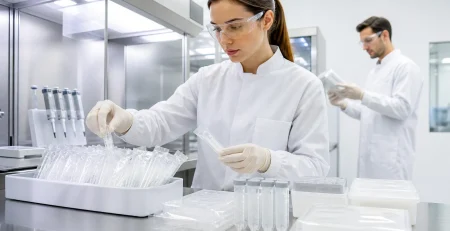
Build Reliable Cultures with the Right Dish
Petri dish material affects more than appearance. It can shape how clearly you see colonies, how easily dishes are handled, how contamination is managed, how much waste is produced and how smoothly your daily culture work runs. For that reason, we see the choice between glass and plastic as a workflow decision, not simply a personal preference.
Both reusable glass and disposable plastic dishes can suit research, education, testing and industrial laboratories. Your best fit depends on culture type, sterilisation capability, throughput and internal compliance needs. At LabChoice Australia, we support Australian laboratories with durable cultureware and related consumables for dependable daily work.
Reusable Glass Supports Clarity and Control
Glass Petri dishes are valued for their optical clarity and smooth, non-porous surface. When you need to inspect media, colony growth or subtle changes in a culture, clear glass can make observation more confident. Glass also resists staining, scratching and many common laboratory chemicals better than many plastic alternatives.
With validated cleaning and sterilisation procedures in place, glass dishes can generally be washed, inspected and autoclaved for repeat use. This makes them a practical choice for laboratories that already have reliable cleaning processes and repeatable protocols.
We often recommend reusable glass cultureware for teaching settings, repeated research methods, microscopy-related observation and culture work where visual assessment matters. When choosing a glass Petri dish supplier, look for consistent glassware that suits your dish size, handling and sterilisation requirements.
Plastic Dishes Prioritise Speed and Sterility
Plastic Petri dishes are commonly chosen when speed matters. Sterile, ready-to-use dishes remove the need for washing, drying and autoclaving before setup, which can simplify short-term culture work and busy testing schedules.
For high-throughput workflows, single-use plastic can also reduce concerns about residue or incomplete cleaning between uses. Teams can prepare batches quickly, handle dishes with less concern about breakage and dispose of them according to their laboratory waste process.
There are trade-offs to consider. Plastic dishes may be less suitable for heat exposure, some solvents or aggressive chemicals, and they can scratch more easily than glass. Before use, we recommend checking the dish material against your planned incubation conditions, specialised media and any chemical exposure.
Compare Waste and Laboratory Workflows
The most suitable dish is not always the one with the lowest purchase requirement. Reusable glass needs staff time, water, detergent, autoclave capacity, validation and regular inspection. If those systems are already efficient, repeated use may suit your workflow well. If not, sterile disposable dishes may keep work moving more smoothly.
Sustainability also needs a practical view. Glass can reduce single-use waste, while plastic can reduce the water and energy involved in washing and sterilisation. Rather than assuming one option is always better, we suggest reviewing what happens in your own laboratory.
Consider:
- How often dishes are used each week
- Available washing, autoclaving and inspection capacity
- Breakage, disposal and waste-stream procedures
- Water and energy use across the full workflow
Match Dish Choice to Your Culture Method
A sensible choice starts with the work in front of you. Consider culture volume, incubation conditions, contamination sensitivity, inspection needs, chemical exposure and the number of dishes your team uses in a typical week.
Reusable glass Petri dishes can suit laboratories with established sterilisation procedures, durable handling practices and repeatable culture methods. Before reuse, dishes should be checked for chips, cracks, scratches and residue that could affect safe handling or reliable observations.
Plastic dishes can suit high-volume, short-duration or contamination-sensitive work where sterile disposable cultureware improves efficiency. If your team is standardising a process, a trusted glass Petri dish supplier can also help you compare suitable sizes, materials and supporting accessories without treating every culture task as the same.
Prepare for Spring Laboratory Demand
October can bring a busier period for Australian laboratories, with spring environmental sampling, water testing, agricultural analysis and late-semester education activities increasing demand for culture supplies. Planning ahead helps prevent rushed substitutions when the right dish type is not available.
Before busy work begins, we recommend reviewing stock of:
- Petri dishes and culture media
- Inoculating loops and sample containers
- Waste disposal supplies and labels
Where appropriate, standardising preferred dish types across teams can simplify training, purchasing, storage and protocol documentation. Glass and plastic Petri dishes both have a useful place in modern culture work. The better choice is the one that fits your sterilisation capacity, waste practices, culture requirements and the way your team needs to work each day.
Reliable Petri Dishes For Everyday Lab Work
At LabChoice Australia, we stock options for teams seeking a dependable glass Petri dishes supplier for routine culture work. Our range helps laboratories source suitable dishes alongside their broader glassware requirements. For product guidance or help with your order, contact us and our team will assist.