Achieve Reliable Results with Smarter Heat Control
Precise heat control sits at the heart of repeatable mixing, dissolution, digestion and sample preparation. When you can heat a sample steadily and keep it moving at the right pace, you are better placed to achieve consistent results while protecting sensitive materials.
At LabChoice Australia, we know that a hot plate magnetic stirrer is used by laboratory teams, educators and industrial users for many different tasks. In this guide, we explain why the number displayed on a unit is only part of the picture, how to select settings sensibly, where a temperature probe helps, and what to consider as warmer Australian weather approaches.
How a Hot Plate Magnetic Stirrer Delivers Even Heating
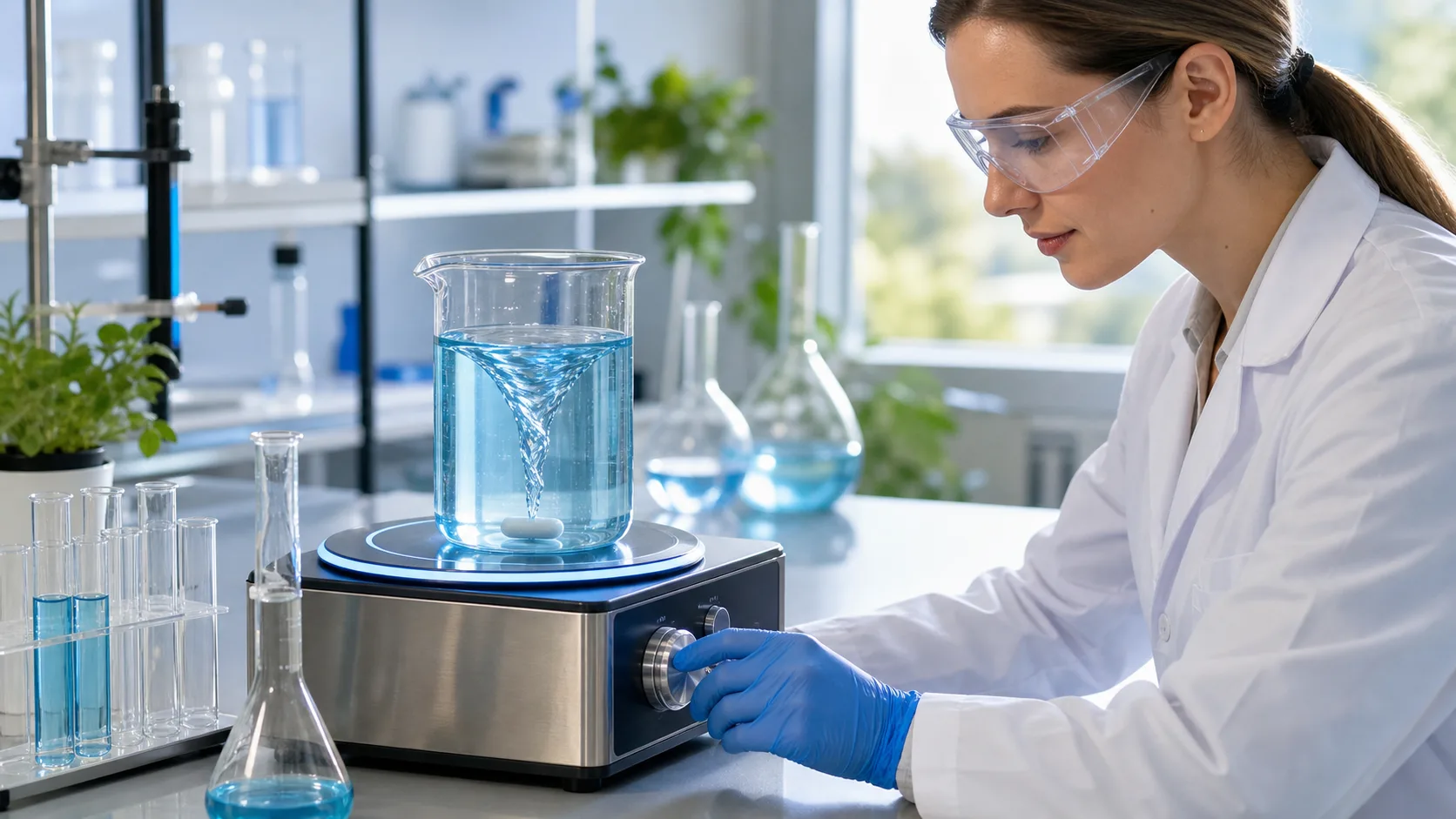
A hot plate magnetic stirrer performs two jobs at once. Its heated surface transfers thermal energy into the vessel sitting on top, while a rotating magnetic field beneath the plate turns a stir bar inside the liquid. Together, these functions allow you to warm and circulate a sample without placing a mechanical stirrer directly into it.
Continuous movement matters because liquid does not always warm evenly on its own. Without stirring, the portion closest to the base of the vessel may become much warmer than the liquid near the top. This can create hot and cool zones, slow down dissolution and make it harder to judge when a sample has reached the desired condition.
It is also worth separating hot plate temperature from sample temperature. The plate may be set to a certain point, but the liquid inside your vessel can be cooler or warmer depending on several factors:
- Vessel material, including glass, ceramic or metal
- Vessel size and base thickness
- Liquid volume and starting temperature
- Stirring speed and stir bar performance
- Room temperature and surrounding airflow
Borosilicate glassware, for example, behaves differently from a ceramic dish or metal container. Each material transfers and holds heat in its own way, so the display should be treated as a control setting rather than an automatic reading of the liquid itself.
Match Temperature Settings to Your Sample and Vessel
Start with the needs of the sample, not the highest available setting on the unit. Some materials tolerate steady heating well, while sensitive media, volatile solvents and heat-reactive substances need closer control. A gradual approach gives you more time to observe changes and avoid pushing the sample beyond its intended temperature.
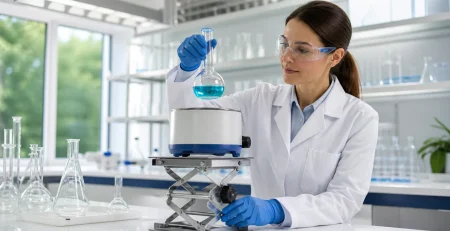
Vessel choice also affects how quickly heat reaches the contents. Borosilicate glassware is commonly used for general laboratory heating, but different wall thicknesses, base shapes and capacities can change the rate of heat transfer. A larger vessel or a thicker base may take longer to warm, even when the hot plate setting remains the same.
For day-to-day work, we recommend building a little patience into your process:
- Begin at a moderate temperature setting
- Allow the vessel and liquid time to stabilise
- Monitor the sample as it warms
- Increase the setting in small steps when needed
- Record successful settings for repeat tasks
Making several rapid adjustments can lead to confusing results because the vessel and liquid may still be responding to the previous setting. Waiting for equilibrium makes it easier to see what is actually happening inside the sample, rather than reacting to a temporary change at the plate surface.
Prevent Overshoot with Sensors and Stirring Speed
Temperature overshoot occurs when a sample rises beyond the temperature you intended. It can happen during the initial warm-up period, especially when a high-powered unit is heating a small volume. Once the plate, vessel and liquid have stored heat, the sample may continue warming even after you reduce the setting.
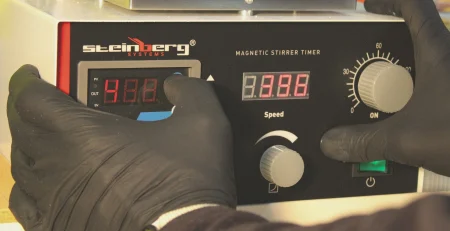
An external temperature probe can offer more useful feedback for temperature-sensitive work because it measures the liquid directly. Probe-compatible hot plate stirrers and digital controls can help you compare the selected temperature with the actual sample temperature, giving you a clearer basis for adjustments. When accuracy matters, we suggest positioning the probe carefully so it sits in the liquid without interfering with the stir bar or touching the vessel base.
Stirring speed deserves the same attention as heat. Faster stirring often improves heat distribution, particularly in liquids that would otherwise develop warmer and cooler layers. Still, the fastest setting is not always the best setting. Excessive speed can create a deep vortex, splash liquid, draw in air or make the sample harder to control.
Watch the liquid as it stirs. A smooth, stable circulation pattern is generally more useful than dramatic movement. If the stir bar jumps, rattles or loses its rotation, reduce the speed and check that the bar is suitable for the vessel and volume being used.
Prepare Your Hot Plate Magnetic Stirrer for Summer Workloads
November brings late-spring conditions and the approach of summer across Australia. Higher room temperatures can affect sample stability, reduce cooling time and change how long a hot plate magnetic stirrer takes to return to room temperature after use. Planning for these conditions helps keep busy work areas safer and more predictable.
Place the unit on a stable, clear bench, away from direct sunlight and materials that could be affected by heat. Crowded benches can make it difficult to work safely around a hot surface, while blocked ventilation openings may affect normal operation. Before a busy period, it is sensible to inspect the power lead, plug and surrounding work area for obvious concerns.
Schools, research facilities and testing laboratories can also use this time to review their heating and mixing routines. Useful seasonal preparation may include checking that suitable stir bars and glassware are available, confirming that temperature probes are ready for use, and revisiting safe operating procedures with staff or students. Clear expectations are especially helpful when several people share the same equipment.
Put Consistent Heat Control Into Practice
Reliable results come from paying attention to the actual sample temperature, selecting a suitable vessel, choosing a sensible stirring speed and allowing enough time for conditions to settle. Our range includes hot plate stirrers, temperature probes, laboratory glassware, stir bars and supporting consumables for laboratories and educational settings that need a practical heating and mixing setup.
Review the steps you use before, during and after heating, particularly when repeatability or temperature-sensitive samples are involved. A measured approach, with careful monitoring and steady adjustments, can help you maintain better control from one preparation to the next.
Choose Equipment That Supports Consistent Results
At LabChoice Australia, we can help you select a hot plate magnetic stirrer suited to your laboratory’s heating and mixing requirements. Our range supports practical workflows across a variety of sample types and preparation tasks. For product guidance or assistance choosing the right model, contact us.