23
Feb
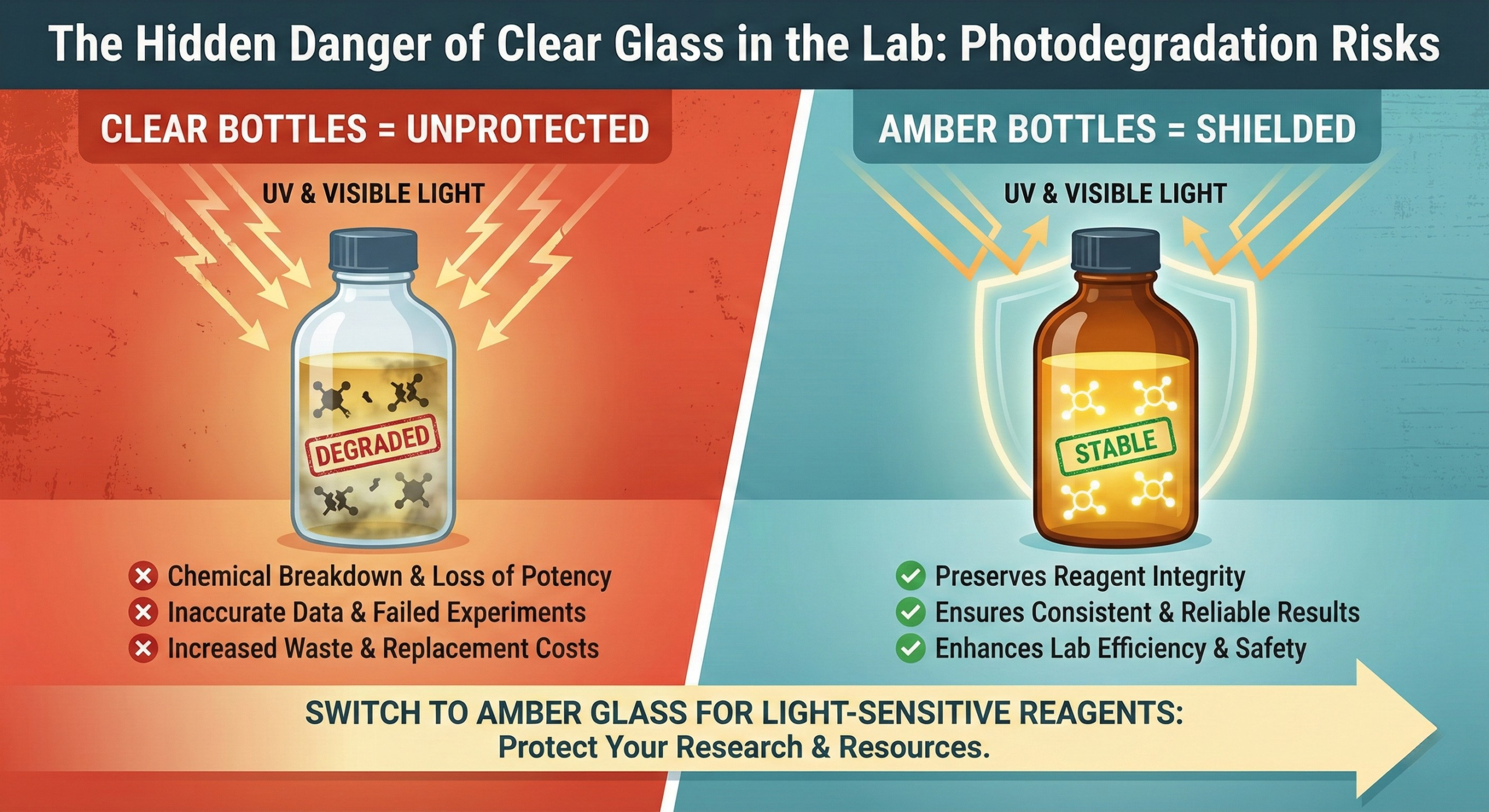
Why Labs Should Stop Using Clear Bottles for Light-Sensitive Reagents
Clear reagent bottles look tidy on a shelf, but they are a common failure point for light-sensitive chemicals....
Comments Off on Why Labs Should Stop Using Clear Bottles for Light-Sensitive Reagents
20
Feb
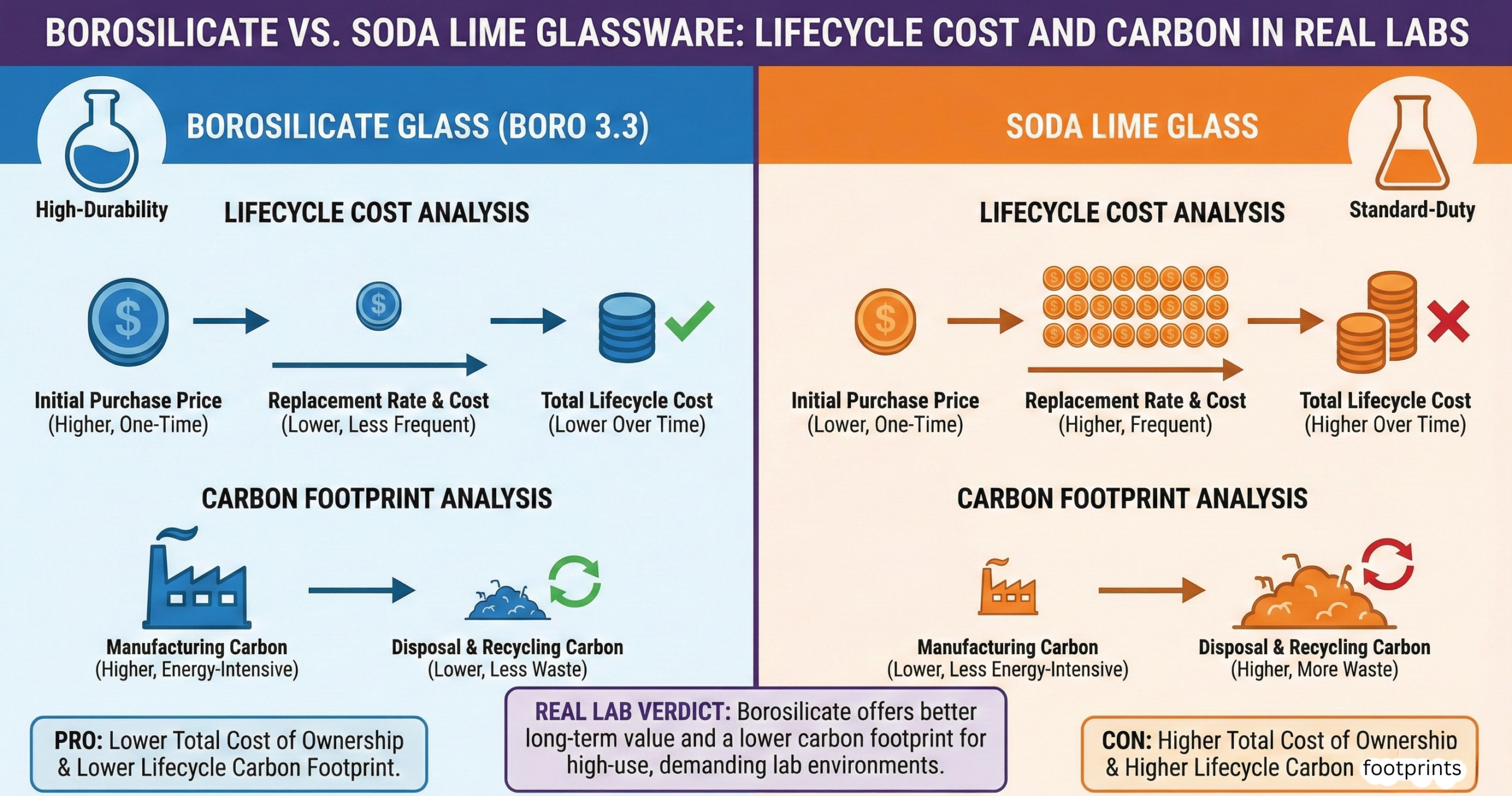
Borosilicate vs Soda Lime Glassware: Lifecycle Cost and Carbon in Real Labs
Choosing between borosilicate (often BORO 3.3) and soda lime glassware is not just a material preference. In real...
Comments Off on Borosilicate vs Soda Lime Glassware: Lifecycle Cost and Carbon in Real Labs
19
Feb
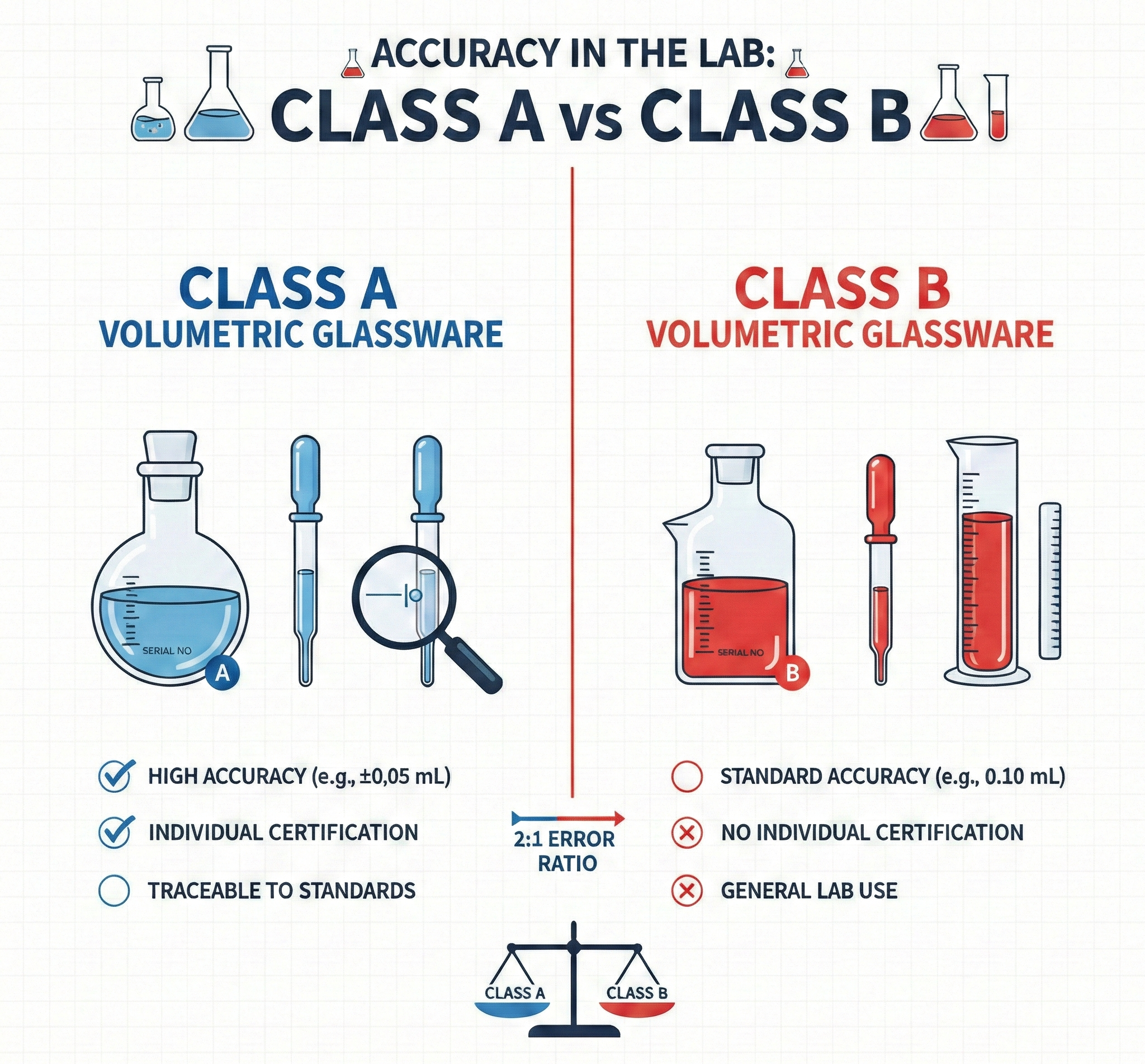
Class A vs Class B Volumetric Glassware
Volumetric glassware is manufactured to defined tolerances so you can measure and deliver volumes with predictable error. The...
Comments Off on Class A vs Class B Volumetric Glassware
19
Feb
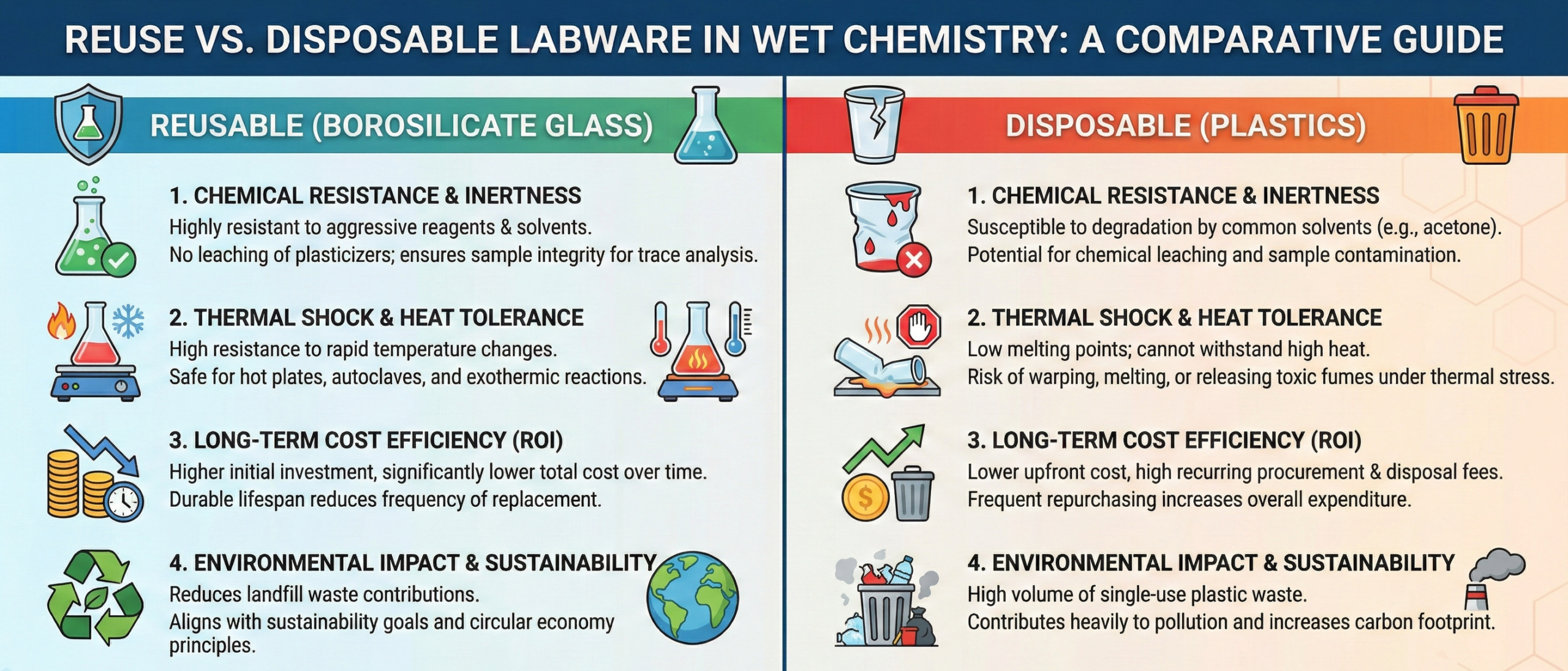
Reuse vs Disposable Labware in Wet Chemistry
Wet chemistry labs constantly trade off between reusability, contamination control, cost, safety, and waste. The “best” choice is...
Comments Off on Reuse vs Disposable Labware in Wet Chemistry
19
Feb
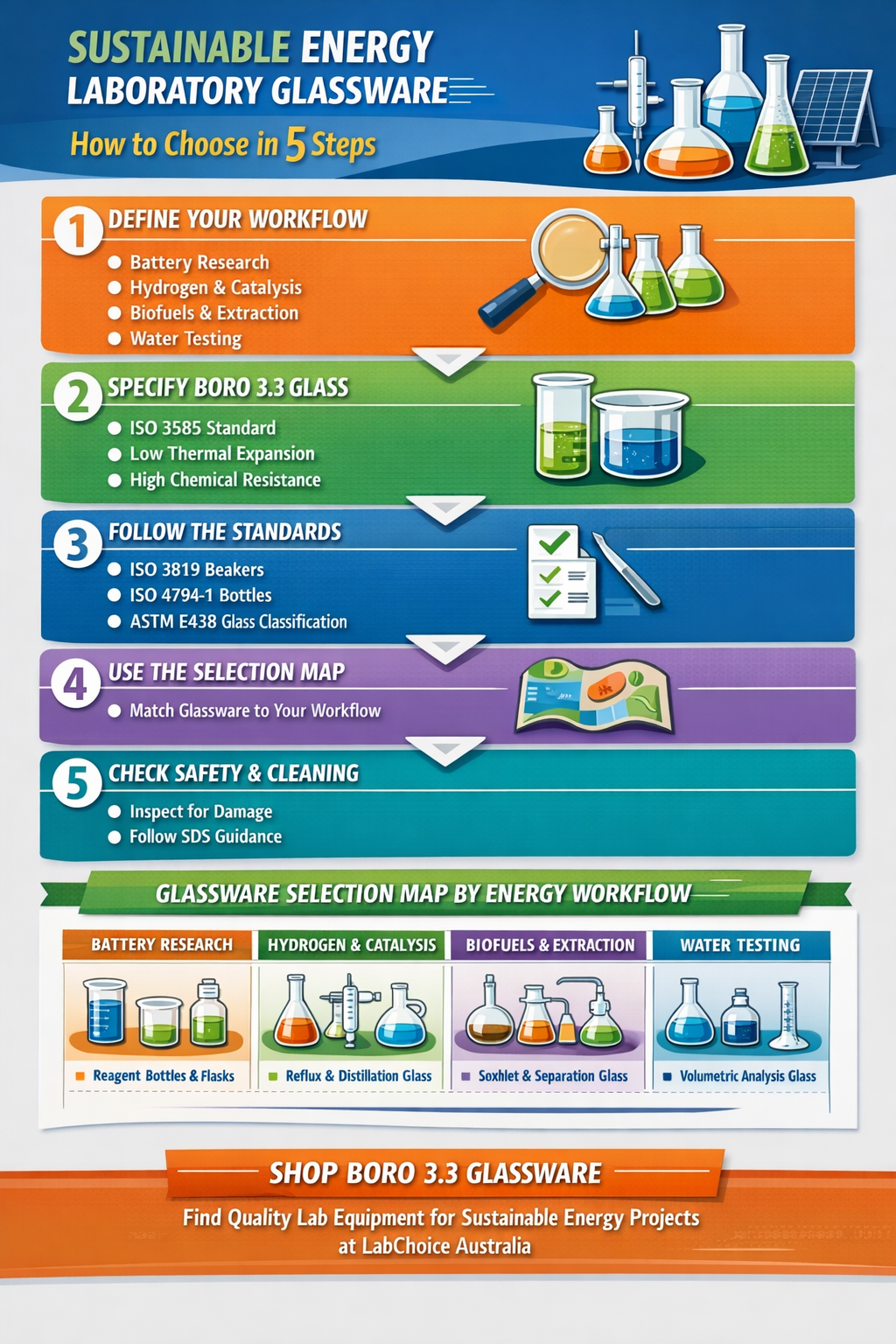
Sustainable Energy Laboratory Glassware: Full Buyer Guide for Australian Labs
Sustainable energy research labs push glassware harder than many “standard” chemistry workflows. Battery electrolytes, solar inks, hydrogen catalysts,...
Comments Off on Sustainable Energy Laboratory Glassware: Full Buyer Guide for Australian Labs
24
Sep
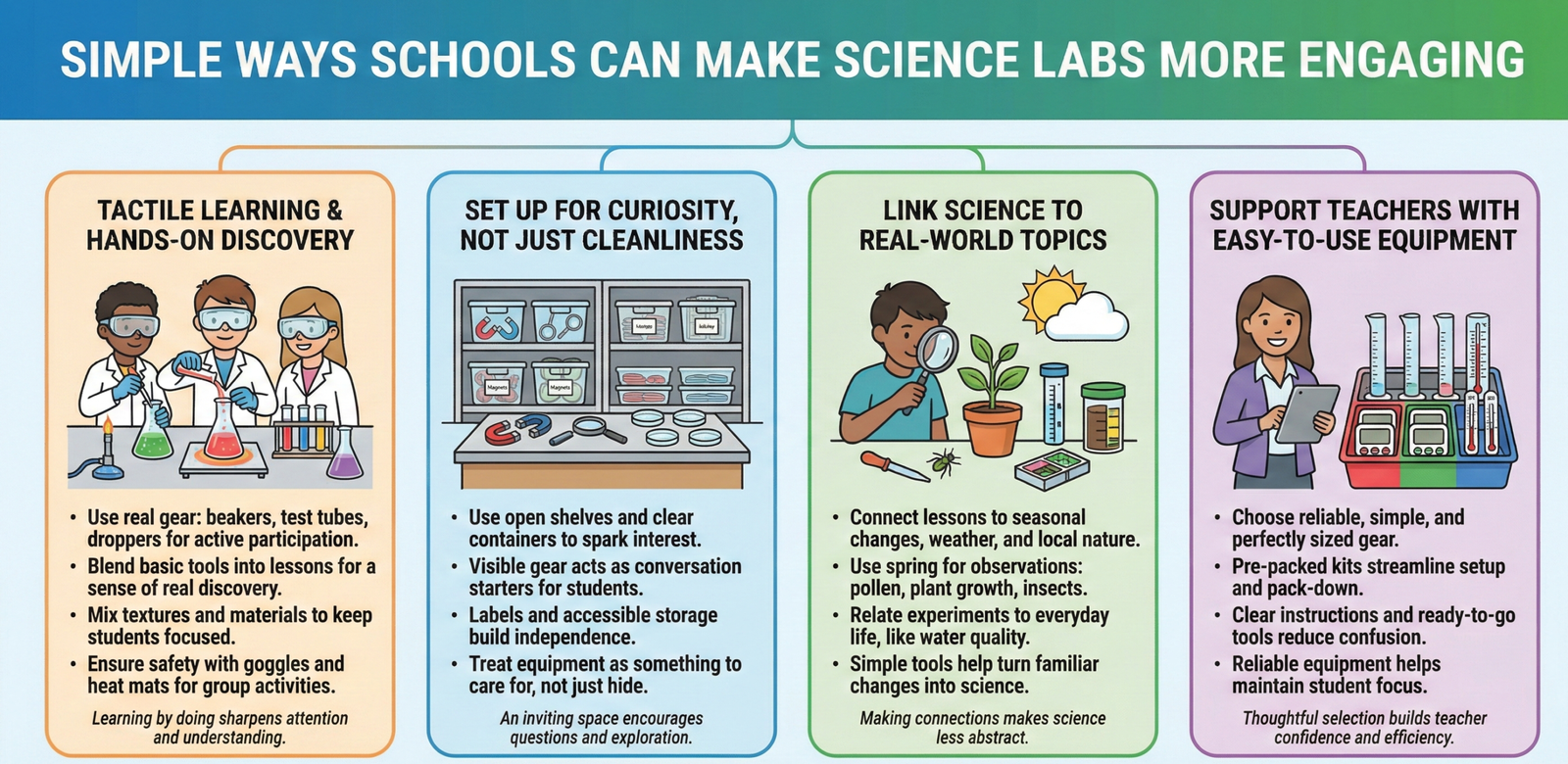
Simple Ways Schools Can Make Science Labs More Engaging
Science labs should be places where students feel free to ask questions, try new ideas and get their...
No Comments
Can PTFE Stopcocks Improve Burette Reliability in Titrations
Reliable liquid delivery is the heart of a good titration. Whether you are working with acid-base, redox or complexometric methods,...
Incubator Shakers After a Temperature Excursion: Restart Checks
A temperature excursion deserves more than a quick restart. When incubator shakers move outside their approved temperature range, cultures, media,...
Choosing a Laboratory Vacuum Pump After Filtration Delays
Slow filtration is more than a minor annoyance. When filtrate takes too long to pass through, batches stack up, sample...
The True Cost of Centrifuge Downtime in Busy Laboratories
A centrifuge stopping unexpectedly can affect far more than one piece of equipment. In a busy laboratory, it may hold...
Understanding Durable Plastic Joint Clips for Secure Glassware
Durable plastic joint clips help keep compatible glassware joints together when a setup is being handled, adjusted or exposed to...
Variable-Speed Tube Rotators for Consistent Sample Mixing
Controlled tube rotation helps you create even, repeatable sample mixing without relying on how quickly or gently each person handles...
How to Set up a Glass Desiccator for Chemistry Drying
A glass desiccator for chemistry helps keep dried samples dry while they cool, wait for weighing or sit in short-term...
Prevent Joint Seizure When Using Glass Adapters and Joints
A seized ground glass joint can stop a distillation, reflux, filtration or sample preparation task without warning. It can also...
How to Build Stable Laboratory Stands and Clamps in Australia
Build Safer Setups From the Bench Up Stable stands and clamps help us create safer laboratory workspaces, protect glassware and keep...
Why Digital Laboratory Water Baths Improve Method Consistency
A digital laboratory water bath gives you a clearer way to manage one of the most common sources of method...
In-House Vs Outsourced Testing: General Labware for Pharmaceutical QC
Choosing between in-house and outsourced pharmaceutical QC testing can shape far more than your daily workload. It affects batch release...