
5
Nov
How Centrifuge Rotor Choices Affect Sample Recovery
Sample recovery depends on more than choosing a high speed and pressing start. The rotor in your laboratory centrifuge machine changes how particles move, where pellets settle and how safely you can remove supernatants or fractions afterwards.
We recommend choosing the rotor early in method planning, especially when samples are limited or hard to replace. Rotor geometry, tube fit, cooling, braking and routine checks all affect whether you recover a clean result or lose material during handling.
Protect More of Every Sample From the Start
A centrifuge can separate the same sample in very different ways depending on the rotor inside it. The wrong setup may leave part of a pellet behind, disturb a density band or make a supernatant difficult to remove without pulling up the material you need.
Poor rotor selection can also create problems that are not obvious until later. Uneven sedimentation, carryover between fractions and inconsistent handling can make results harder to repeat across batches, staff members or sites.
When we help laboratories think through centrifugation equipment, we suggest starting with the recovery goal. Ask what needs to be collected after the run:
- A compact pellet for resuspension
- A clear supernatant for transfer or testing
- A clean density-gradient band
- Multiple liquid fractions collected in order
Australian laboratories preparing spring projects or planning ahead for pre-summer shutdowns can benefit from reviewing rotor suitability before ordering new tubes, adapters or equipment. A small mismatch at the start can become a larger sample recovery issue when workloads increase.
Rotor Geometry Shapes Pellets, Bands and Supernatants
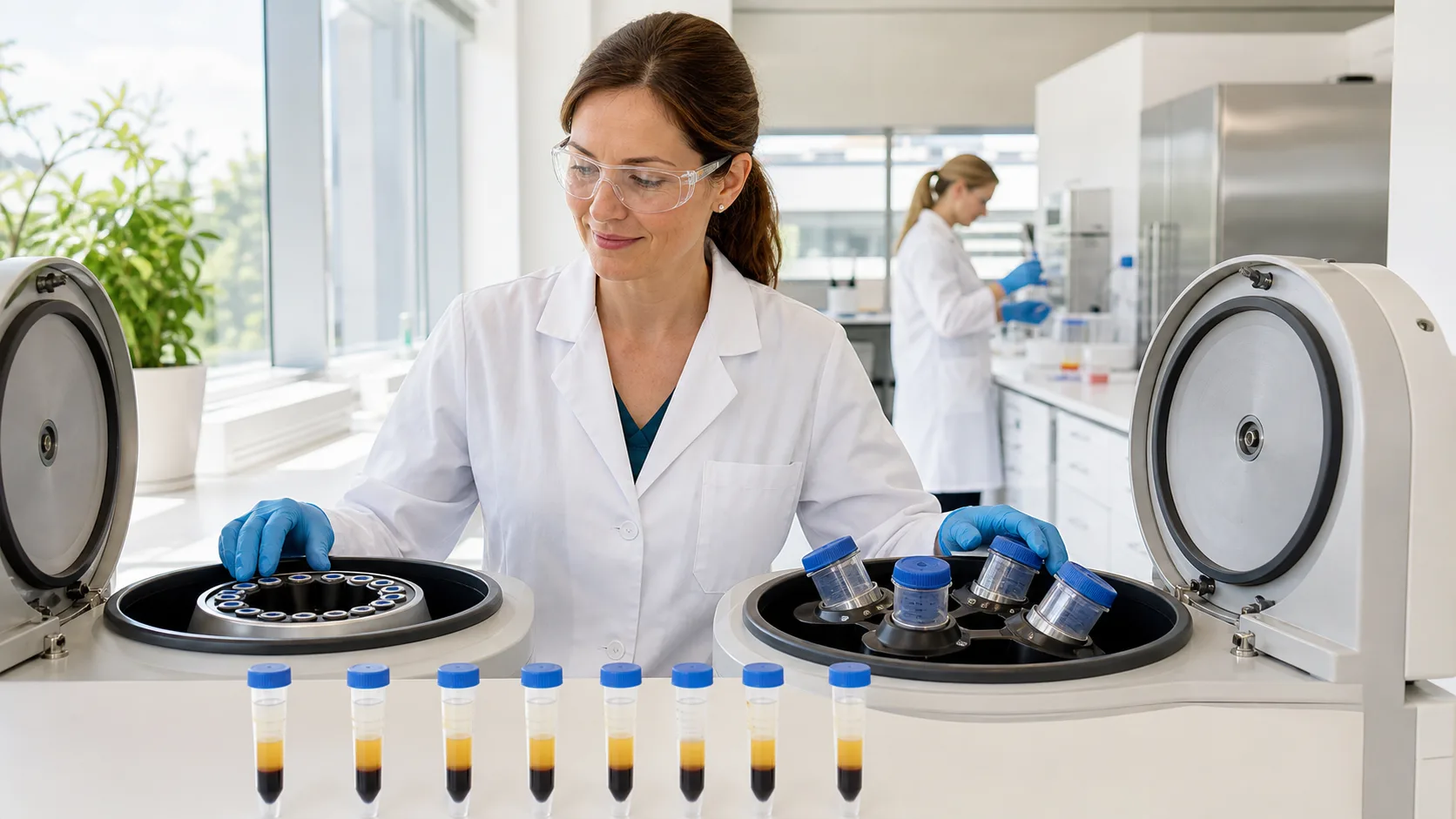
Fixed-angle rotors hold tubes at a set angle. During a run, particles travel a relatively short path and commonly collect along the side and lower end of the tube. This makes fixed-angle rotors a practical choice for rapid pelleting of cells, bacteria, precipitates and other particulate samples.
That angled pellet shape affects how you remove liquid. If you need to decant a supernatant, you need to know where the pellet sits so it is not accidentally disturbed. For pellets that will be resuspended, the tube angle and pellet location can also affect how easily material mixes back into solution.
Swinging-bucket rotors work differently. Their buckets move into a horizontal position while spinning, which helps create flatter layers within the tube. We often recommend considering this setup for density-gradient separations, blood fractionation and other processes where clear horizontal bands support more accurate collection.
Vertical and near-vertical rotors are generally used for high-speed density-gradient work. Their shorter sedimentation path can reduce run time, but careful loading and fraction collection matter. Delicate layers can still be lost if the tube is handled roughly after the rotor stops.
Your preferred recovery method should guide the choice. A pellet you will resuspend, a supernatant you will pour off and a band you will aspirate each call for different tube positions and handling steps.
Match a Laboratory Centrifuge Machine to Your Workflow
The best laboratory centrifuge machine is not simply the fastest model available. It needs to suit your sample type, required relative centrifugal force, batch size, tube format and the material you want to recover at the end of the run.
Rotor selection should happen alongside centrifuge selection, not as an afterthought. A fixed-angle microtube rotor may suit quick molecular biology or microbiology spins. Swinging-bucket designs can suit blood tubes, larger conical tubes and workflows that need well-defined liquid layers. Plate rotors can support higher-throughput assays, provided the plates are approved for the rotor and sealed correctly.
Batch size matters as much as speed. If your usual workload does not fit safely into a rotor, you may end up running extra batches. More transfers and repeated handling can increase the chance of spills, mix-ups or sample loss.
Before selecting equipment, we suggest confirming:
- Sample volume and usual tube size
- Required RCF and maximum speed
- Rotor capacity and approved adapters
- Cooling requirements for the method
- Aerosol containment and sealing needs
Always check the centrifuge manufacturer’s approved rotor, consumable and accessory specifications. Using a compatible setup supports balanced loading, safer operation and more consistent recovery.
Tube Fit and Rotor Compatibility Prevent Hidden Losses
Even a suitable rotor can perform poorly when tubes, buckets or adapters do not fit as intended. A tube that is not seated correctly may shift during spinning, causing imbalance, leaks, breakage or uneven sedimentation. Each of these issues can compromise the sample before recovery even begins.
Tube material matters too. Polypropylene, polycarbonate, glass and specialised centrifuge tubes have different chemical resistance, temperature limits and maximum RCF ratings. The tube needs to be suitable for the speed you plan to use, compatible with the rotor, and appropriate for the sample chemistry.
Approved adapters and cushions are useful when a laboratory works with mixed tube sizes. They help maintain correct tube position and balance. Improvised inserts may seem convenient, but they can raise the risk of tube damage and may not follow the centrifuge manufacturer’s safety guidance.
Containment deserves close attention when samples are volatile, infectious or hazardous. Properly fitted caps, sealed buckets and aerosol-tight lids can help protect operators while limiting loss from leaks or aerosols. This is especially relevant in microbiology, pathology, environmental testing and education settings.
Regular checks should include tube cavities, bucket surfaces, seals and lids. Cracks, corrosion, worn seals and damaged components should be addressed promptly to help protect both samples and equipment.
Speed, Braking and Temperature Protect Recovery
RPM tells you how quickly a rotor spins, but RCF tells you the force experienced by the sample. Because rotor radius changes the force produced at a given speed, we recommend setting up methods around the required RCF rather than RPM alone.
Acceleration and braking settings can be just as important as the target force. Fast acceleration may disrupt loosely layered material, while hard braking can remix gradients, resuspend a soft pellet or disturb separated phases. Methods involving density gradients or fragile pellets may call for reduced braking or a coast setting.
Temperature control also protects heat-sensitive samples such as proteins, enzymes, nucleic acids and some cell preparations. Friction can generate heat during longer or high-speed runs. Refrigerated rotors and pre-cooling procedures may be needed when method requirements call for temperature management.
For repeatable outcomes, record the full setup in your standard operating procedures:
- Rotor type and tube format
- RCF and run time
- Temperature setting
- Acceleration and deceleration settings
- Any required sealing or containment steps
Warmer Australian spring and summer conditions can make temperature monitoring more important during high-throughput work. Consistent settings help staff reproduce recovery outcomes across shifts and batches.
Choose a Rotor Setup That Supports Reliable Recovery
Clean recovery comes from considering the whole setup together: rotor geometry, tube compatibility, capacity, run settings and the type of material you need to collect. The fastest option is not always the right one when intact gradients, firm pellets or undisturbed supernatants are the priority.
Before busy end-of-year work or a summer shutdown, review your most common centrifugation methods. Check whether you have suitable rotor capacity, approved adapters, sealed buckets, correctly rated tubes and the refrigeration capability your samples require.
Choose Equipment That Supports Reliable Recovery
At LabChoice Australia, we can help you compare options and select a laboratory centrifuge machine suited to your sample volumes, workflows and recovery requirements. Our range supports laboratories seeking dependable performance across routine and specialised applications. For tailored product guidance, contact us to discuss your requirements.

RELATED
Posts

5
Nov
Selecting and Using a Mini Centrifuge for Sample Preparation
A mini centrifuge can make everyday sample preparation quicker and more consistent. We recommend it for routine, low-volume jobs such as bringing...
read more

22
Oct
The True Cost of Centrifuge Downtime in Busy Laboratories
A centrifuge stopping unexpectedly can affect far more than one piece of equipment. In a busy laboratory, it may hold up sample...
read more
1
Oct
Should You Upgrade to a Benchtop Centrifuge for Daily Samples
A centrifuge that cannot keep up with daily work can slow down an entire laboratory. Whether you are separating, clarifying, pelleting or...
read more
8
Sep
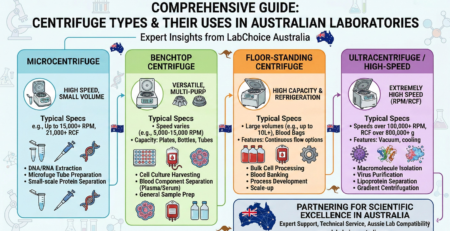
Centrifuge Types and Their Uses in Australian Laboratories: A Comprehensive Guide by LabChoice Australia
Centrifuges are indispensable in modern Australian laboratories, enabling efficient separation of biological samples, chemical mixtures, and industrial materials. Understanding the various types...
read more