Choosing Pipette Tips That Protect Low-Volume Results
Low-volume pipetting sounds simple, but anyone who has tried to pipette a few microlitres knows how easily things can go wrong. When we are working at or below 10 µL, small errors quickly turn into failed plates, strange standard curves and repeat work we do not have time for.
Across Australian education, research, food, pharma and industrial labs, tiny volumes are now part of daily life. End-of-financial-year method checks, winter assay development, qPCR runs, ELISAs and analytical standards all rely on accurate low-volume liquid handling. In all of this, laboratory-grade pipette tips often get less attention than pipettes or reagents, even though they can make or break our results.
When tips are well designed and made to tight tolerances, they help us get reproducible, audit-ready data. When they are not, we see drift, inconsistent wells and unexpected background noise. Our goal here is to share what actually matters when choosing tips, so your low-volume work is protected from the start.
Why Low-Volume Pipetting Is so Hard to Get Right
Once we move below about 20 µL, the physics starts to work against us. At these volumes, surface tension and viscosity dominate. A tiny change in angle or speed can leave droplets stuck inside the tip or clinging to the outside. Evaporation also becomes more of a problem, especially in heated blocks or dry winter air, and any small bubble in the air gap has a bigger impact on the final volume.
Common sources of error at low volume include:
- Pipettes that are out of calibration
- Poor fit between the pipette and the tip cone
- Wrong tip type for the sample, for example standard tips with viscous liquids
- Inconsistent technique, like skipping pre-wetting or changing plunge speed
In winter, many Australian labs see sample numbers climb. Respiratory pathogen panels ramp up, food labs push through seasonal stability studies, and industrial labs run more checks on stored products. When throughput jumps, small pipetting errors can spread across plates and batches very quickly, especially if low-volume techniques and tips are not under control.
Key Design Features of Accurate Laboratory-Grade Pipette Tips
Not all tips are built the same. For low-volume work, the design details matter a lot more than we might think at first glance.
Key geometry features include:
- A fine, consistent orifice that lets liquid leave cleanly
- Smooth internal surfaces that reduce sample sticking and carryover
- A shape that keeps droplets from hanging on the outside of the tip
Material and manufacturing also affect performance. High-quality tips are usually made from virgin polypropylene, with tight moulding tolerances so bore size and wall thickness are consistent from tip to tip. Some lines use low-retention formulations to help stubborn liquids slide out more completely, which is handy for concentrated buffers, enzymes or detergents.
Fit and sealing are just as important. A good laboratory-grade pipette tip forms a secure, leak-free seal with the pipette cone, without needing excessive force to mount or eject. Poor fit can cause:
- Slow air leaks, which show up as drifting volumes over a plate
- Tips loosening during multichannel work
- Inconsistent blow-out, especially at the lowest end of the volume range
When we are buying tips online, it helps to pay close attention to compatibility notes and fit lists so we match tips to the most common pipette brands in our lab.
Matching Pipette Tips to Your Application and Volume Range
Once we understand design basics, the next step is to match tip type to the work we do. Different assays and sample types call for different styles of tips, even at the same volume range.
Some common choices include:
- Filter vs non-filter tips
- Low-retention vs standard tips
- Extended length vs shorter universal tips
For example, qPCR, PCR and other molecular assays often benefit from filter tips to help protect against aerosol contamination. Low-retention tips can be helpful with enzymes or master mixes that like to cling to plastic. Microbiology and cell culture work may focus more on sterility and gentle handling, while analytical chemistry might care more about solvent resistance and clean backgrounds.
Chemical and temperature compatibility should also be on our checklist. Tips used with organic solvents, detergents or strong buffers need to hold their shape and not leach additives. Cold-room or refrigerated work can stress plastics, so we want tips that do not crack or warp when chilled.
Sterility and cleanliness levels depend on the workflow:
- Sterile tips for culture work and clinical samples
- DNase/RNase-free tips for RNA and sensitive DNA assays
- Pyrogen-free or PCR-grade tips for contamination-prone molecular testing
Through the cooler months, when molecular diagnostics and respiratory testing often pick up, setting clear rules around which tip types go with which workflows helps cut down on cross-contamination and repeat runs.
Practical Checks to Verify Low-Volume Performance
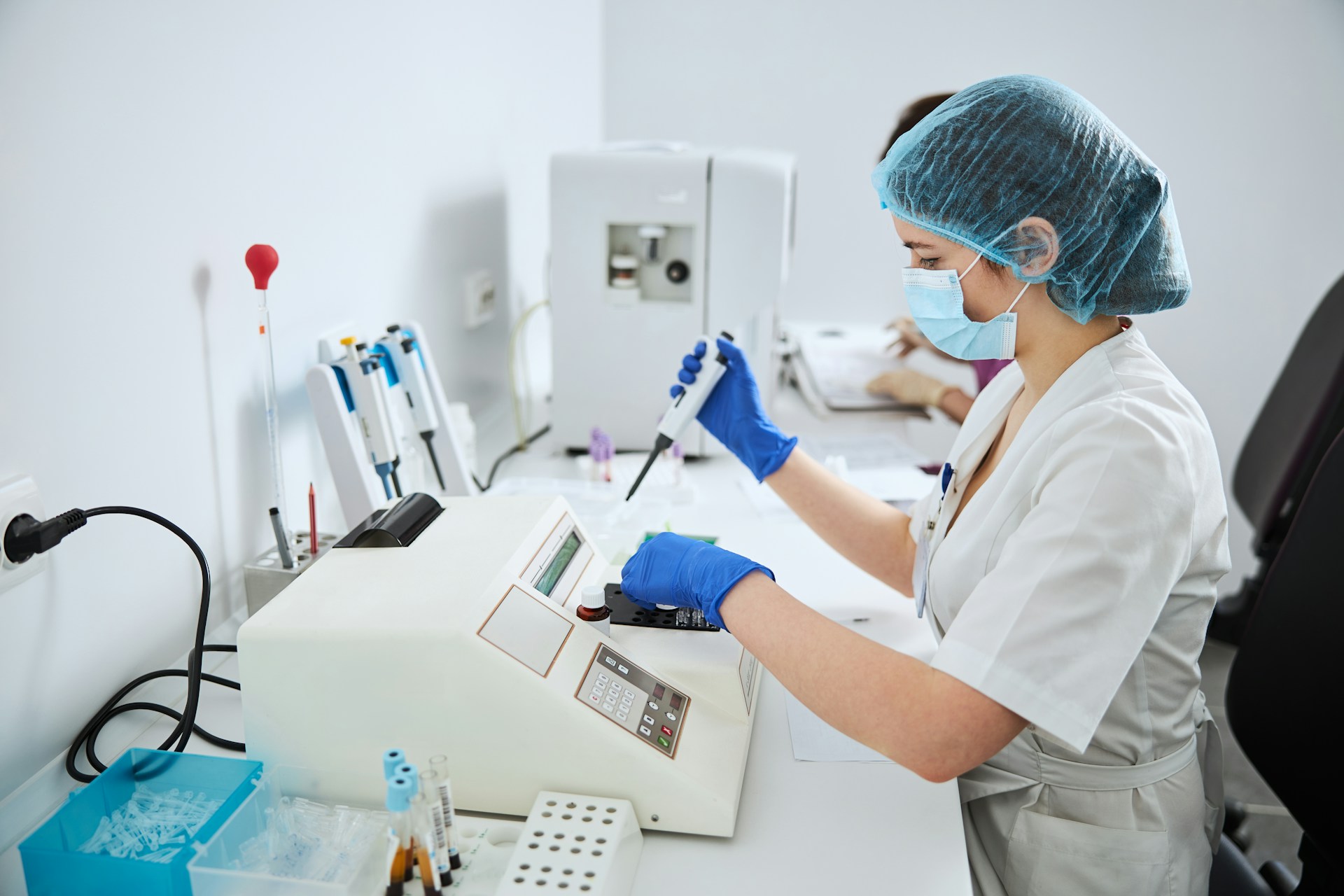
Even with good buying choices, it is smart to check how our tips behave in our own lab conditions. Simple gravimetric tests can be done in-house using a balance and distilled water.
A basic approach looks like this:
- Set the pipette to a typical low volume, such as 2 µL, 5 µL or 10 µL
- Weigh repeated dispenses of water at normal room temperature
- Compare the mass readings to the expected value from water density tables
- Look for both accuracy and repeatability across multiple dispenses
For common ranges like 0.5 to 10 µL or 2 to 20 µL, we should see results stay within the tolerance range recommended for our pipettes. Large swings or clear trends across repeated dispenses can point to trouble with either the pipette or the tips.
Observational checks also help. During normal work, keep an eye out for:
- Droplets left inside or hanging off the outside of tips
- Bubbles trapped in the tip or air gap
- Tips slowly working loose on multichannel heads
- Inconsistent blow-out or spots of liquid creeping up into the filter
Folding these checks into regular quality routines pays off. Pipette tip performance can be included in SOPs, training plans and equipment checks, especially before winter throughput jumps. That way problems with new batches or new tip lines are caught before they affect a full season of data.
Selecting Reliable Pipette Tips with LabChoice Australia
When we are choosing a supplier for laboratory-grade pipette tips, a few practical things can make life much easier. Local stock matters for Australian labs, especially when winter testing peaks and we cannot wait long for restocks. Clear specifications, including fit lists, sterility levels and manufacturing details, make it easier to standardise across teaching labs, research groups and production areas.
Batch traceability is also important for audits and quality systems. If something does go wrong, knowing exactly which batch was used lets us respond quickly without guessing.
At LabChoice Australia, we focus on laboratory-grade pipette tips that support low-volume accuracy across education, research, food, pharma and industrial labs. Our range is curated to cover common pipette brands and applications, and we pay close attention to fit, material quality and performance at the lower end of each volume range. With options that suit different workflows and budget limits, labs can standardise on tip lines that hold up when winter work ramps up, protect high-value reagents and help keep data clean, consistent and ready for review.
Streamline Your Lab Workflow With Reliable Consumables
If you are ready to improve accuracy and consistency in your workflows, explore our full range of laboratory-grade pipette tips designed for Australian research and diagnostic labs. At LabChoice Australia, we carefully source products to help your team maintain precision, reduce waste and stay compliant. If you would like tailored guidance on matching tips to your instruments or applications, you can contact us for local support and product advice.