1
Sep
Sustainable Labware: Glass vs Plastic for Eco-Friendly Science
Sustainability is becoming a top priority for laboratories across Australia. With growing awareness of plastic waste and carbon...
No Comments
29
Aug
Sustainable Labware: How Reusable Glassware Cuts Costs and Waste
Sustainability has become a major focus for laboratories across Australia, as schools, universities, and industry work to reduce...
No Comments
29
Aug
Glassware vs Plasticware: Which is Better for Modern Australian Labs?
Laboratories today have more choice than ever when it comes to consumables. Glassware has long been the standard...
No Comments
29
Aug
Class A vs Class B Measuring Cylinders – What’s the Difference?
Measuring cylinders are essential for volume measurement in any laboratory, but not all cylinders are created equal. The...
No Comments
29
Aug
The Essential Guide to Graduated Beakers – Accuracy, Uses, and Limitations
Graduated beakers are among the most common pieces of laboratory glassware, found in schools, universities, and...
No Comments
29
Aug
Beakers vs Flasks: Which Should You Use for Mixing and Heating?
Beakers and flasks are the backbone of laboratory glassware, yet many labs misuse them interchangeably....
No Comments
29
Aug
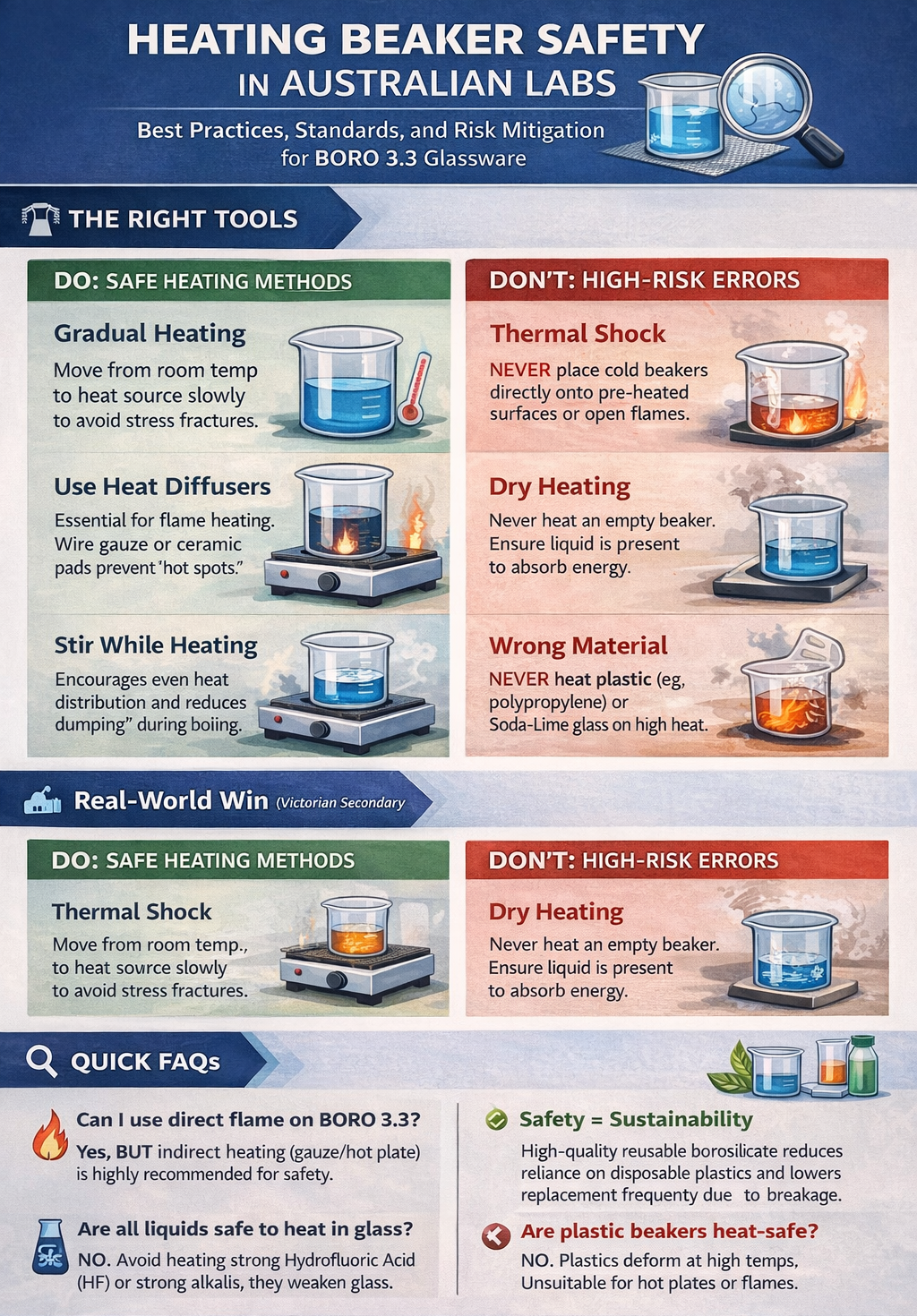
Beaker Safety in Heating Applications – Best Practices for Australian Labs
Heating is one of the most common laboratory procedures, but it’s also one of the most likely to...
No Comments
29
Aug
The Sustainability Benefits of Choosing Borosilicate Beakers in Australian Labs
Laboratories are under growing pressure to reduce waste and operate more sustainably. One simple yet effective switch is...
No Comments
29
Aug
Top 5 Mistakes When Using Laboratory Beakers (and How to Avoid Them)
Beakers are one of the most widely used pieces of lab glassware, but small mistakes in their handling...
No Comments
Petri Dishes: Uses, Types and Laboratory Best Practices
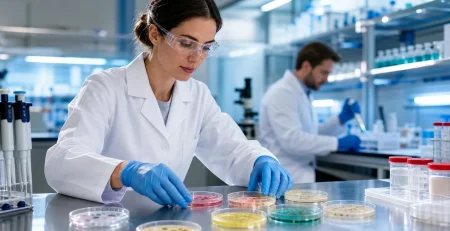
Petri dishes are a familiar part of laboratory work because they make small details easier to see. From growing microorganisms...
Selecting Magnetic Stirrers for Australian Pharma Cleanrooms
Selecting a magnetic stirrer for a pharma-grade cleanroom is about more than making liquid move. The unit needs to support...
Common Vortex Mixer Mistakes Undermining Lab Reproducibility
Small habits around a vortex mixer can quietly wreck good science. A tube held at a slightly different angle, a...
Situations Where Lab Plasticware Outperforms Glassware
Choosing between glassware and laboratory plasticware is not about picking a winner. Both have a clear place on the bench....
Lab Plasticware Selection for Australian Food and Beverage Testing
Good food and beverage testing starts long before the sample hits an instrument. It starts with the container you put...
Prepared Microscope Slides Guide for Laboratory Workflows
Reliable laboratory workflows begin with steady, repeatable preparation. Before samples move through measurement, mixing, heating or separation, small change...
Beyond Beakers: Lab Plasticware Choices for Modern Workflows
Smarter Plastic Choices for Faster, Safer Lab Work Lab plasticware is not just background clutter on the bench. The tubes, tips,...
Leveraging Lab Plasticware to Reduce Contamination Risk
Cut Contamination Risk Before It Starts Reducing contamination is one of the simplest ways to protect your results and your sanity...
Selecting Laboratory Plasticware for Food-Grade Sample Integrity
Protecting Food Samples with the Right Plasticware Good food testing starts long before a sample hits a balance or an incubator....
Choosing Lab Plasticware That Survives Real-World Workflows
Plasticware That Keeps up with Real-World Lab Demands Choosing laboratory plasticware is not just ticking boxes in a catalogue. In a...
Avoiding Repeat Testing Caused by Pipette Volume Mismatch
Sample volume mismatch can quietly lead to repeat testing, delayed reporting and added pressure on your team. A preparation step...