1 Sep

Reagent Bottles Explained: Narrow Neck vs Wide Neck, Amber vs Clear

Reagent bottles are essential in every laboratory for the storage and handling of liquids, powders, and solutions. Yet...
No Comments
1 Sep

Graduated Cylinders vs Volumetric Flasks: Which Gives More Accurate Measurements?

Accuracy is the cornerstone of reliable science. In Australian schools, universities, and quality control labs, two pieces of...
No Comments
1 Sep

Boiling Flasks: Flat Bottom vs Round Bottom โ€“ Which One Should You Choose?

Boiling flasks are a staple in laboratories, used for heating, mixing, and distillation. But the choice between flat...
No Comments
1 Sep

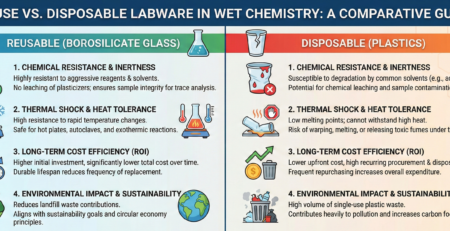
Sustainable Labware: Glass vs Plastic for Eco-Friendly Science

Sustainability is becoming a top priority for laboratories across Australia. With growing awareness of plastic waste and carbon...
No Comments
1 Sep

Autoclaving Laboratory Glassware: What Can and Canโ€™t Be Sterilised

Autoclaving remains the gold standard for sterilisation in laboratories across Australia. By applying pressurised steam at 121โ€“134 ยฐC,...
No Comments
1 Sep

Round Bottom vs Flat Bottom Flasks: Choosing the Right Boiling Flask

Separatory funnels are indispensable for liquidโ€“liquid extractions, a technique widely used in organic chemistry, pharmaceuticals, and educational labs....
No Comments
1 Sep

Desiccators in the Lab: Glass vs Plastic, Vacuum vs Plain

Moisture control is critical in laboratories, especially when working with hygroscopic materials, weighing samples, or storing sensitive reagents....
No Comments
1 Sep

Vacuum Filtration Setup: Buchner Flasks, Funnels, and Safety Tips

Vacuum filtration is a cornerstone technique in laboratories, used to separate solids from liquids efficiently. From chemistry classrooms...
No Comments
1 Sep

Amber Glass vs Clear Glass: When to Use Each in the Laboratory

Laboratory storage is more than convenience โ€” the choice between amber glass and clear glass can determine whether...
No Comments
1 Sep

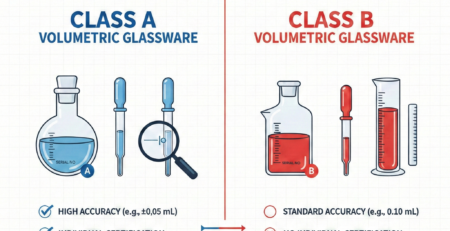
Class A vs Class B Glassware: Accuracy Standards Explained

Accuracy is the foundation of reliable laboratory results. Whether in schools, research institutes, or Australian quality control labs,...
No Comments

The Ultimate Guide to PCR Machines for Australian Laboratories: Expertise from LabChoice Australia

Polymerase Chain Reaction (PCR) machines have revolutionized molecular biology, diagnostics, and research by enabling rapid amplification of DNA and RNA....

Comparing Refrigerated vs. Non-Refrigerated Centrifuges: What Australian Laboratories Need to Know

Selecting between refrigerated and non-refrigerated centrifuges is a key decision that impacts sample integrity, operational efficiency, and budget considerations in...

Choosing the Right Centrifuge Rotor: A Comprehensive Comparison for Australian Laboratories

Choosing the correct rotor is criticalย for centrifuge efficiency, safety, andย the quality ofย sample separation. With variousย rotor types available, understandingย their advantagesย and applicationsย helps...

Troubleshooting Common Centrifuge Problems: Solutions for Australian Laboratories

Centrifuges are critical in laboratories, but like all complex equipment, they can experience operational issues that affect performance and sample...

Comparing Benchtop vs. Floor-Standing Centrifuges: Which Is Right for Your Australian Laboratory?

Choosing between a benchtop and a floor-standing centrifuge is a common decision faced by Australian laboratories aiming to optimize space,...

Centrifuge Types and Their Uses in Australian Laboratories: A Comprehensive Guide by LabChoice Australia

Centrifuges are indispensable in modern Australian laboratories, enabling efficient separation of biological samples, chemical mixtures, and industrial materials. Understanding the...

A Complete Guide to Microscope Illumination: Brightening the Path for Australian Laboratories

Proper illumination is fundamental to obtaining crisp, high-contrast images in microscopy. In Australian laboratories, selecting and adjusting the right lighting...

Understanding the Role of Numerical Aperture in Microscope Performance: A Guide for Australian Laboratories

Numerical Aperture (NA) is a vital optical specification that significantly impacts the resolution, brightness, and quality of images produced by...

Latest Trends in Microscopy Technology: What Australian Laboratories Need to Know in 2025

Microscopy technology is evolving rapidly, reshaping how Australian laboratories conduct research, teaching, and quality control. Staying abreast of the latest...

How to Choose the Right Microscope for Your Lab: The Definitive Guide by LabChoice Australia

Choosing the right microscope is one of the most important decisions for any Australian laboratory, whether for education, research, or...

Exploring the Different Types of Microscopes: A Detailed Guide for Australian Laboratories

Microscopes are essential tools in laboratories across Australia, powering discoveries in biology, materials science, education, and industry. Understanding the variety...

Sustainable Laboratory Glassware: Reducing Plastic Waste in Science

Sustainability is now a priority for laboratories worldwide, including in Australiaโ€™s schools, universities, and research facilities. With the rise of...