9 Sep

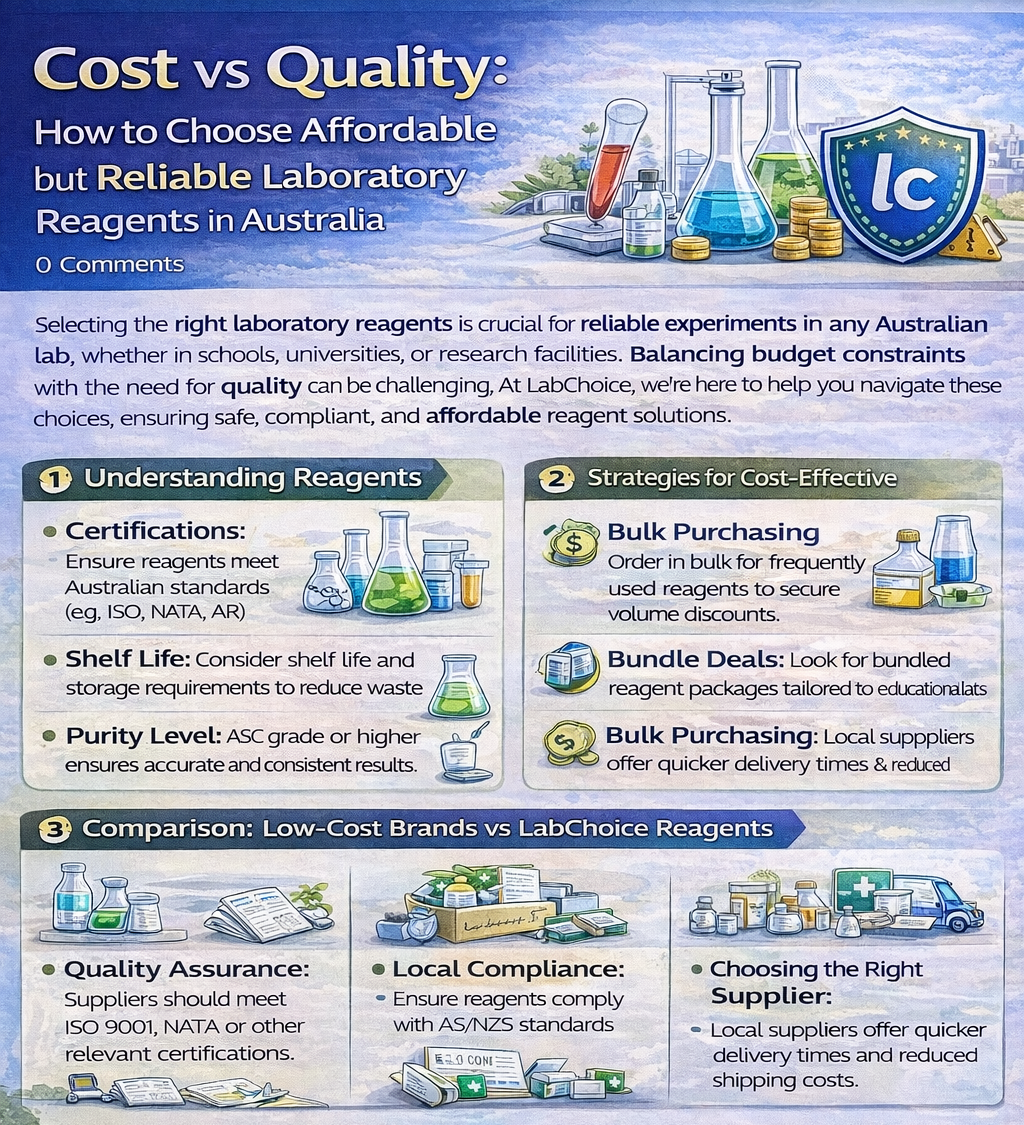
Cost vs Quality: How to Choose Affordable but Reliable Laboratory Reagents in Australia

Laboratory budgets are often stretched between equipment, consumables, and staff training. Reagents make up a significant portion of...
No Comments
9 Sep

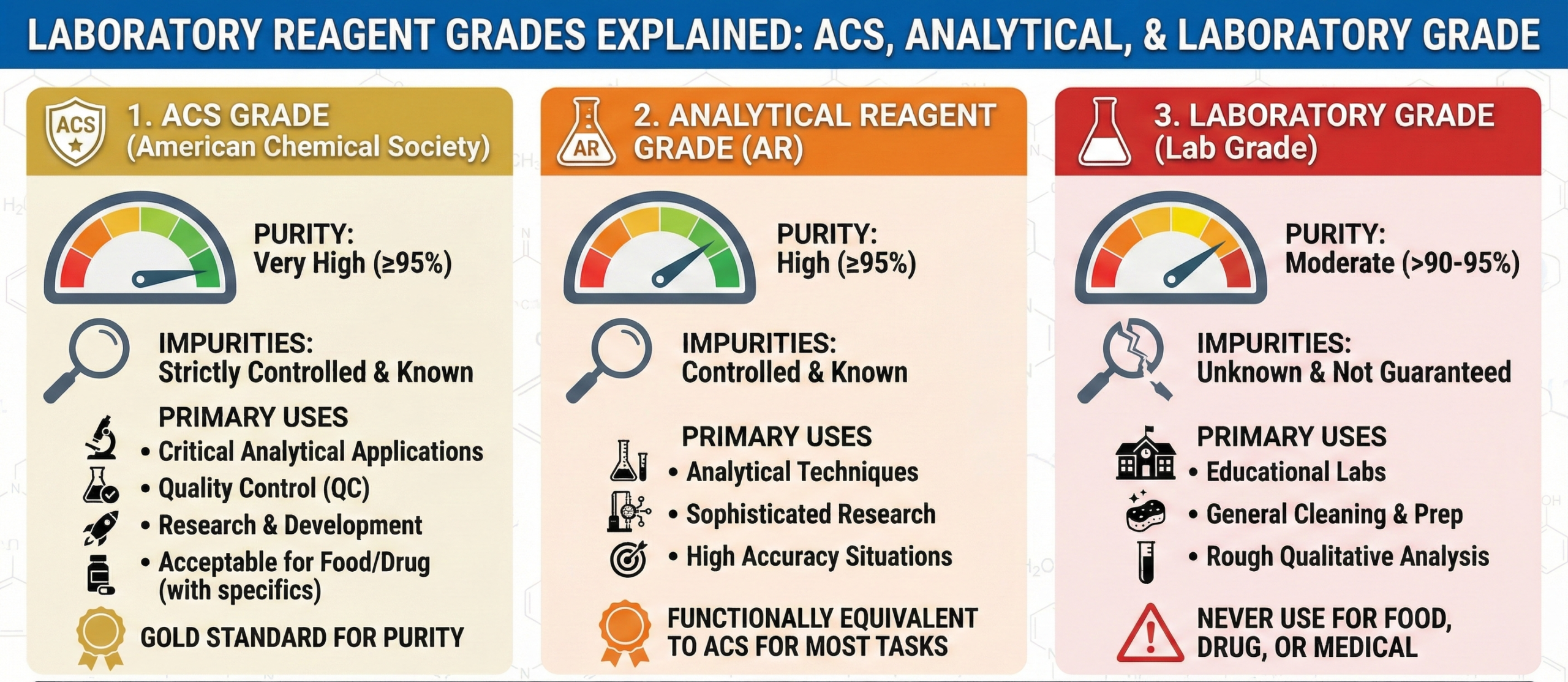
Laboratory Reagent Grades Explained: Analytical, ACS, and Laboratory Grade

The quality of laboratory reagents directly impacts the accuracy, reproducibility, and safety of scientific work. From high school...
No Comments
9 Sep

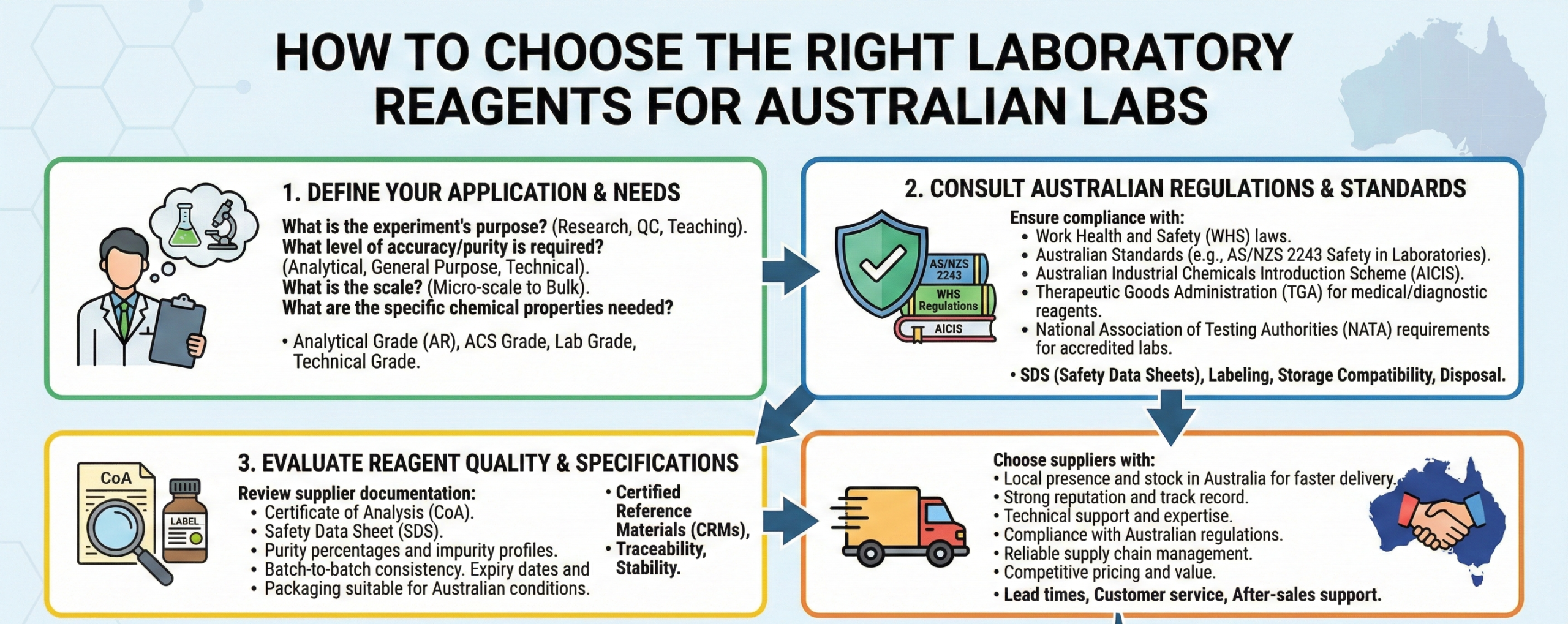
How to Choose the Right Laboratory Reagents for Australian Labs

Laboratory reagents are the foundation of every experiment. From simple teaching demonstrations to complex molecular diagnostics, the reliability...
No Comments
Can Commercial Laboratory Test Tubes Withstand Repeated Heating?

Can Commercial Laboratory Test Tubes Withstand Repeated Heating?

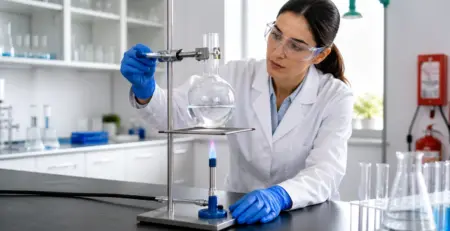
Commercial laboratory test tubes can withstand repeated heating when you choose the right material, heat them in a controlled way...
How to Choose the Right Magnetic Stirrer for Your Laboratory

How to Choose the Right Magnetic Stirrer for Your Laboratory

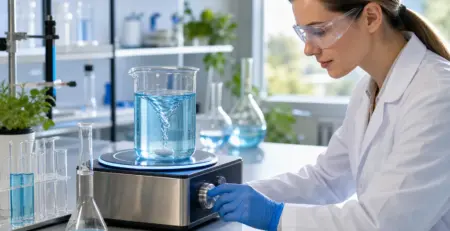
Choosing the right magnetic stirrer helps us create a safer, smoother and more repeatable lab workflow. The right unit does...
Why Research Teams Are Standardising Laboratory Plasticware

Why Research Teams Are Standardising Laboratory Plasticware

Consistent laboratory plasticware can make everyday research work calmer, clearer and easier to repeat. Pipette tips, tubes, plates, bottles and...
Reusable Plastic Lab Funnels for Segregated Chemical Workflows

Reusable Plastic Lab Funnels for Segregated Chemical Workflows

Reusable plastic lab funnels can help you prevent avoidable cross-contamination during liquid transfers, filtration and decanting. A simple funnel may...
How Centrifuge Rotor Choices Affect Sample Recovery

How Centrifuge Rotor Choices Affect Sample Recovery

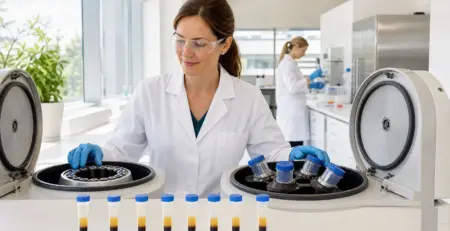
Sample recovery depends on more than choosing a high speed and pressing start. The rotor in your laboratory centrifuge machine...
Selecting and Using a Mini Centrifuge for Sample Preparation

Selecting and Using a Mini Centrifuge for Sample Preparation

A mini centrifuge can make everyday sample preparation quicker and more consistent. We recommend it for routine, low-volume jobs such...
Selecting Tube Rotators for Consistent Pharmaceutical QC Mixing

Selecting Tube Rotators for Consistent Pharmaceutical QC Mixing

Consistent mixing can make a real difference to pharmaceutical QC work. When samples, suspensions, reagents or aliquots must remain uniform...
Understanding Hot Plate Magnetic Stirrer Heat Control

Understanding Hot Plate Magnetic Stirrer Heat Control

Precise heat control sits at the heart of repeatable mixing, dissolution, digestion and sample preparation. When you can heat a...
Soxhlet Vs Ultrasonic Extraction: Choosing the Right Apparatus

Soxhlet Vs Ultrasonic Extraction: Choosing the Right Apparatus

Choosing an extraction method affects everything that comes next, from recovery and repeatability to processing time and solvent waste. When...
Is a Glass Distillation Apparatus Supplier Right for Your Lab?

Is a Glass Distillation Apparatus Supplier Right for Your Lab?

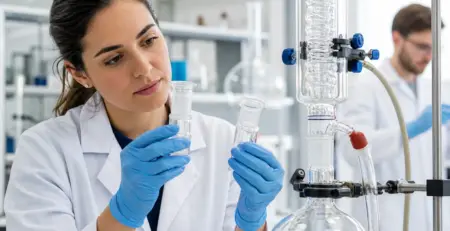
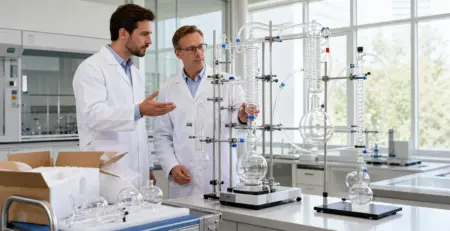
A distillation setup works best when its parts are designed to fit together safely and predictably. Rather than piecing together...
Understanding What a Vortex Mixer Supplier Should Specify

Understanding What a Vortex Mixer Supplier Should Specify

A vortex mixer can look like a simple piece of bench equipment, but the right choice depends on far more...
How Petrochemical Labs Specify Glassware for Thermal and Solvent Work

How Petrochemical Labs Specify Glassware for Thermal and Solvent Work

Petrochemical testing puts glassware under far more pressure than ordinary bench work. Heat, rapid cooling, volatile hydrocarbons and aggressive solvents...