1 Sep

Filter Paper Selection Guide: Grades, Pore Sizes, and Best Practices

Filtration is one of the most common techniques in laboratories, from chemistry and microbiology to food testing and...
No Comments
1 Sep

Storage Solutions in the Lab: Why Polypropylene Containers Outperform HDPE in Some Applications

Laboratories depend on reliable storage containers to protect chemicals, samples, and reagents. Two common plastics dominate lab storage...
No Comments
1 Sep

Burettes with Glass Stopcock vs PTFE Stopcock: Choosing for Accuracy and Maintenance

Burettes are vital in titration, one of the most precise techniques in analytical chemistry. The stopcock — either...
No Comments
1 Sep

Dropping Funnels vs Pressure Equalising Funnels: When to Use Each

In organic chemistry and distillation, controlled reagent addition is critical for safety and accuracy. Two types of glass...
No Comments
1 Sep

Reagent Bottles Explained: Narrow Neck vs Wide Neck, Amber vs Clear

Reagent bottles are essential in every laboratory for the storage and handling of liquids, powders, and solutions. Yet...
No Comments
1 Sep

Graduated Cylinders vs Volumetric Flasks: Which Gives More Accurate Measurements?

Accuracy is the cornerstone of reliable science. In Australian schools, universities, and quality control labs, two pieces of...
No Comments
1 Sep

Boiling Flasks: Flat Bottom vs Round Bottom – Which One Should You Choose?

Boiling flasks are a staple in laboratories, used for heating, mixing, and distillation. But the choice between flat...
No Comments
1 Sep

Sustainable Labware: Glass vs Plastic for Eco-Friendly Science

Sustainability is becoming a top priority for laboratories across Australia. With growing awareness of plastic waste and carbon...
No Comments
1 Sep

Autoclaving Laboratory Glassware: What Can and Can’t Be Sterilised

Autoclaving remains the gold standard for sterilisation in laboratories across Australia. By applying pressurised steam at 121–134 °C,...
No Comments
1 Sep

Round Bottom vs Flat Bottom Flasks: Choosing the Right Boiling Flask

Separatory funnels are indispensable for liquid–liquid extractions, a technique widely used in organic chemistry, pharmaceuticals, and educational labs....
No Comments

Pipette Accuracy in the Lab: Pumps, Fillers, and Calibration Best Practices

Pipettes are one of the most widely used tools in laboratories, and their accuracy directly impacts the reliability of results....

Amber vs Clear Reagent Bottles: Safe Storage for Sensitive Chemicals

Reagent bottles are essential for storing and transporting chemicals safely in the laboratory. The choice between amber and clear bottles...

Desiccators Explained: How to Keep Samples Moisture-Free in the Lab

Desiccators are essential in laboratories for protecting samples, reagents, and sensitive materials from moisture. Whether used in schools,...

Laboratory Equipment Maintenance: Best Practices for Reliable Results

Laboratory equipment is a major investment, and its performance directly impacts the accuracy of scientific results. Whether in education,...

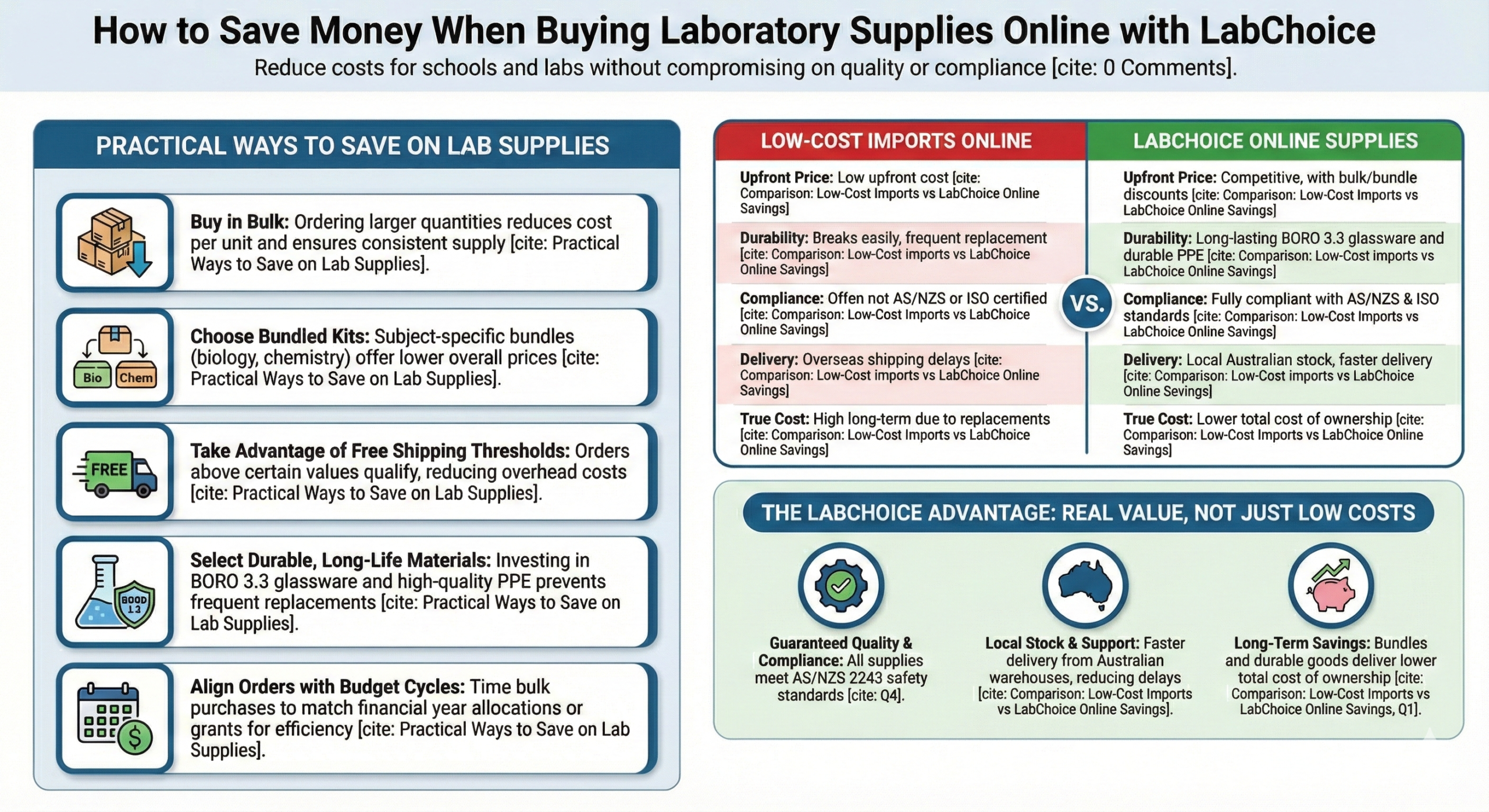
Lab Supply Procurement in Australia: How to Optimise Costs Without Compromising Quality

Running a laboratory means balancing accuracy, compliance, and costs. One area that often challenges lab managers is procurement — ensuring...

Volumetric Flasks in Analytical Chemistry: Why Precision Matters

Volumetric flasks are the foundation of accurate solution preparation in analytical chemistry. Unlike beakers or measuring cylinders,...

Burette Care and Calibration: Extending Accuracy and Glassware Life

Burettes are among the most precise pieces of laboratory glassware, but their accuracy depends on proper care and regular...

How to Choose the Right Burette for Titration: Class, Capacity, and Material

Burettes are precision instruments, and choosing the right one can make all the difference in titration accuracy. For Australian...

Burettes with PTFE vs Glass Stopcocks: Which is Right for Your Lab

The stopcock is the heart of a burette, controlling the precise release of liquid during titration. Choosing between PTFE and...

Burettes in Titration: Why Class A Accuracy Matters

Burettes are central to titration work, where even the smallest deviation in volume can change the outcome of an...

Beakers in Industry vs Education: Different Roles, Same Standards

Beakers are one of the most universal pieces of laboratory glassware, used everywhere from high school classrooms to...

Common Mistakes When Using Beakers and How to Avoid Them

Beakers may seem simple, but improper use can cause inaccurate results, glass breakage, or even safety hazards. For Australian...