1 Sep

Glass vs Plastic Pipettes: Which Supports Sustainable Laboratory Practices?

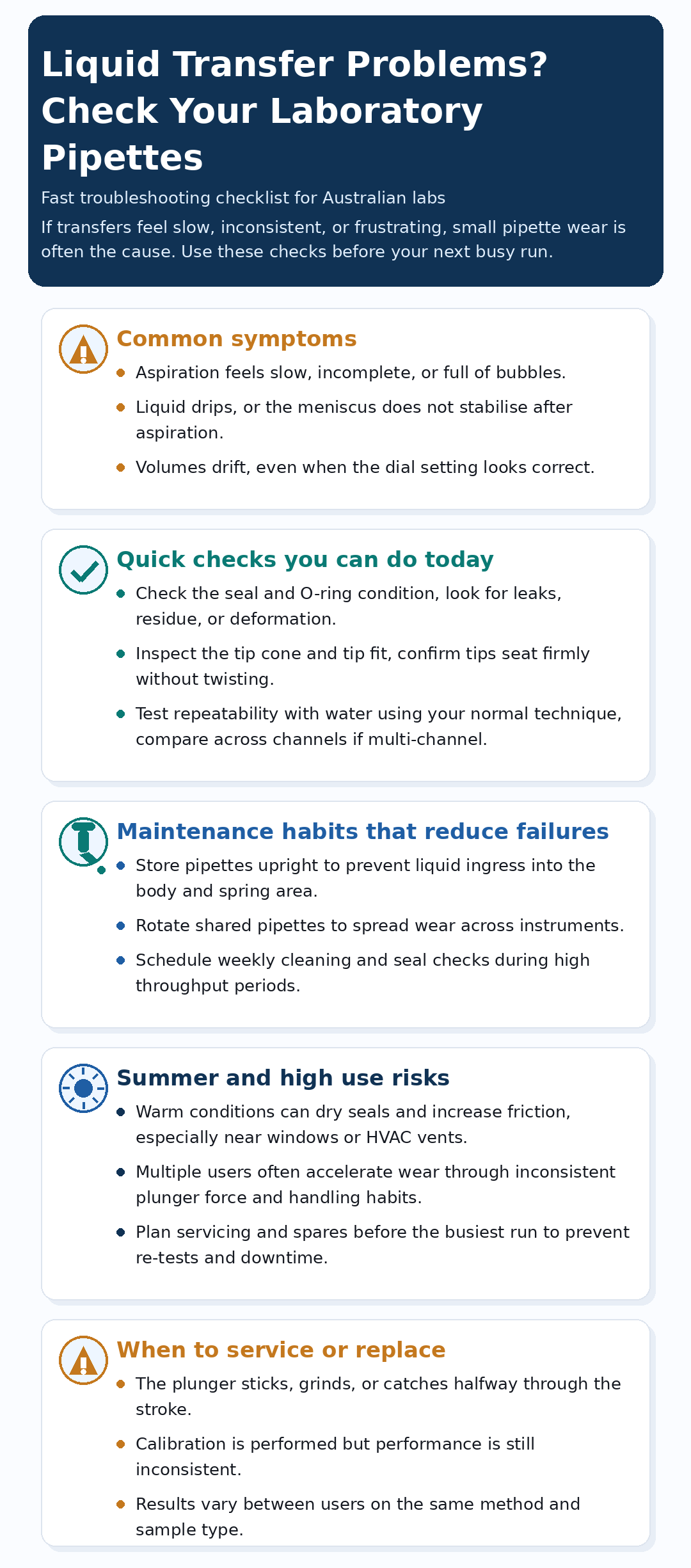
Pipettes are one of the most widely used tools in laboratories, from classrooms to advanced...
No Comments
1 Sep

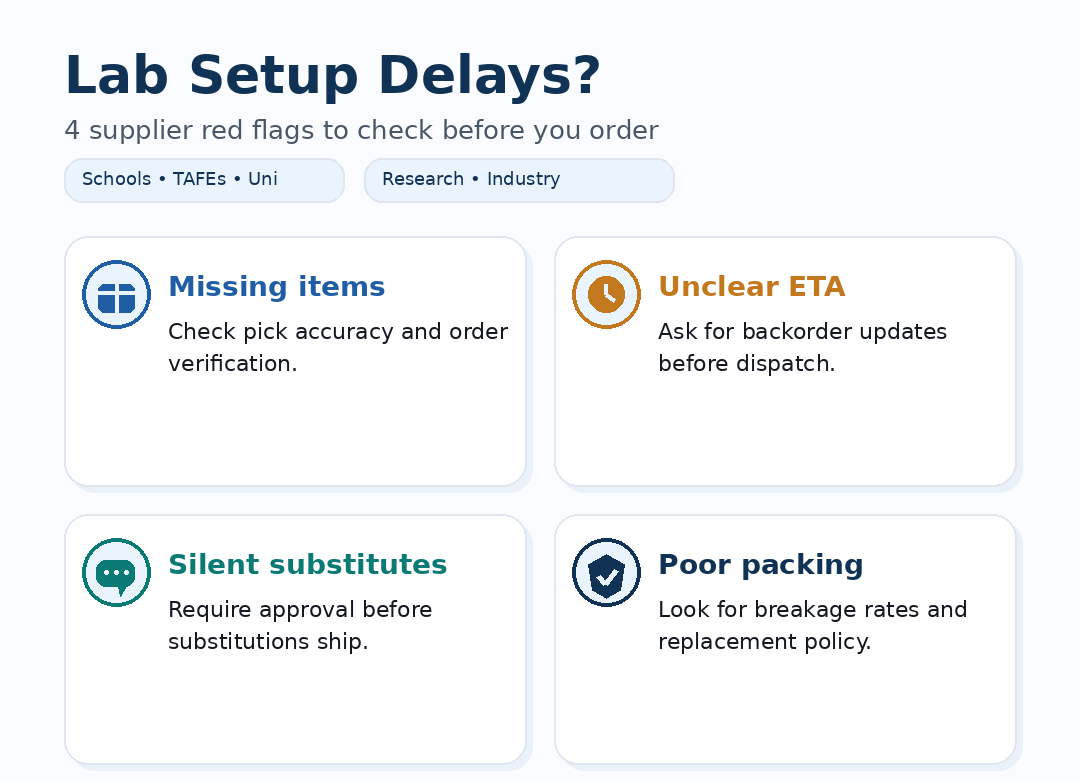
Green Procurement in Science: Choosing Sustainable Labware Suppliers

Procurement is more than just purchasing — it shapes the environmental footprint of laboratories. From glassware to consumables,...
No Comments
1 Sep

Laboratory Energy Efficiency: How Green Labs Reduce Carbon Footprints

Laboratories are among the most energy-intensive facilities in the world, consuming 3–5 times more energy per square metre...
No Comments
1 Sep

Eco-Friendly Sterilisation: Autoclaving vs Chemical Disinfection in Green Labs

Sterilisation is essential in laboratories, ensuring that equipment, media, and consumables remain free of microorganisms. But how labs...
No Comments
1 Sep

How Australian Laboratories Can Cut Plastic Waste by 50% with BORO 3.3 Glassware

Plastic waste in laboratories is a growing environmental challenge. Research has shown that labs generate up to 10...
No Comments
1 Sep

Volumetric Flask Accuracy: Why Class A Matters in Standard Solution Preparation

When precision matters, few pieces of glassware are as important as the volumetric flask. Designed for preparing exact...
No Comments
1 Sep

Laboratory Safety Glassware: Why BORO 3.3 is Essential Over Soda-Lime

Not all laboratory glassware is created equal. While soda-lime glass is common in household and industrial products, it...
No Comments
1 Sep

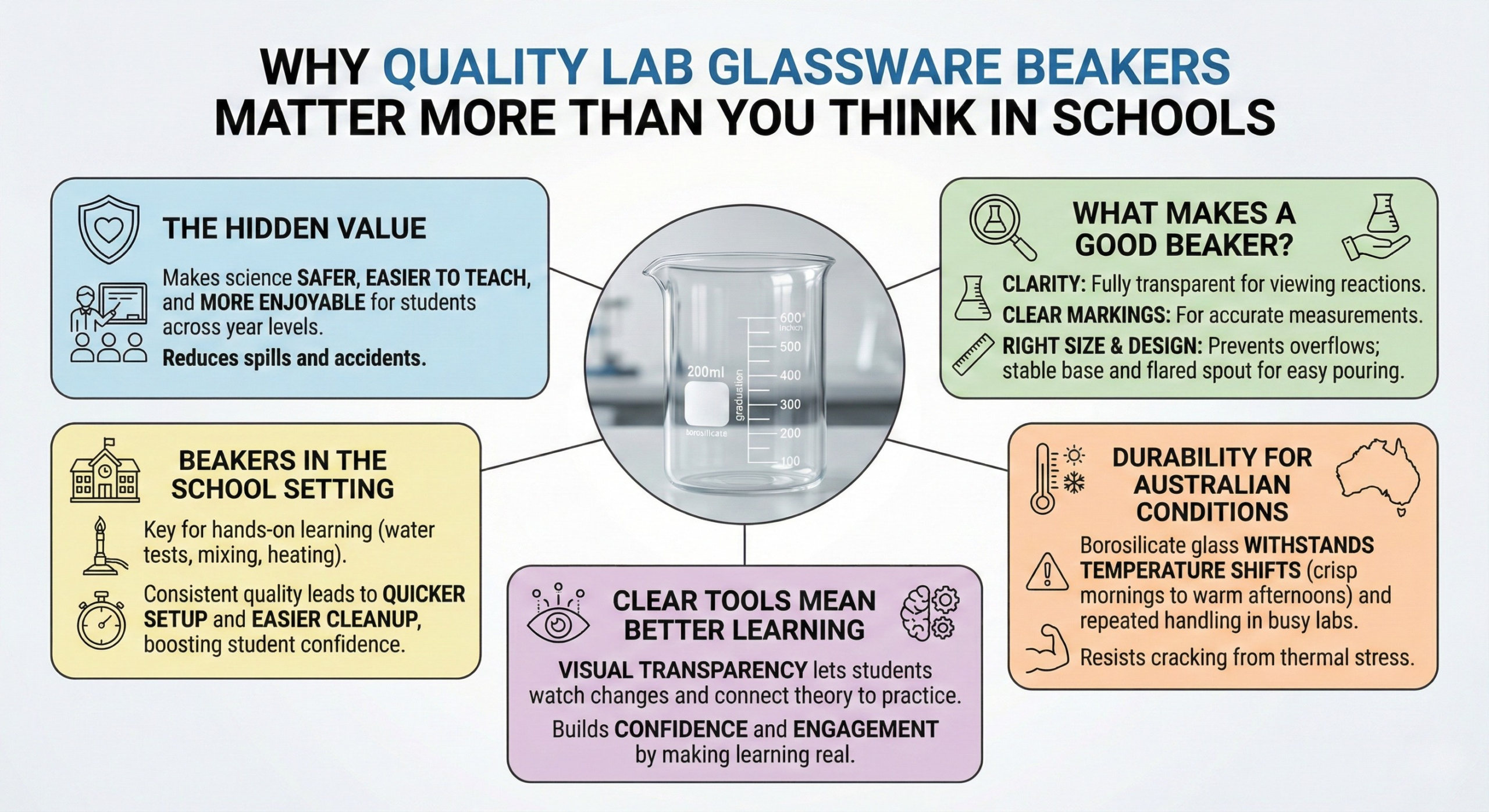
Beaker Sets for Schools: What Australian Science Teachers Should Know

Beakers are one of the first pieces of glassware students encounter in science education. They are used...
No Comments
1 Sep

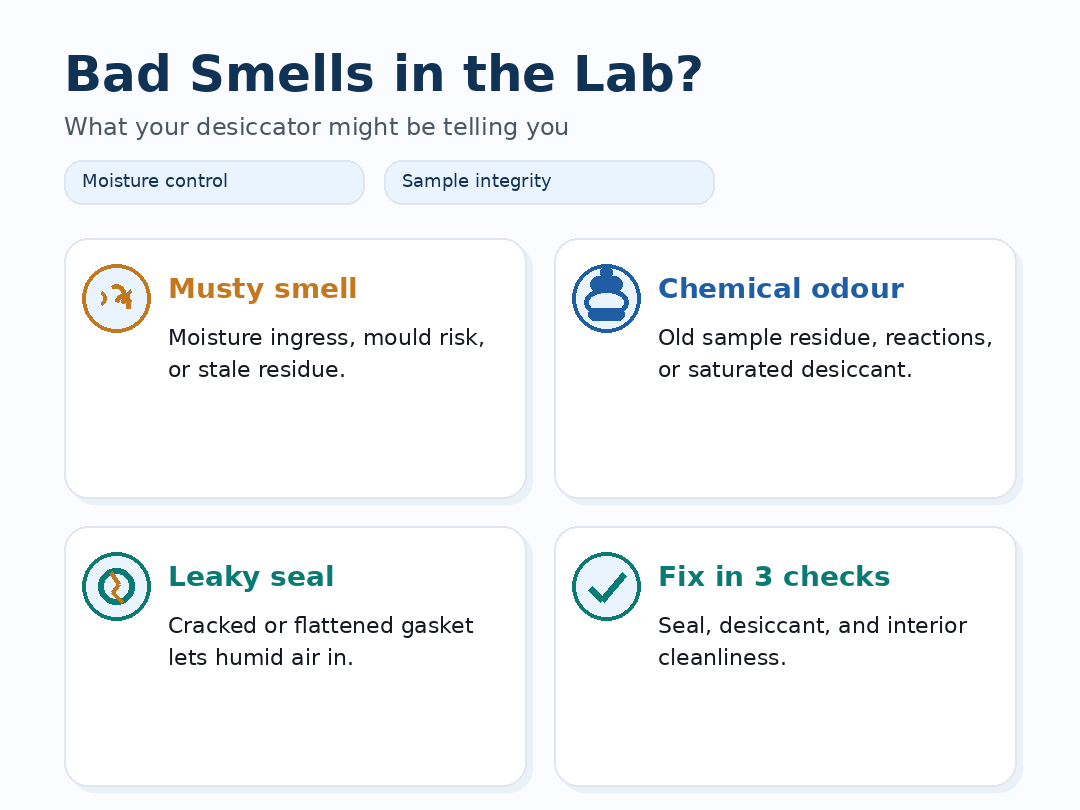
Desiccator Maintenance: How to Extend the Life of Glass and Polypropylene Models

Desiccators are vital for protecting hygroscopic chemicals, dried samples, and calibration weights from atmospheric moisture. Available in both...
No Comments
1 Sep

Conical Flasks (Erlenmeyer): Why They’re Still the Most Versatile Glassware in Science

Few glassware items are as versatile as the conical flask, also known as the Erlenmeyer flask. Its tapered...
No Comments

Bunsen Burner vs Spirit Lamp: Which Heating Tool Is Safer for Your Lab?

Heating equipment is central to laboratory work, from sterilising instruments to conducting flame tests and chemical reactions. Two of the...

Essential Oil Extraction in the Lab: Choosing the Right Distillation Apparatus

Essential oils are valuable natural products used in pharmaceuticals, cosmetics, and food industries. Extracting them requires precision, as factors such...

Pipette vs Burette vs Volumetric Flask: Which Is Most Accurate for the Lab?

Accurate measurement is at the heart of every experiment. Whether preparing standard solutions, performing titrations, or running quality control assays,...

Autoclaving Laboratory Glassware and Plasticware: Best Practices for Sterility and Safety

Sterilisation is one of the most critical processes in laboratories, ensuring that equipment and consumables are free from microorganisms before...

Distillation Glassware: Essential Setups for Education, Research, and Industry

Distillation is one of the oldest and most widely used laboratory techniques, applied in chemistry, pharmaceuticals, food science, and teaching....

Erlenmeyer Flasks in Education and Research: The Most Versatile Lab Tool

The Erlenmeyer flask, also known as the conical flask, is one of the most widely used pieces of laboratory glassware....

Round Bottom vs Flat Bottom Flasks: Which to Choose for Heating and Distillation

Boiling flasks are essential in laboratories for heating, mixing, and distillation. Available in both round bottom and flat bottom designs,...

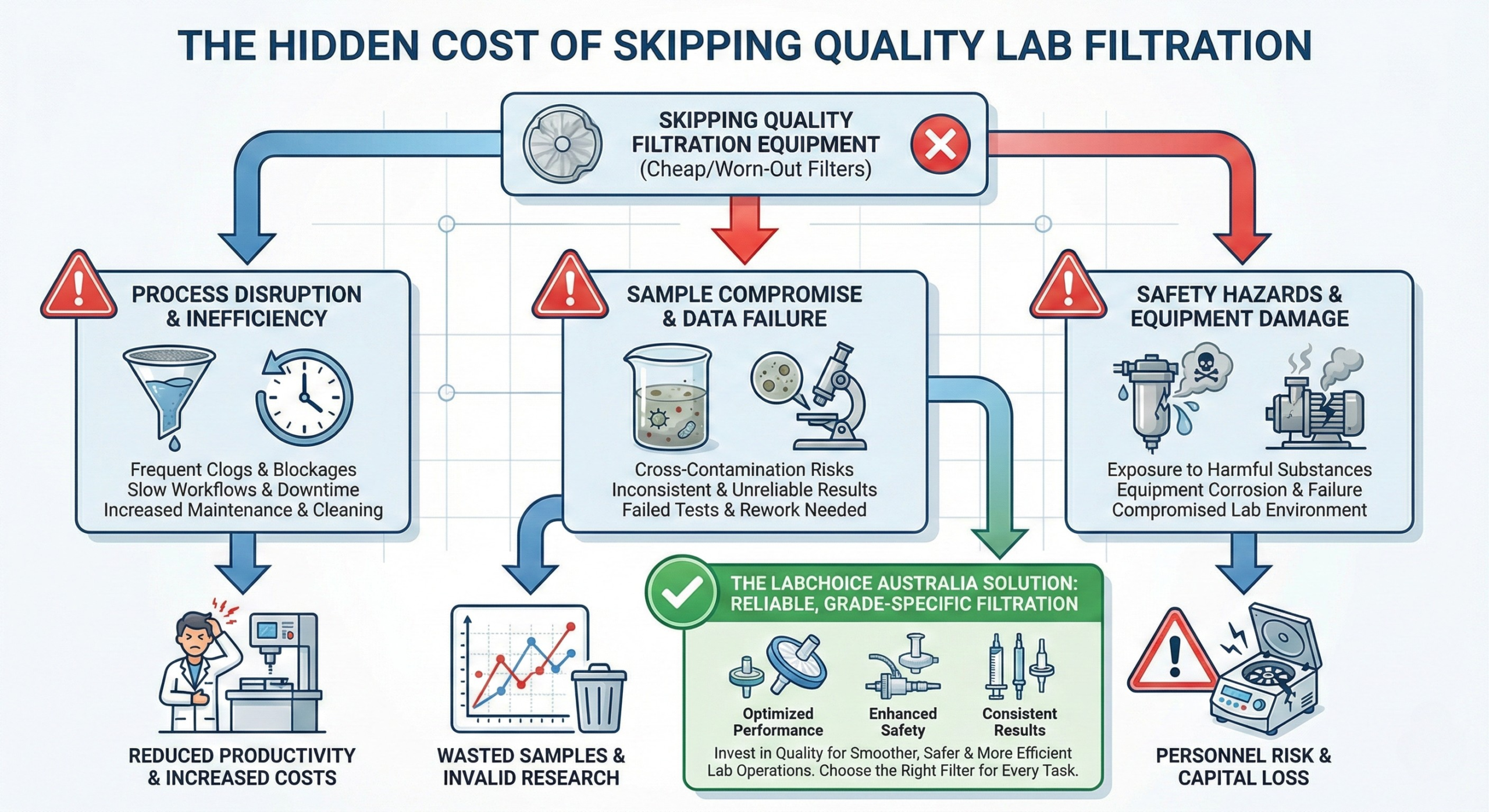
Vacuum Filtration in the Lab: How Büchner Flasks Improve Efficiency

Filtration is one of the most common techniques in laboratories, used for separating solids from liquids, purifying compounds, and preparing...

Separatory Funnels Explained: Applications, Safety, and Choosing the Right Design

Separatory funnels are indispensable in chemistry and biology labs, used for separating immiscible liquids, solvent extractions, and purification processes. Their...

Sustainable Labware: How Reusable Glassware Cuts Costs and Waste

Sustainability has become a major focus for laboratories across Australia, as schools, universities, and industry work to reduce waste and...

Bunsen Burners in the Lab: Types, Safety, and Best Practices

The Bunsen burner is one of the most iconic pieces of laboratory equipment, still widely used in schools, universities, and...

Glassware vs Plasticware: Which is Better for Modern Australian Labs?

Laboratories today have more choice than ever when it comes to consumables. Glassware has long been the standard for durability...