Why Verifying Glassware Accuracy Protects Your Results
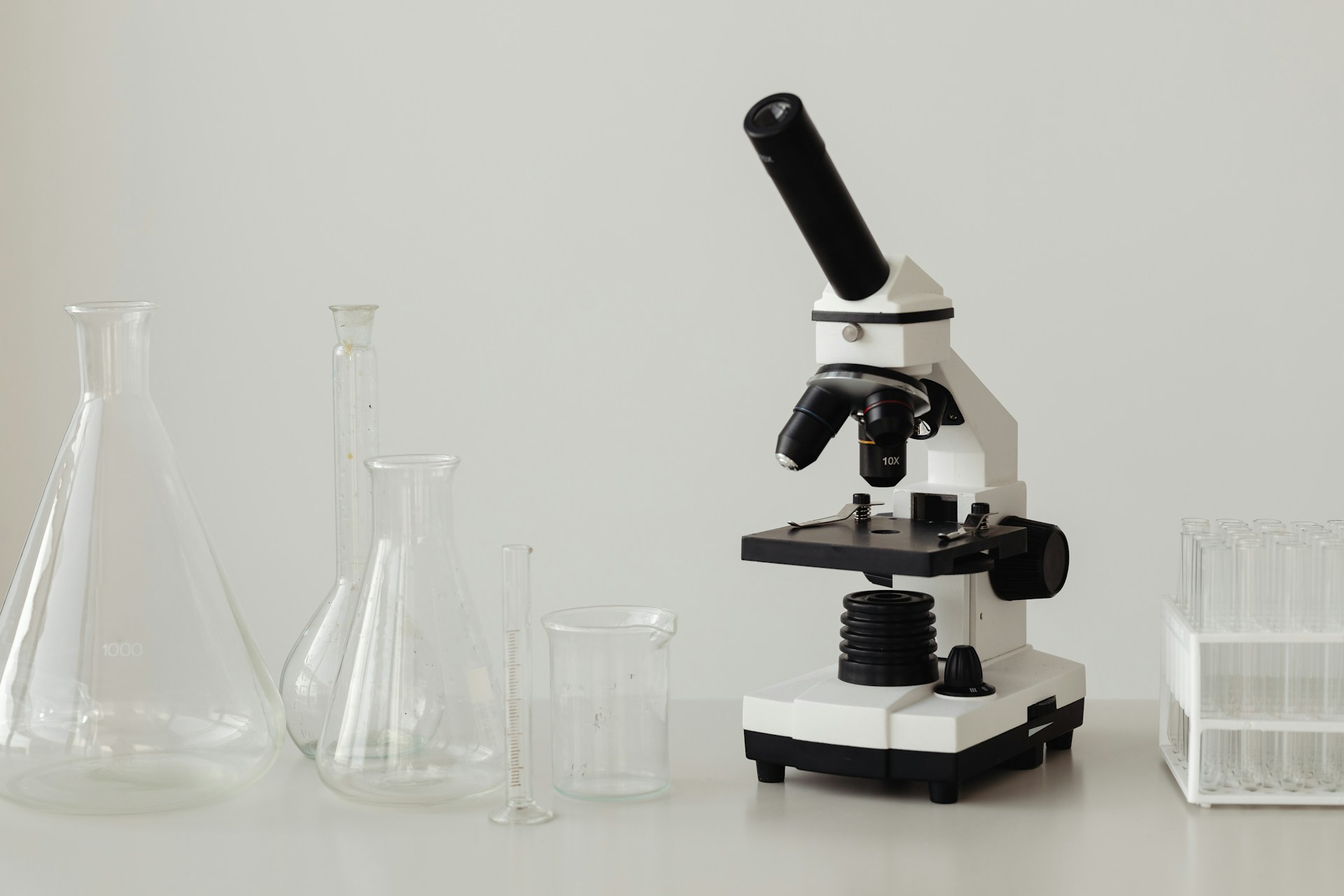
Volumetric accuracy is not optional in an Australian laboratory; it underpins every sound result. If your measuring cylinders, pipettes or flasks are inaccurate, your chemistry, biology or microbiology work becomes unreliable. That can compromise calibration standards, culture media, sample dilutions and any decision made from those measurements.
When laboratory glassware for analytical use is out of tolerance, even slightly, it can lead to failed batches, out‑of‑specification results and unnecessary investigations. In regulated testing environments, this may mean repeating full sample runs, checking instruments that are actually performing correctly or even revalidating methods. In teaching laboratories and research groups, it wastes time, samples and student or researcher confidence.
LabChoice Australia focuses on premium BORO 3.3 glassware and Polylab plasticware that are engineered for accurate measurement, durability and clear traceability. These are research‑grade products selected for Australian laboratories, schools and research teams that require consistent performance. High‑quality hardware is the first step. The second is demonstrating that each item continues to perform as specified through sensible in‑house checks and, where necessary, traceable calibration.
Understanding Tolerances, Classes and Standards in Australia
Before determining how to verify volumetric accuracy, it is important to define what “good” looks like. Volumetric glassware is typically marked as Class A or Class B.
In practical terms:
- Class A: tighter tolerances, suitable for high‑precision analytical work, calibration standards and quantitative methods.
- Class B: wider tolerances, suitable for routine preparation, industrial work or many school‑level applications.
Australian laboratories generally align with international standards to ensure consistency between methods and suppliers. For common volumetric items, this usually involves:
- ISO 1042 for volumetric flasks
- ISO 4788 for graduated cylinders
- ISO 385 for burettes
These standards specify, for example:
- Shape and design requirements
- Permitted tolerances for each nominal volume
- Markings, including TD (to deliver) and TC (to contain)
- Calibration temperature, typically 20 °C
TD (to deliver) applies to items such as pipettes and burettes that are designed to deliver a specified volume when drained correctly. TC (to contain) applies to items such as volumetric flasks that are designed to contain a precise volume when filled to the calibration line.
Calibration is defined at 20 °C. In many Australian laboratories, room temperature may deviate from this, particularly during summer heat or in cooler regions during winter. When you verify glassware, it is important to consider actual laboratory temperature and its effect on liquid density and glass expansion so that assessments of accuracy are realistic.
LabChoice Australia supplies BORO 3.3 volumetric glassware that is manufactured to meet relevant ISO tolerances, providing Australian users with predictable, standards‑aligned performance.
Simple In‑House Checks Any Australian Lab Can Implement
Most Australian laboratories can perform basic volume checks in‑house using gravimetric techniques. These checks do not require complex equipment: an analytical balance, clean deionised water and a controlled weighing environment are usually sufficient.
A straightforward gravimetric check for a volumetric flask could follow this approach:
- Clean and dry the flask, then allow it to reach room temperature.
- Tare a clean, dry beaker or container on the analytical balance.
- Fill the flask to the calibration mark with water at approximately 20 °C, taking care to avoid parallax error when adjusting the meniscus.
- Transfer the water into the tared container, weigh and record the mass.
By using the density of water at the measured temperature (ideally close to 20 °C), you can calculate the corresponding volume and compare it with the nominal value. Many laboratories accept results within the stated Class A tolerance, often with a defined internal buffer. For education‑grade or general preparation glassware, wider in‑house limits may be appropriate where the volumetric step does not directly influence final compliance decisions.
Australian climate conditions can influence measurement stability. Cooler benches, air drafts and varying air‑conditioning cycles can affect balance performance and temperature equilibrium. To improve the repeatability of in‑house checks, laboratories should:
- Allow glassware and water to stabilise at room temperature before measurement.
- Avoid performing weighings near doors, vents or open windows.
- Allow filled flasks or cylinders to stand briefly before transfer so that temperature equalises.
These steps make gravimetric checks more consistent and reduce the risk of misclassifying a conforming item as a failure due to environmental effects rather than true volumetric error.
When to Use Traceable Calibration and How It Works
For many Australian laboratories, in‑house checks are sufficient for routine work. However, when operating under accredited methods, tight specifications or regulated frameworks such as environmental, food, pharmaceutical or clinical testing, you may require external, traceable calibration for particular volumetric items.
Common triggers for traceable calibration include:
- Glassware used to prepare calibration standards for instruments.
- Volumes that directly influence pass/fail decisions for samples.
- Method validation or verification activities.
- Reference solutions or standards that are prepared infrequently but used for extended periods.
The usual process is:
• Identify critical volumetric items (for example, Class A volumetric flasks, burettes and pipettes used for assay standards).
• Send them to a calibration provider that uses gravimetric methods traceable to national or international measurement standards.
• Receive a calibration certificate for each item, typically documenting:
• The actual measured volume at specified conditions.
- The measurement uncertainty.
- A statement of metrological traceability.
- A recommended recalibration date or interval.
This documentation integrates readily into NATA‑aligned or ISO/IEC 17025‑based quality systems commonly used in Australian laboratories.
LabChoice Australia supplies Class A BORO 3.3 volumetric glassware and compatible Polylab plasticware designed for use in these quality frameworks, so you can pair physical performance with documentation that supports formal calibration and audit requirements.
Building Glassware Verification Into Your Quality System
Effective quality systems treat volumetric verification as a routine control activity rather than a one‑off project. A risk‑based plan ensures that resources are focused where they matter most.
Key Elements Typically Include:
- An equipment register listing volumetric items used in critical analytical steps.
- Risk ranking to determine which items require traceable external calibration and which are suitable for in‑house verification only.
- Written SOPs for gravimetric checks, acceptance criteria and defined actions when items fail.
- A schedule for routine verification and external calibration with documented intervals.
Supporting Documentation Commonly Covers:
- Calibration or verification labels on each item, with due dates and identifiers.
- Records of each check, including operator, balance identification, environmental conditions and results.
- Nonconformance reports when items fail, with impact assessment on past results.
- Change control procedures when replacing or upgrading volumetric glassware in validated methods.
Australian schools, TAFEs and universities can adopt a streamlined version of this structure. For example, they may:
- Use Class A glassware for senior chemistry and analytical units where students learn quantitative techniques.
- Maintain simple registers for sets of volumetric flasks, burettes and pipettes used in assessments.
- Perform basic annual verification checks before intensive practical blocks.
Paired with robust LabChoice Australia BORO 3.3 glassware and Polylab plasticware, this approach gives students a realistic understanding of accuracy, uncertainty and quality systems, while remaining manageable for teaching staff.
Choosing the Right LabChoice Glassware and Plasticware for Analytical Use
Different workflows demand different materials and tolerances. LabChoice Australia selects BORO 3.3 glassware for its high chemical resistance, low thermal expansion and optical clarity, making it well suited to:
- Volumetric flasks for preparation of standards, buffers and reference solutions.
- Burettes and pipettes for titration and other quantitative methods.
- Distillation and heating applications where thermal shock resistance is essential.
Where glass is not ideal, Polylab plasticware from LabChoice Australia provides a durable, lighter and shatter‑resistant option. It is particularly useful for:
- Routine media and buffer preparation in microbiology laboratories.
- Salt solution and buffer preparation for cell culture and tissue culture support workflows.
- Student teaching laboratories, where breakage rates and handling risks are higher.
For laboratory glassware used in analytical applications, many Australian laboratories choose BORO 3.3 when:
- Preparing samples for trace metal analysis, where low leaching and low contamination risk are important.
- Making standard solutions for titrations, spectrophotometric assays and other quantitative methods.
- Teaching senior chemistry students correct meniscus reading and pipetting technique using Class A volumetric ware.
Polylab plasticware is advantageous where:
- Sterility and disposability are priorities, such as in microbiology and life science workflows using sterile containers, bottles and tubes.
- Mechanical durability and impact resistance matter more than the tightest volumetric tolerance, for example in field sampling, industrial plants or busy teaching labs.
- Transport and field work make glass too risky, and robust plastic containers reduce breakage and contamination from glass shards.
LabChoice Australia also supports adjacent areas such as microbiology, cell culture, tissue culture and broader life science applications with compatible plasticware and supporting equipment. This allows laboratories to standardise on a trusted supplier across both volumetric glassware and routine consumables.
Bringing It Together for Australian Laboratories
By matching BORO 3.3 glassware and Polylab plasticware from LabChoice Australia to the right tasks, and backing them with clearly defined in‑house checks and, where required, traceable calibration, Australian laboratories, schools and research teams can:
- Improve volumetric accuracy and method reliability.
- Protect analytical results and regulatory compliance.
- Build quality systems that withstand audit and accreditation scrutiny.
This combination of research‑grade products, adherence to ISO standards and practical verification processes is why Australian buyers can rely on LabChoice Australia as a trusted partner for volumetric glassware, plasticware and supporting laboratory workflows.
Equip Your Lab With Reliable Glassware That Delivers Accurate Results
Choose LabChoice Australia for high quality laboratory glassware for analytical use that supports precise, repeatable results in your workflows. We carefully source products to meet the demands of Australian research, quality control and education labs, helping you work with confidence every day. If you would like guidance on selecting the right glassware for your methods or budget, simply contact us and our team will be ready to help.