Sample volume mismatch can quietly lead to repeat testing, delayed reporting and added pressure on your team. A preparation step that is slightly above or below the intended volume can change concentrations, ratios and reaction conditions before a test has even begun.
During busy spring periods, validation work, staff training and restarted workflows can place extra demand on laboratory routines. A consistent process for volume checks, mixing and sample preparation helps you catch preventable variation before it turns into a repeat run.
See How Small Volume Errors Distort Results
Small volume errors can create big questions. An incorrect reagent amount may leave a reaction short of a component, while excess liquid can dilute or shift the balance of a prepared sample. Either way, duplicate samples, different operators or separate test runs may not match as expected.
The tricky part is that volume mismatch can look like a sample issue. Results may appear inconsistent because the sample is variable, when the real cause is uneven liquid handling, incomplete mixing or a preparation step that was not controlled in the same way each time.
Before repeating a test, consider looking at where variation may have entered the workflow:
- Was the sample mixed fully before aliquots were prepared?
- Were repeated preparation volumes checked against the intended amount?
- Was the liquid at the method’s required temperature?
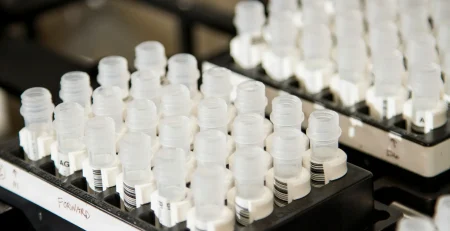
- Had liquid collected in the cap or sides of the tube?
Laboratory equipment helps separate these questions. A Lab Balance can help check prepared liquid quantities, while mixing, heating and separation equipment can show whether variation began during sample preparation. This gives you a clearer starting point than assuming the sample itself is at fault.
A Lab Balance supports gravimetric volume checks by measuring the mass of repeated liquid portions. When your approved method accounts for the liquid being tested, those measurements can help show whether preparation volumes are consistent with the target amount.
Consistency matters as much as the individual result. One correct measurement does not always show how a preparation process performs across a full run. Repeated checks can reveal a pattern, such as variation at a particular target volume or a result that changes between operators.
A simple, clear format can be used to record each routine check:
- Observed result for each prepared portion
- Operator name or identifier
- Any notes about the liquid or conditions
These records give your team something useful to compare over time. If a result begins to drift, you can investigate before an entire run needs to be repeated. Lab Balance checks should be part of regular verification, not something brought out only after a failed test.
Standardise Mixing and Sample Preparation
Correct preparation volumes will not solve an uneven sample. If liquid concentration differs from the top of a tube to the bottom, two equal portions can still produce different results. That can make volume verification appear inaccurate when the real problem is incomplete mixing.
The right mixer depends on the sample format and the agitation your method requires. A Vortex Mixer can suit short, stronger agitation of suitable tubes. A Tube Mixer may provide more controlled movement, while a Tube Roller can keep suitable tube samples moving more gently over time.
For liquid preparations that need ongoing uniformity, a Magnetic Stirrer or Hot Plate may support the preparation step when used in line with the method. The aim is straightforward: each portion should come from a liquid that is as uniform as possible.
Preparation steps work best when they are documented, not left to memory. Record the equipment used, the mixing approach and the point in the workflow when volume checks occur. This helps different team members prepare samples in the same way, even during busy periods.
Control Temperature and Separation Variables
Temperature can affect how a liquid behaves during handling. Where a method requires controlled conditions, a Water Bath or Dry Bath can help keep samples at the required temperature before volume verification. This reduces avoidable differences caused by one sample being handled under different conditions from another.
Liquid sitting in the cap or along the wall of a tube can also lead to an incomplete or uneven sample portion. A Centrifuge or Mini centrifuge can bring suitable liquid to the bottom of the tube before preparation, helping you work from the intended sample volume.
Safe setup matters here too. A Laboratory Jack can help set containers or equipment at a repeatable working height during preparation. This can make handling more comfortable and support a consistent workflow, particularly where the same step is repeated many times.
Where a Vacuum pump is part of an approved laboratory process, document that step alongside the rest of the preparation conditions. Even when volume checks are within the intended range, differences in the steps around them can still affect the final result.
Build a Repeatable Volume Control Routine
A dependable routine looks beyond volume checks alone. Document the full path of the sample, from mixing and temperature control to centrifugation settings and Lab Balance results. That way, your team can trace variation back to the preparation stage instead of only reacting after results do not match.
Routine checks are especially useful after:
- Staff changes or training periods
- Seasonal increases in laboratory activity
- Unexpected variation between runs
- Changes to the preparation process
Lab Balances, mixers, heating equipment and centrifuges each support a different part of controlled preparation. Used together with approved laboratory procedures, this equipment helps create more repeatable conditions around every sample volume.
Turn Volume Checks Into Fewer Repeat Tests
Reliable preparation depends on the equipment working together across the workflow. Consider whether your Centrifuge, Vortex Mixer, Tube Mixer, Magnetic Stirrer, Water Bath, Dry Bath and Lab Balance are supporting the same preparation conditions from one run to the next.
The practical takeaway is to check sample volumes alongside the steps that happen before and after preparation. When mixing, temperature, separation and volume verification are controlled as one routine, it becomes easier to find mismatch early and reduce avoidable repeat testing.
Choose Equipment That Supports Reliable Results
Our range of analytical equipment helps laboratories maintain consistent handling across everyday preparation and measurement tasks. LabChoice Australia can help you select practical equipment suited to your workflow, from tube mixers and centrifuges to balances and water baths. Contact us to discuss your laboratory requirements with our team.