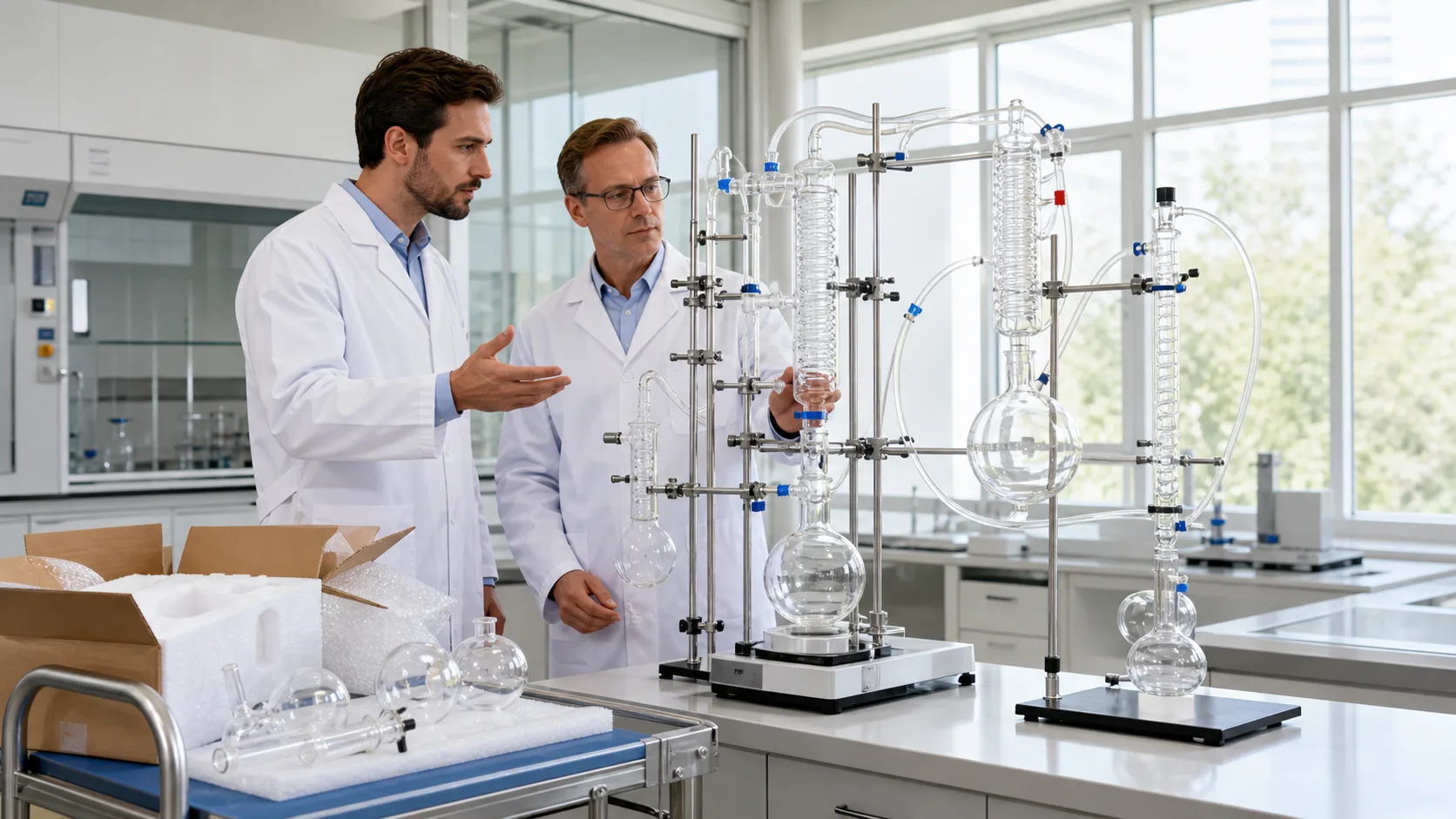
Choose Distillation Glassware That Supports Reliable Results
A distillation setup works best when its parts are designed to fit together safely and predictably. Rather than piecing together unrelated items, we recommend choosing glassware that suits your method, your available bench space and the type of work you carry out. A well-matched apparatus can make separations easier to repeat, simplify cleaning and replacement, and help create a more orderly laboratory workflow.
Glass distillation setups are used across schools, research facilities and industrial testing environments. Depending on the task, you may need a different flask size, condenser style, joint size or level of temperature control. Common applications include:
- Solvent recovery and purification
- Water analysis procedures
- Teaching demonstrations and practical classes
- Separation work in research and testing laboratories
For many routine laboratory applications, borosilicate glass is a popular choice. It allows staff and students to observe the process clearly, and it is suited to laboratory heating applications when used correctly. Its thermal shock resistance also makes it a practical material where temperatures may change during setup, heating and cooling.
The main question is not simply whether you need distillation glassware. It is whether a glass distillation apparatus supplier is the right fit for the way your lab operates. When you need clear specifications, compatible parts and access to replacements over time, working with a supplier focused on laboratory equipment can make purchasing much more straightforward.
When a Glass Distillation Apparatus Supplier Adds Value
A complete distillation assembly often involves more than a flask and a condenser. Depending on your procedure, the setup may also require a distillation head, thermometer adapter, receiving vessel, stands, clamps, heating equipment and connecting adapters. Choosing these parts separately from general catalogues can create uncertainty around fit, joint sizes and the suitability of each component.
By sourcing from a glass distillation apparatus supplier, we can help you compare components that are intended to work within standard laboratory setups. This matters when your team needs to build several similar assemblies for teaching, repeated testing or ongoing research work.
Before ordering, it helps to confirm practical details such as:
- Glass type and material construction
- Capacity and overall dimensions
- Standard joint sizes and connection points
- Temperature considerations and intended use
Clear product information gives you a better basis for checking new glassware against existing equipment and documented procedures. It also helps reduce the chance of ordering a part that cannot be used with the rest of the assembly.
Replacement needs deserve attention too. Glassware can be damaged, chipped, scratched or taken out of service after heavy use or contamination. When individual components are available, you may only need to replace the affected item rather than the entire apparatus. That can be particularly helpful for laboratories with multiple users, busy practical schedules or several setups in circulation.
Match Glassware Design to Your Distillation Method
Not every method calls for the same arrangement. Before selecting a supplier or building a list of products, we suggest reviewing the sample, expected boiling range, target purity, required throughput and level of control involved. The right apparatus is one that supports your documented process without adding unnecessary complication.
Simple distillation may suit work involving liquids with substantially different boiling points, as well as some solvent recovery procedures. A typical arrangement can include a boiling flask, distillation head, thermometer adapter, condenser and receiving vessel. Each part needs to fit correctly and be supported securely during operation.
Fractional distillation is commonly considered where components have closer boiling points. A fractionating column can help improve separation, though it also adds height and weight to the arrangement. In practical terms, this means you may need additional support hardware and enough overhead room to assemble the apparatus safely.
Some procedures require more specialised equipment. Vacuum distillation may be considered for heat-sensitive materials, while steam distillation can be used when working with volatile compounds. These configurations may call for extra items such as vacuum connections, cold traps, temperature monitoring and stronger support systems. We recommend documenting these requirements before purchasing, especially where the setup will be used regularly or by several staff members.
Assess a Glass Distillation Apparatus Supplier Carefully
Price matters in any purchasing decision, but it should not be the only point of comparison. A lower upfront cost may be less helpful if the parts do not match your current glassware or if replacements are difficult to source later. We encourage laboratories to look at the full picture, including range, compatibility, product details and ordering convenience.
Start with the available product range. A suitable supplier should make it easier to find commonly used borosilicate glassware, flasks, condensers, adapters, standard joints and accessories that work together. If you already have equipment in service, check whether the new parts will integrate with what you own.
Quality information is equally important. Product listings should clearly describe capacities, dimensions, joint types and material construction. Your team can then compare those details against the chemicals, temperatures and procedures involved in your work. Glassware should always be selected and used according to your laboratory’s safety processes and the requirements of the intended method.
For Australian laboratories, ordering convenience can also shape the decision. Clear stock information, reliable delivery options and access to replacement glassware can support smoother planning. We see this as particularly useful for schools preparing practical classes, research groups managing changing projects and testing facilities keeping routine work moving.
Plan Spring Purchases Around Workflow and Lead Times
Spring is a sensible time to review distillation equipment before end-of-year activity increases. Final practical classes, research deadlines, maintenance periods and preparation for new projects can all place extra pressure on laboratory resources. A quick audit now can help you identify problems before they interrupt scheduled work.
Look closely at the condition and completeness of each setup. Pay attention to chipped joints, damaged condensers, scratched glass surfaces, missing clamps and configurations that no longer suit current procedures. Compromised glassware should not be left until the busiest period to address.
It also helps to review what is coming up. You may need extra capacities for planned runs, spare receiving flasks for a teaching program, multiple student assemblies or a different condenser style for an upcoming procedure. Allowing time to compare specifications and confirm joint compatibility can prevent rushed decisions before summer closures, reduced staffing periods or January project starts.
Take the Next Step Towards a Better Equipped Lab
A specialist supplier can be a strong choice when your laboratory needs dependable components, clear product information and replacement options that suit ongoing use. At LabChoice Australia, we supply laboratory glassware, consumables and educational science equipment for Australian laboratories, schools, research facilities and industrial testing environments.
Before making a purchase, document the setup you require, including joint sizes, flask capacities, heating method, condenser type and any accessories needed for safe operation. Comparing product suitability, component compatibility and replacement availability will give you a more useful result than choosing glassware on upfront cost alone.
Build A Distillation Setup With Confidence
LabChoice Australia offers dependable options for laboratories seeking a glass distillation apparatus supplier that understands practical setup requirements. Our range helps you source compatible apparatus and accessories for your workflow. For tailored product guidance, contact us and speak with our team.