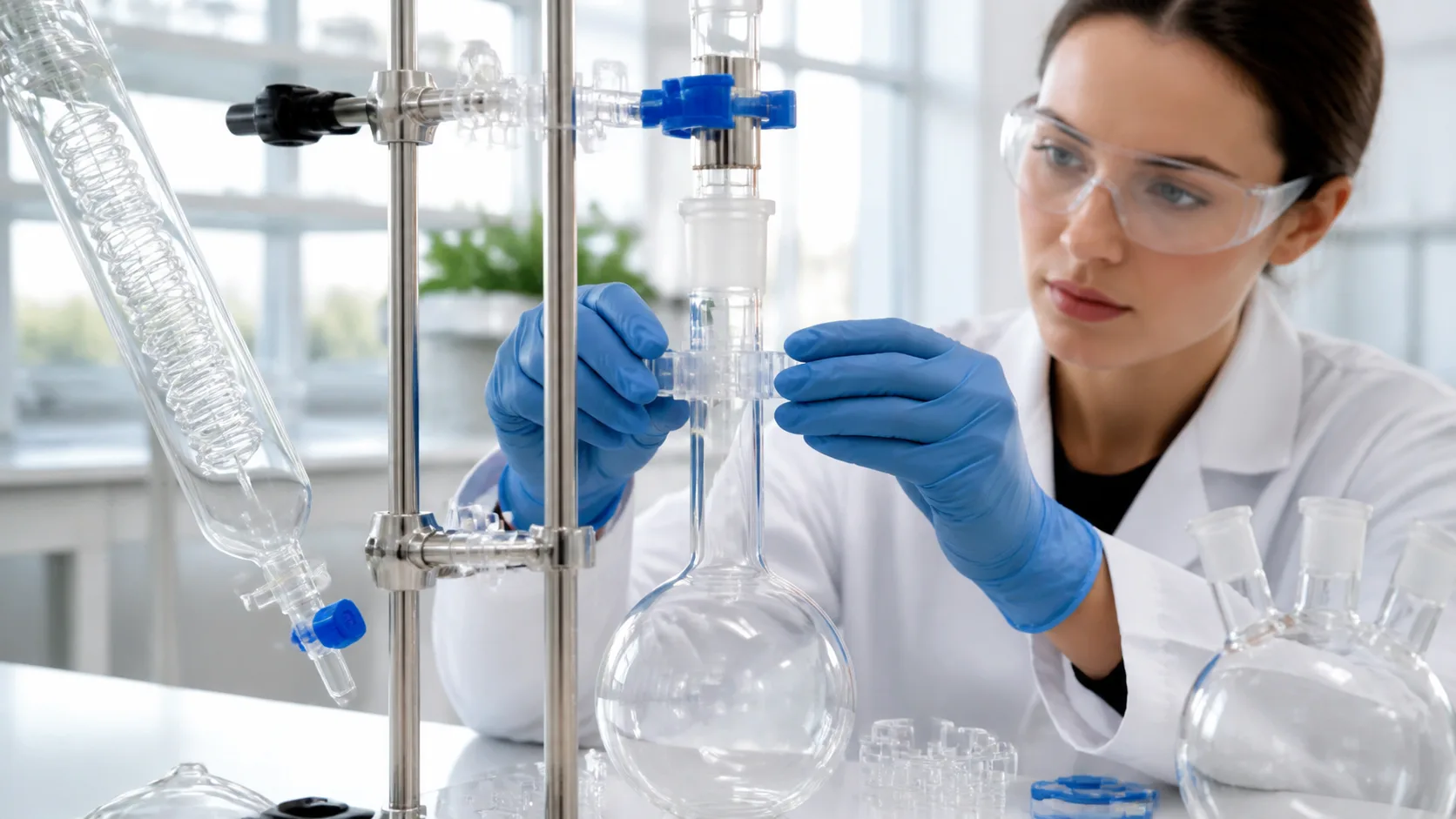
Prevent Costly Glassware Separation Before It Starts
Durable plastic joint clips help keep compatible glassware joints together when a setup is being handled, adjusted or exposed to vibration. A well-prepared apparatus can still be affected by small movements, temperature changes or busy bench work, so a simple retaining clip can make day-to-day work feel more secure.
At LabChoice Australia, we understand that reliable assemblies matter across research, education, testing and industrial laboratories. During October, many Australian teams are managing spring teaching sessions, environmental sampling work and preparation for summer testing demands. Keeping glassware setups secure and well maintained can help you reduce avoidable interruptions when activity picks up.
Ground glass joints are made to connect pieces such as flasks, condensers, adapters and columns. When matched correctly, the ground surfaces create a close fit. Even so, the connection may benefit from extra retention when an apparatus is moved or when several pieces are joined together.
Joint clips are small accessories, but they can help protect more valuable components. By holding connected glassware in place, they may reduce the chance of unexpected separation during routine work. That can mean fewer spills, fewer lost samples, less cleanup and less risk of a glass component falling from the assembly.
We recommend treating clips as one part of a safe setup, not the whole safety plan. Correct glassware selection, careful assembly and your site’s laboratory procedures still matter every time, particularly for heating, vacuum work and chemical handling.
Know How Joint Clips Support Safer Glassware Setups
A properly fitted joint clip provides extra retention around the outside of a connected glass joint. This is particularly helpful with multi-piece assemblies, elevated apparatus and setups positioned in fume cupboards, where access may be limited once work is underway.
Clips can support steadier workflows in several common situations:
- Moving or adjusting an assembled apparatus
- Working with condensers, columns and connected adapters
- Setting up equipment at height on a stand
- Carrying out routine work in a fume cupboard
- Managing teaching benches where equipment is handled often
The clip does not make an unsuitable connection safe. Before fitting one, we suggest that you inspect both glass joints for chips, cracks, dirt or damage. Components should be clean, compatible and fully seated before the clip is added.
Careful handling remains important after the clip is in place. Avoid lifting an assembly by one component alone, and follow your laboratory’s guidance when heating glassware or working with pressure or vacuum. A clip supports the connection, while sound laboratory practice supports the full apparatus.
Choose Durable Plastic Joint Clips for Your Joint Sizes
Correct sizing is the starting point for dependable retention. Durable plastic joint clips need to match the joint size of the connected glassware. A clip that is too small can be difficult to fit and may place unwanted pressure on the glass. One that is too large may sit loosely and provide little support.
Before ordering, check the stated joint dimensions on your existing glassware and compare them with the clip specifications. It is worth taking a moment to identify the sizes that appear most often across your benches, practical rooms or testing stations.
Quality plastic clips are lightweight and easy to handle, making them suitable for many routine laboratory applications. They can also be a useful option where you prefer a non-metallic retaining accessory for the workflow. As with any laboratory accessory, the clip material should suit the conditions it will encounter.
When planning supplies, we encourage you to consider more than a single setup. Think about:
- The joint sizes used most often in your laboratory
- How many workstations need clips at the same time
- Whether teaching or testing periods increase demand
- Which setups are assembled regularly
- Keeping spare clips available for replacement
Our range at LabChoice Australia allows you to compare laboratory accessories alongside compatible glassware, which can make purchasing decisions more straightforward.
Use Durable Plastic Joint Clips Correctly Every Day
Fitting a clip is simple, but it should never be rushed. Start with clean, undamaged glassware that has correctly matched joints. Seat the joint fully, then position the clip around the outer joint area according to its design. It should sit firmly without forcing the connection or putting unnecessary pressure on the glass.
A quick check before use can prevent a small accessory from becoming a weak point in the setup. Look for cracking, distortion, chemical residue or any loss of holding tension. If a clip no longer sits properly, remove it from service rather than trying to make it work on an incompatible joint.
Cleaning conditions and working environments can affect plastic accessories over time. Clips exposed to harsh cleaning agents, repeated heating cycles or demanding laboratory conditions may need closer inspection and earlier replacement. We recommend building this check into normal setup habits, especially on equipment used frequently.
Storage also makes a difference. Keep clips clean, dry and sorted by size so staff can identify the right option quickly. A labelled container near common assembly areas can reduce the temptation to use the nearest clip, rather than the correct one.
Build a Practical Clip Replacement and Inspection Routine
Including joint clips in regular equipment checks helps keep small problems from interrupting larger tasks. Alongside glassware inspection, cleaning schedules and stocktake work, note which clip sizes are replaced most often. This gives your team a clearer picture of what should be kept ready for busy periods.
We suggest placing the appropriate sizes where glassware is assembled most often, including research benches, teaching laboratories, testing areas and industrial workstations. When the right accessory is close at hand, staff are less likely to pause work while searching for a clip or choose an unsuitable alternative.
Durable plastic joint clips may be small, but they play an important part in protecting connected glassware and supporting consistent laboratory work. Review the joint sizes used most often, inspect clips before fitting them and replace damaged items promptly. These simple habits can help keep spring practical sessions and pre-summer testing programs orderly, safer and easier to manage.
Find The Right Fit For Your Glassware
LabChoice Australia offers a practical range of durable plastic joint clips to suit common laboratory joint sizes. Browse the available options to help streamline your equipment selection for upcoming classes, testing and routine lab work. If you need help choosing a suitable clip, contact us for product guidance.