Plasticware That Will Not Fail Under Heat and Harsh Chemistries
Strong lab work needs more than good ideas, it needs gear that does what it is told. As teaching labs start up again, research groups spin up new projects, and food and pharma teams tweak methods, laboratory plasticware suddenly matters a lot. Autoclaves are running hot, solvent bottles are in constant use, and the last thing anyone wants is a warped flask or a cracked bottle in the middle of a busy run.
Not all plastics behave the same under heat and harsh chemicals. Each type has limits for temperature, pressure, and solvent exposure. Some slowly leach additives, some lose shape, and some simply give up after a few sterilisation cycles. Here we will walk through how to choose plasticware that can handle autoclaving, aggressive solvents, and the day to day pressure of real lab work, without constant breakage or hidden contamination risks.
How Autoclaves Punish the Wrong Plastics
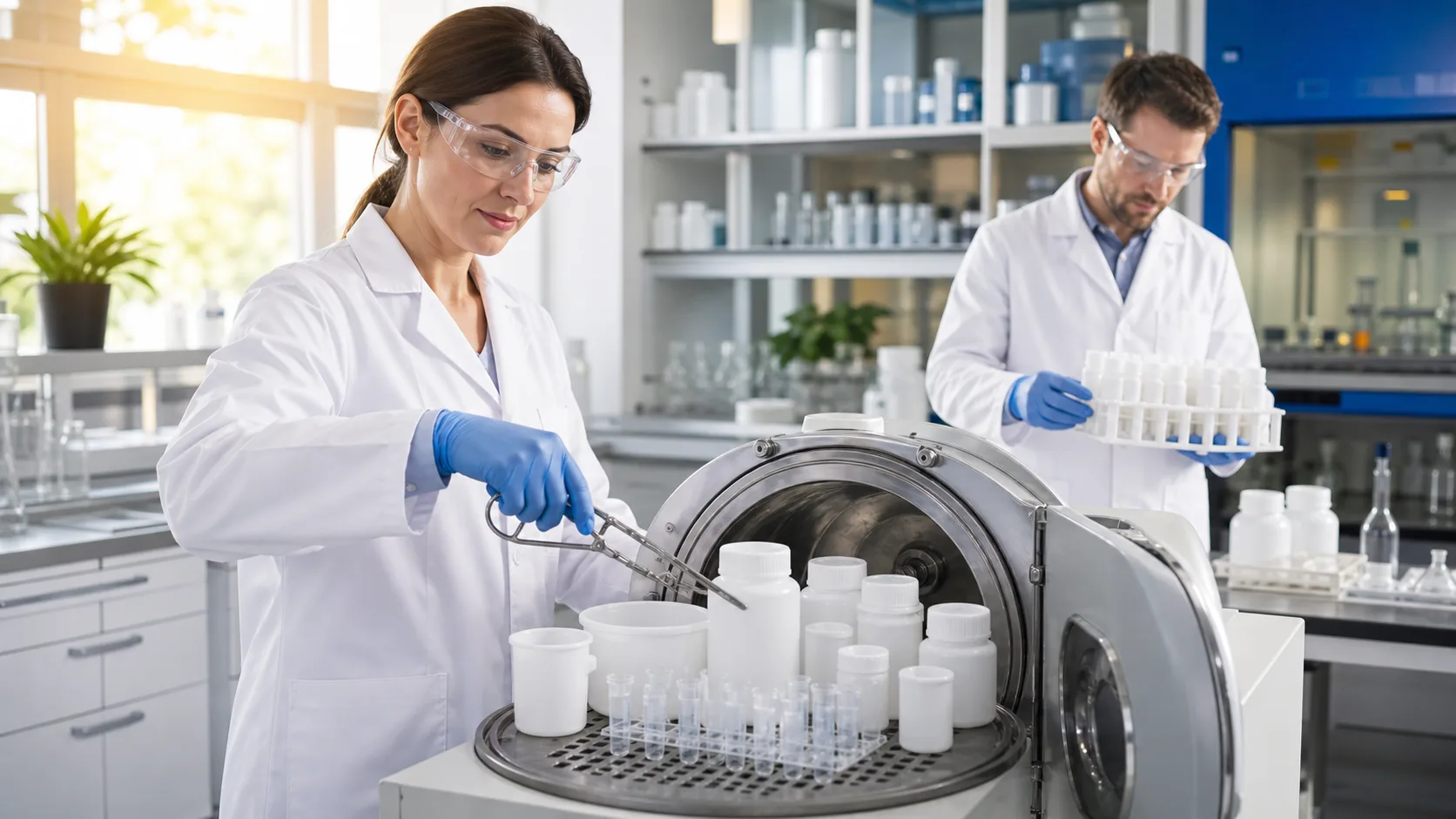
An autoclave is not “just hot”. It is high-pressure steam, moisture everywhere, and repeated cycles from room temperature up to sterilisation temperature and back again. Those swings pull and push on polymer chains, o-rings, and screw threads. Tiny flaws get bigger. Stresses build up in corners and at the base of necks and handles.
When the plastic is not suited to that abuse, we start to see:
- Warping so lids no longer fit or tubes no longer stand straight
- Crazing, those fine white lines that show stress in the plastic
- Cracking around caps, necks, and tube hinges
- Loss of transparency, turning once-clear items cloudy
- Graduations that distort so volumes are no longer reliable
Some plastics simply should not go in an autoclave at all. Polystyrene, common in cheap dishes and some tubes, will soften and deform. PVC can lose plasticisers and become brittle or sticky. Low-grade polypropylene blends may survive one or two runs, then start warping or cracking long before you expect.
As labs tune methods at the start of a teaching block or a new QA program, it is a smart time to audit plasticware. Look for items that always seem to fail after sterilisation, and flag them for replacement with materials that are actually rated for the job.
Choosing Autoclavable Plastics That Last
A few plastic families do much better in the autoclave. Each has its own strengths, limits, and best use cases.
Common choices include:
- Polypropylene (PP): often the first choice for autoclavable tubes, bottles, and flasks, with good heat resistance and chemical resistance for many aqueous solutions
- Polycarbonate (PC): very clear and tough, often used where visibility matters, though it can be more sensitive to some solvents and repeated high-heat cycles
- PFA and PTFE: fluoropolymers that handle very high temperatures and many aggressive chemicals, often used for demanding work or where very low extractables are needed
Maximum use temperature, typical cycle life, and the exact grade all matter. For example, PP is great for many culture and media tasks, but not every PP bottle will give the same lifetime in a busy autoclave schedule.
Design details can be just as important as the base polymer:
- Wall thickness: thin walls heat and cool fast but may deform more easily
- Cap style: vented caps allow steam to escape and re-enter, reducing pressure shock, while non-vented caps help protect sterility after cooling
- Thread quality: strong, deep threads keep caps sealing well after many cycles
- Graduation style: moulded graduations tend to survive heat better than printed inks
Clear information on autoclavability, including temperature limits and recommended cycle counts, makes it much easier to standardise across teaching, research, and QC spaces and avoid guesswork at the autoclave.
Beating Aggressive Solvents Without Leaching or Cracks
Heat is only half the story. Many Australian labs use strong solvents and reagents every day: ethanol and methanol in wash bottles, acetone for cleaning, DMSO in screens, chloroform for extractions, along with strong acids, bases, and oxidising cleaners. These do not just sit politely in a bottle. They can swell plastics, cause stress cracking, or pull out additives and plasticisers.
A few general guides help:
- For many organic solvents: PTFE and PFA handle a wide range, while HDPE often works well for storage of common solvents
- For strong acids and bases: PP and HDPE are often preferred, but long-term storage and high concentration need careful checking
- For oxidisers and strong cleaners: fluoropolymers again handle the harsh end of the scale better than many other plastics
Some plastics might be fine for short-term handling, like quick transfers or rinses, but not for long-term storage on a warm shelf. That same squeeze bottle that copes with ethanol may suffer with acetone.
Practical habits make a big difference:
- Use solvent compatibility tables when choosing bottles and containers
- Avoid using the same plastic bottle for both acids and organics, even if you rinse between uses
- Colour-code or clearly label containers for different solvent classes to cut down on mistakes
These small choices reduce cracking, leaks, and unknown leachables turning up in sensitive methods.
Balancing Safety, Sustainability and Budget in Spring Purchasing
Good laboratory plasticware is about more than just surviving the autoclave. For food and pharma labs in particular, safety and compliance sit front and centre. That can mean choosing plastics suitable for contact with food or pharmaceuticals where needed, and looking for low extractables to help protect sample integrity.
There is also the bigger picture of waste and cost of ownership. When plasticware fails early, you are left with:
- Extra plastic waste going in the bin
- Interruptions as staff scramble for backup items
- More rush orders and time spent managing stock
Choosing items that are matched to your heat and solvent demands means fewer failures and fewer surprises.
Spring is a natural reset point. Teaching labs know what class numbers look like. Research teams can see which projects are moving forward. QA and QC teams are planning validation and method reviews. It is a good moment to line up plasticware choices with what the next season of work will actually need, comparing items by material, volume, and compatibility, instead of buying the same thing again and hoping for a better result.
Upgrade Your Plasticware Before the Next Sterilisation Cycle
A simple review of current laboratory plasticware can clear away a lot of small problems. Open a drawer, look at what is inside, and ask a few straight questions: Which bottles always seem to warp? Which tubes fog or crack after sterilising? Where do we see solvent crazing or mysterious leaks?
A quick action checklist can help guide that process:
- Confirm material types from labels or product data, not guesses
- Match those materials against your real temperature and solvent needs
- Standardise on a small set of core plastics for most tasks
- Write clear, simple rules into lab SOPs about what each material is approved for
With a bit of attention before the next big sterilisation cycle, labs can step into the busy season with plasticware that holds up to heat, solvents, and daily handling, giving everyone one less thing to worry about at the bench.
Equip Your Lab With Reliable Plasticware Solutions Today
Choosing the right consumables is critical to getting consistent, accurate results, and our range of laboratory plasticware is selected with that in mind. At LabChoice Australia, we work closely with labs across the country to match products to specific workflows and compliance needs. If you would like tailored recommendations or bulk pricing support, simply contact us and we will help you put together the right mix for your lab.