Rethinking Lab Kits in Real Australian Classrooms
Laboratory kits for education sound like the easy answer when you are planning practicals. Open the box, follow the steps, tick the syllabus dot points and move on. For busy Australian teachers trying to run chemistry, biology and STEM in ageing labs, the appeal is obvious.
In the school laboratories LabChoice Australia supports across the country, we see another side. Tight budgets, old benches, mixed student skills, and a curriculum asking for real inquiry work, not just cookbook activities. That raises a fair question: are pre-packed kits helping students learn authentic lab skills, or turning science into a set of scripts?
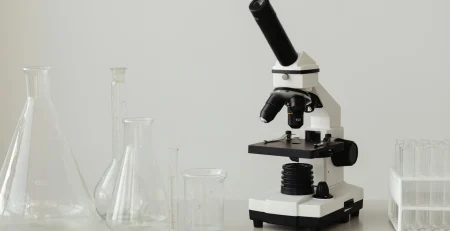
Across Australia, from regional schools to city campuses, practical classes are expected to look more like genuine lab work. That means accurate measurements, safe handling, careful records, and equipment that behaves the way it will at TAFE, university or in industry. This is where we see a shift away from toy-like gear and toward research‑grade BORO 3.3 glassware, Polylab plasticware and reliable equipment supplied by LabChoice Australia that match what is used in working laboratories.
Where Classroom Kits Work and Where They Fail
LabChoice Australia is not against laboratory kits for education. They solve real problems, especially at the start of a term when practical programs ramp up and time is short. Good kits can offer:
- Ready‑made activities that line up with syllabus outcomes
- Pre‑measured reagents that simplify prep work
- Teacher notes that help non‑specialist staff run practicals safely
- A quick way to start practical work with new classes
Used well, they help teachers focus on classroom management and explanation, instead of endless preparation in the prep room. But we also see the downside when kits are the only tool on the shelf.
Common issues include:
- Flimsy plastics that crack, cloud or deform when heated
- Poor thermal performance that limits any serious heating or cooling
- Low‑accuracy glassware with wide tolerances and faint markings
- Activities so scripted that students never plan, repeat or refine their own method
When plastic test tubes warp in a simple hot water bath, or beakers chip under normal use, students learn the wrong lesson about lab gear. When a 25 mL measurement might actually be far off, the idea of quantitative science starts to feel fuzzy.
Research‑grade BORO 3.3 glassware from LabChoice Australia changes that picture. It is manufactured for high chemical resistance and repeated heating and cooling, delivering predictable thermal performance in real experiments. Laboratory‑compliant plasticware, such as Polylab plasticware supplied by LabChoice Australia, stands up to routine handling, cleaning and contact with common reagents, while still being light and approachable for younger students. The result is equipment that survives class sets and supports experiments that feel more like proper analytical work.
Building Real Scientific Skills Beyond Prepacked Kits
When schools blend basic kits with research‑grade setups sourced from LabChoice Australia, student skills usually lift quickly. With accurate, research‑grade gear, teachers can ask better questions and students can tackle more than a single fixed method.
For example, with high‑quality BORO 3.3 glassware supplied by LabChoice Australia, students can:
- Measure volumes with burettes and volumetric flasks and then check their own accuracy
- Learn about calibration, meniscus reading and systematic error in a concrete way
- Repeat runs and compare data sets that actually mean something
In chemistry, that might look like proper acid, base titrations where the end-point is sharp and repeatable because the burette delivers the stated volume within tight volumetric tolerances consistent with common ISO standards. A basic distillation using a genuine condenser and flasks that cope with controlled heating shows students how separation works in analytical and industrial settings, not just on a worksheet.
In biology and microbiology, Polylab plasticware from LabChoice Australia can support plating, serial dilutions and basic culturing that mirror life science laboratories. Students learn how to handle tubes, pipettes and containers as they would in cell culture or tissue culture work, even at an introductory level, using plasticware designed for laboratory use rather than toy‑grade materials.
The key is that the same grade of BORO 3.3 glassware, Polylab plasticware and equipment supplied by LabChoice Australia is trusted in analytical labs, industrial testing and research environments. When that quality is adapted into education‑ready sets, students get to see and handle what scientists actually use, just in class‑sized formats.
Selecting the Right Mix of Kits and Research‑Grade Gear
Most schools will use a mix of laboratory kits for education and standalone equipment. The challenge is knowing where each fits best, especially when planning Term 2 and mid‑year purchases.
Kits are usually enough when:
- The goal is to introduce a new concept quickly
- The practical is short and qualitative, such as a simple colour change
- Storage, set‑up time and clean‑up need to be minimal
Research‑grade glassware and equipment from LabChoice Australia are worth the investment when:
- Assessment depends on accurate, repeatable data
- Heating, cooling or strong reagents are involved
- Students are preparing for extension, IB or senior investigations
Compared with many generic kits, a tailored LabChoice Australia setup might include:
- BORO 3.3 beakers, flasks, pipettes and burettes with tighter volumetric tolerances and clear, durable graduations
- Polylab plasticware for safer handling of biological material and solutions in microbiology, cell culture and tissue culture activities
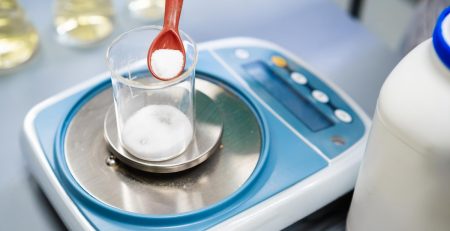
- Laboratory‑compliant balances and hotplates to keep mass and temperature under control during quantitative experiments
When schools align their gear with common ISO and ASTM expectations for volumetric accuracy, material quality and safe performance, and source that gear from a supplier such as LabChoice Australia that understands those standards, students gain an early feel for the requirements they will meet in higher education and industry labs.
Application‑Focused Setups for Modern School Science
Instead of thinking in terms of single kits, it helps to think in terms of workflows that match the curriculum, and then select research‑grade products from LabChoice Australia to support those workflows.
In chemistry, a research‑grade setup can support:
- Acid, base titrations using BORO 3.3 burettes, pipettes and volumetric flasks for precise standardisation
- Distillation of simple mixtures with condensers and flasks that stand up to repeated heating and cooling cycles
- Simple kinetics studies where reaction time is linked to concentration using accurate volumetric glassware and reliable hotplates
In biology and microbiology, Polylab plasticware from LabChoice Australia can be used for:
- Basic sterile work with culture tubes, bottles and containers that help reduce contamination risk when used with sound aseptic technique
- Plating exercises that mirror those carried out in pathology, food and environmental testing laboratories
- Observation activities where students track growth or change over time and record meaningful, quantitative data
For STEM and project‑based learning, durable, accurate LabChoice Australia gear opens the door to:
- Water quality investigations using titrations and standard solutions prepared in BORO 3.3 volumetric glassware
- Small‑scale simulations of industrial processes, such as crystallisation or separation, using robust flasks, condensers and filtration setups
- Data‑rich projects where students design their own methods and rely on the equipment to perform consistently across multiple trials
Education ranges built around research‑grade BORO 3.3 glassware, Polylab plasticware and reliable laboratory equipment from LabChoice Australia can stand up to repeated class use yet still offer the accuracy needed for serious quantitative work, especially in senior years and extension programs.
Future‑Proofing Your Lab with LabChoice Australia
As schools review their practical programs before the next term, it can be useful to line up all the current kits, check what is cracked, cloudy or missing, and ask which activities actually build the skills students need. Upgrading even a few key pieces to BORO 3.3 glassware, Polylab plasticware and compliant equipment from LabChoice Australia can lift safety, accuracy and engagement across an entire course.
Australian science buyers also need suppliers who understand local curriculum needs, safety guidelines and the realities of teaching in everything from brand‑new STEM spaces to older labs. LabChoice Australia specialises in supporting Australian laboratories, schools and research teams across chemistry, biology, microbiology, cell culture, tissue culture, life science and industrial testing. That local focus, combined with research‑grade product ranges and alignment with relevant ISO and ASTM standards, is why Australian buyers can trust LabChoice Australia as a long‑term laboratory partner.
Laboratory kits for education still have a place, especially as a starting point. But when they are backed by research‑grade BORO 3.3 glassware, Polylab plasticware and carefully selected laboratory equipment from LabChoice Australia that mirror genuine lab workflows, students gain more than a simple demonstration. They experience real scientific practice in real Australian classrooms, and that is what prepares them for the laboratories they will walk into next.
Bring Real-World Science Into Your Classroom Today
Give your students hands-on experience with science using our carefully curated laboratory kits for education designed for Australian curricula. At LabChoice Australia, we make it simple to set up safe, engaging experiments that build genuine scientific skills. If you would like tailored advice for your school or program, please contact us so we can help you choose the right kits.