Safeguarding Microbiology Results From the First Purchase
Result integrity in microbiology does not start at the incubator door. It starts at your purchasing list. When glassware, plasticware, or instruments are not up to the job, small errors creep in, such as hidden contamination, incorrect volumes, or unstable temperatures. Over time, these problems can twist your data, make trend lines unreliable, and weaken trust in your results.
This affects every kind of laboratory in Australia, from diagnostic, industrial, and food testing labs to school and university teaching spaces. When media dries out faster than it should, when flasks crack in the autoclave, or when volumes are off, your colony counts and quality checks can shift without warning. Choosing the right microbiology supplies is one of the simplest ways to keep your work accurate, repeatable, and compliant with recognised methods and audits.
At LabChoice Australia, we focus on premium BORO 3.3 glassware, Polylab plasticware, and research-grade instruments that are suited to microbiology, cell culture, tissue culture, and STEM teaching. Our range is selected for Australian laboratories, schools, and research teams that need research-grade quality, traceability, and consistency. Our aim is to support reliable outcomes from the first pour of media through to final reporting, not just at the visible “shiny” parts of the workflow.
Matching Microbiology Supplies to Your Workflow
A strong microbiology setup follows a clear flow, and each step needs the right tools:
- Sample collection
- Media preparation
- Inoculation and handling
- Incubation and growth
- Enumeration and reading
- Storage and archiving
At each stage, being fit for purpose matters more than having the most complex item on the shelf. A buying decision that looks economical in isolation can cost far more in repeat work, failed batches, or failed audits.
For example, during media preparation and storage, you might need:
- Narrow-neck borosilicate bottles for safer pouring and reduced spill risk
- Wide-neck bottles where you need easier access for powders, viscous media, or cleaning
- Correct volume flasks and cylinders for accurate dilutions and media concentrates
- Closures that seal tightly enough to limit evaporation and contamination, yet still allow safe autoclaving without deformation
In plasticware, the choice between sterile and non-sterile is a basic but often missed decision. Sterile Petri dishes, tubes, and microtubes are important for culture work, environmental monitoring, and cell-based assays, while non-sterile plastics may be suitable for buffer storage, reagent prep, or general classroom demonstrations where sterility is not critical.
For life-science and cell and tissue culture work, additional considerations include surface treatment, pyrogen control, and packaging integrity. These factors influence attachment, growth, and contamination risk for mammalian and insect cell lines.
Common pitfalls we see in Australian laboratories and classrooms include:
- Using food or household containers instead of lab-grade glass or plastic
- Reusing non-autoclavable plastics and warping them in high heat
- Working with poorly graded volumetric glass that shifts calibration after a few heat cycles
By focusing on clearly specified laboratory products, with known temperature limits, resin types, and volume tolerances, you eliminate many of these everyday risks before they show up as unusual plate counts, out-of-spec QC charts, or inconsistent cell growth.
BORO 3.3 Glassware for Reliable Microbial Work
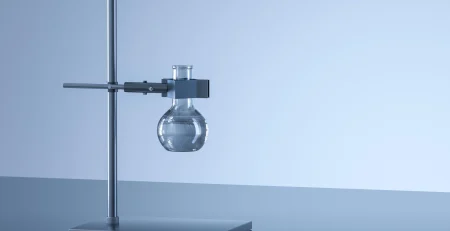
BORO 3.3 borosilicate glass is a workhorse material for microbiology, analytical chemistry, and general laboratory workflows. It has low thermal expansion, strong chemical resistance, and maintains its shape under repeated heating and cooling. This is exactly what you need when you autoclave media, heat buffers on hotplates, perform distillations, or store reagents across a range of temperatures.
Typical uses in microbial, analytical, and teaching workflows include:
- Erlenmeyer flasks for shaking cultures in incubated shakers, with good gas exchange and stable mixing
- Volumetric flasks for accurate stock solutions and media concentrates, particularly where ISO or ASTM methods specify tight volume limits
- Measuring cylinders and pipettes for serial dilutions, titrations, and standard curve preparation
- Distillation assemblies for preparing high-purity water or solvents for sensitive assays and culture media
High-quality BORO 3.3 glassware is designed to handle autoclaves, dry ovens, and hotplates without stress cracking, provided it is heated and cooled correctly. Stable dimensional properties help keep volume marks accurate over time, which supports repeatable methods and long-term QC studies in microbiology, food and beverage testing, and environmental monitoring.
At LabChoice Australia, our premium BORO 3.3 glassware is aligned with recognised ISO and ASTM tolerances for volume and thermal performance. This provides a clear technical reference for microbiology, analytical chemistry, and industrial laboratories that require traceable and defensible methods. The focus is on research-grade quality that will withstand routine sterilisation cycles and day‑to‑day handling in Australian conditions.
Choosing Plasticware That Protects Cultures and Cells
Plasticware carries a lot of the daily load in microbiology, cell culture, and teaching. Polylab plasticware supplied by LabChoice includes items such as Petri dishes, centrifuge tubes, microtubes, wash bottles, reagent reservoirs, and storage containers that are designed for regular laboratory use.
Different polymers suit different tasks:
- PP (polypropylene) for tubes and bottles that need chemical resistance and autoclave compatibility
- PS (polystyrene) for clear Petri dishes and plates where visibility, flatness, and consistent optical properties are important
- HDPE and LDPE for wash bottles and storage containers where squeeze performance, impact resistance, and chemical compatibility matter
Matching plastic type to your laboratory conditions is especially important in Australia, where summer heat can challenge storage areas and transport conditions. Knowing temperature limits helps you avoid warping, cracking, or leaching, especially for components stored near incubators or in non‑air‑conditioned stores.
High-quality plasticware supports result integrity through:
- Consistent wall thickness that withstands centrifugation and reduces risk of tube failure, even at higher g‑forces
- Secure sealing and thread design that limit evaporation, particularly during long incubations or warm transport
- Validated sterility options that lower the chance of background contamination on plates, in broths, or in cell culture flasks
Polylab products supplied through LabChoice are selected as research-grade options, with traceable batches and specifications suited to education, industry, and research settings. This allows Australian laboratories and schools to standardise on a trusted plasticware brand across microbiology, cell culture, and STEM education.
Instruments and Standards That Underpin Result Integrity
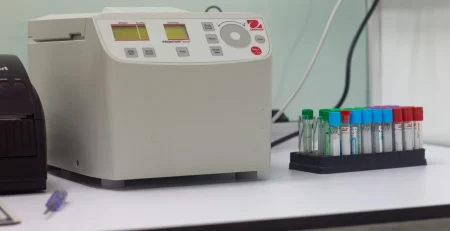
Even the best glass and plastic cannot rescue poor equipment performance. For microbiology, life-science, and STEM teaching work, key instruments include:
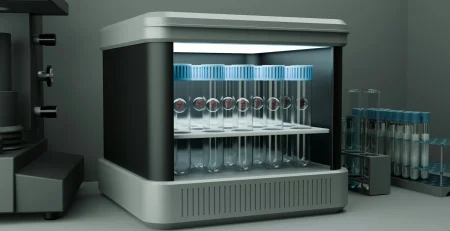
- Incubators and incubated shakers for controlled growth temperatures and mixing
- Hotplates and magnetic stirrers for even heating and proper dissolution of media and reagents
- Water baths for gentle temperature control of samples, cultures, and enzyme reactions
- Balances for weighing dehydrated media, supplements, and reference materials
- pH metres for adjusting and verifying media pH before sterilisation and during routine QC
- Filtration assemblies for culture media, sterility testing, environmental monitoring, and sample preparation
Result integrity relies on consistent temperature, time, mixing speed, and measurement. Uniform temperature within incubators, accurate RPM on shakers, and reliable calibration of balances and pH metres help your methods align with ISO and ASTM guidelines for incubation, volumetric preparation, and filtration.
Instrument housings and internal surfaces also need to tolerate routine disinfection, as microbiology spaces face regular cleaning with alcohols and disinfectants. Materials that resist corrosion and cracking will hold up better to daily use in clinical, industrial, and teaching laboratories.
LabChoice Australia sources research-grade equipment designed to integrate with BORO 3.3 glassware and Polylab plasticware, so that heating, cooling, mixing, and measurement steps work together. Pairing these instruments with quality microbiology supplies lowers variability and helps you answer detailed questions from auditors or internal QA teams about how your data is produced.
Buying Microbiology Supplies for Australian Labs and Schools
When you plan a purchase for an Australian laboratory or classroom, it helps to work through a simple buying checklist:
- Is the glassware or plasticware compatible with your autoclave cycle and loading patterns?
- Are power requirements and safety features for instruments matched to local standards and your facility’s electrical supply?
- Can your storage rooms and transport pathways handle summer heat without pushing items beyond their limits?
- Do you have batch consistency across multiple campuses or laboratory sites, and can you standardise on a small number of premium SKUs?
For teaching laboratories and early STEM programmes, economy ranges may be suitable for basic demonstrations, where students learn technique and general principles. As work moves into accredited testing, research-grade microbiology, cell culture, or tissue culture, the focus should shift to tighter tolerances, higher temperature ratings, more precise volumetrics, and documented compliance with relevant ISO or ASTM standards.
LabChoice Australia supports comparison across different product types so that laboratories can standardise as much as possible. This is especially valuable when you are buying for microbiology, chemistry, analytical work, industrial testing, and broader life-science or tissue culture projects all at once. Our team can help match BORO 3.3 glassware, Polylab plasticware, and instruments to the level of risk and accreditation required in your workflow.
Elevating Your Lab with Trusted Microbiology Supplies
It is worth taking time to review your current microbiology and life science supplies with a critical eye. Look for items that regularly crack, warp, leak, or give suspect readings, and flag them as high‑risk for your data. Shifting these weak spots to well-specified BORO 3.3 glassware, Polylab plasticware, and research-grade instruments can make day‑to‑day work smoother and your trends more reliable.
LabChoice Australia focuses on premium BORO 3.3 glassware, Polylab plasticware, and research-grade equipment that support accurate, repeatable results in microbiology, cell culture, tissue culture, and STEM education across the country. By treating procurement as part of your quality system, rather than an afterthought, you build a laboratory that protects result integrity from the very first purchase and supports Australian standards of scientific practice.
Equip Your Lab With Reliable Microbiology Supplies Today
Whether you are setting up a new lab or scaling an existing one, we can help you find the right microbiology supplies to keep your work accurate and consistent. At LabChoice Australia, our team is ready to suggest practical options that match your methods, budget and compliance needs. If you would like tailored recommendations or a formal quote, simply contact us and we will respond promptly.