19
Feb
Class A vs Class B Volumetric Glassware
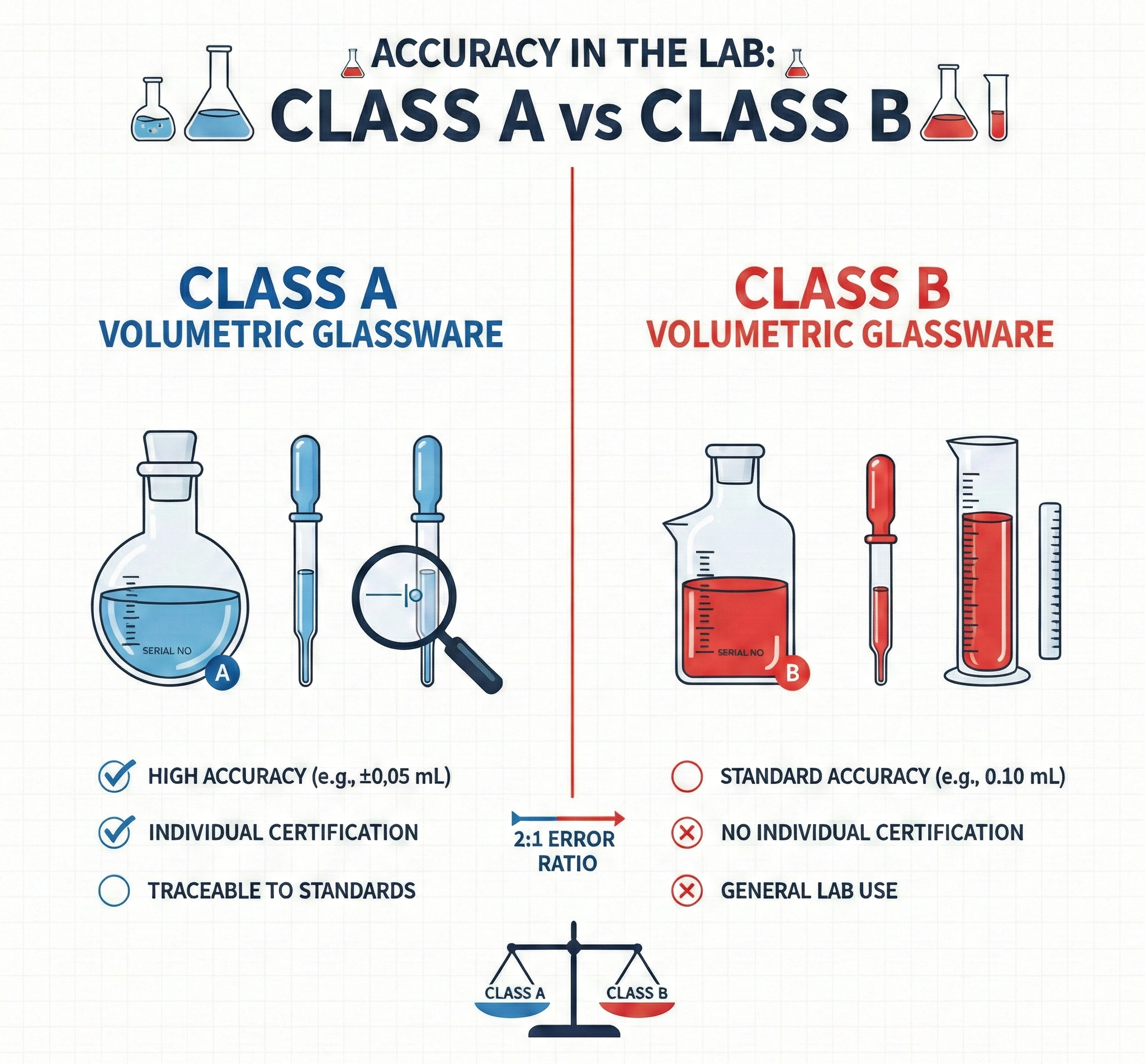
Volumetric glassware is manufactured to defined tolerances so you can measure and deliver volumes with predictable error. The “Class” tells you how tight those tolerances are.
The core difference
- Class A: Higher accuracy, tighter tolerance, typically supplied with a certificate or traceability options depending on the supplier and product line. Best for analytical work where measurement uncertainty matters.
- Class B: Lower accuracy (wider tolerance, commonly about twice the permitted error of Class A for the same item and size). Best for general prep where small volume error does not affect outcomes.
When to choose Class A
Use Class A when you need defensible results, comparability, or repeatability, for example:
- calibration standards and reference solutions
- QC release testing, batch verification
- titrations where endpoint precision matters
- method validation and inter-lab comparability
- regulated environments (ISO/IEC 17025 labs, audits)
- electrolyte formulation or any work where concentration drift changes conclusions
Practical rule: if you would redo the experiment because of a 0.5–1% concentration error, choose Class A.
When Class B is enough
Use Class B for:
- routine buffer prep and wash solutions
- teaching labs and general chemistry practicals
- non-critical dilutions and approximate volumes
- cleaning solutions, rinse solvents, media prep where small error is acceptable
Practical rule: if the process has larger inherent variability than the glassware tolerance, Class B is fine.
Accuracy, tolerances, and what it means in the lab
Tolerance is the allowed deviation from the nominal volume. Lower tolerance = more accurate.
Typical pattern:
- Class A tolerance is the tighter spec.
- Class B tolerance is looser, often ~2× Class A (check the marking or standard for the specific item).
Also note:
- “TC” (to contain) vs “TD” (to deliver) matters as much as class.
- Volumetric flasks are usually TC (they contain the stated volume when filled to the mark).
- Pipettes and burettes are usually TD (they deliver the stated volume under defined conditions).
What affects real-world accuracy (even with Class A)
Even Class A glassware can give poor results if technique is inconsistent. Key factors:
- temperature differences (glassware is calibrated at a reference temperature)
- reading the meniscus incorrectly (parallax)
- drainage time not followed for TD items
- dirty or greasy glass causing poor wetting and retention
- using damaged, chipped, or etched glassware
- using the wrong cleaning detergents leaving residues
What to buy: a simple selection guide
For research and QC labs
- Class A volumetric flasks (core standards)
- Class A pipettes for preparation of standards
- Class A burettes for titrations
- Consider certificates/traceability where required by your QA system
For schools and general labs
- Class B volumetric flasks for routine solution prep
- Class B measuring cylinders and basic transfer tools
- Upgrade to Class A only for senior chemistry or demonstration of uncertainty and good practice
Quick FAQs
Is Class A always “better”?
It is more accurate, but not always necessary. It costs more and requires good technique to realise the benefit.
Can I mix Class A and Class B in one method?
You can, but it increases uncertainty and can make troubleshooting harder. For standards and calibration solutions, keep everything Class A.
Do I still need calibration if it is Class A?
For most lab work, Class A is sufficient if in good condition and used correctly. In regulated settings, you may still need verification/calibration records depending on your QA and audit requirements.
What’s the biggest mistake people make with volumetric glassware?
Using Class A but ignoring temperature, meniscus reading, and drainage time. Technique often dominates the final error.
Standards and references
If you want to cite standards in your blog or product pages, these are the most relevant:
RELATED
Posts
19 Jul
Selecting a Benchtop Centrifuge in Australia for Real-World Lab Demands
Get More From Your Benchtop Centrifuge Budget
Choosing a benchtop centrifuge in Australia is not just about ticking a box on an equipment...
read more 10 Mar
Chemical Compatibility of Laboratory Plastics vs Glassware (AU)
Chemical compatibility is not a minor detail. It determines whether your container stays intact, whether your sample remains uncontaminated, and whether your...
read more 10 Mar
Why Volumetric Glassware Is Critical for Analytical Chemistry (AU)
Analytical chemistry depends on one thing more than most people realise: known, repeatable volumes. If your volumes drift, your concentrations drift. If...
read more 5 Mar
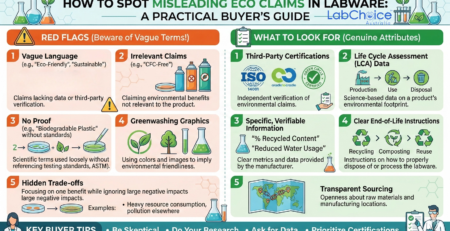
How to Spot Misleading Eco Claims in Labware: A Practical Buyer Guide (AU)
“Sustainable”, “eco-friendly”, and “green” labware claims are everywhere, but many are vague, unverified, or designed to sound better than they are. In...
read more 3 Mar
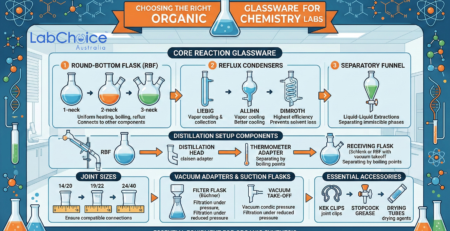
Choosing the Right Glassware for Organic Chemistry Labs (Australia)
Organic chemistry labs depend on clean reactions, controlled heating, reliable seals, and repeatable workups. The right glassware does more than “hold liquid.”...
read more 3 Mar
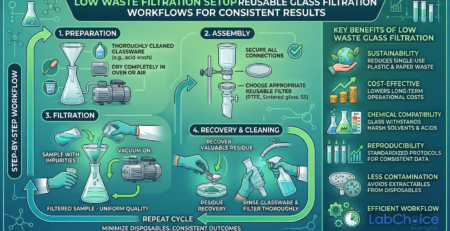
Low Waste Filtration Setup: Reusable Glass Filtration Workflows for Consistent Results (AU)
Filtration is one of the highest-frequency tasks in wet chemistry, materials, and teaching labs. It is also one of the fastest ways...
read more 27 Feb
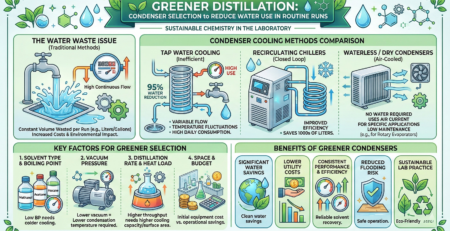
Greener Distillation: Condenser Selection to Reduce Water Use in Routine Runs
Routine distillation can quietly waste a lot of water, especially when condensers are run on continuous tap flow “just to be safe.”...
read more 26 Feb
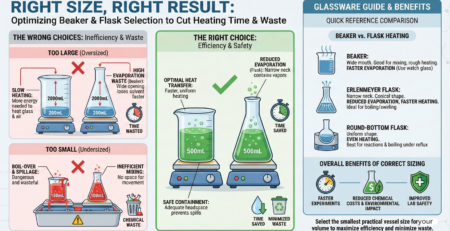
Right Size, Right Result: Choosing Beaker and Flask Sizes to Cut Heating Time and Waste
Choosing the correct beaker or flask size is one of the simplest ways to reduce heating time, solvent loss, and...
read more 25 Feb
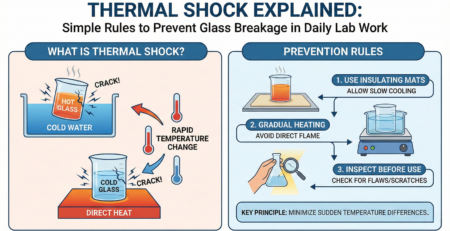
Thermal Shock Explained: Simple Rules to Prevent Glass Breakage in Daily Lab Work
Thermal Shock Explained
Thermal shock is one of the most common reasons laboratory glassware breaks, even when the glass looks perfect and...
read more 24 Feb
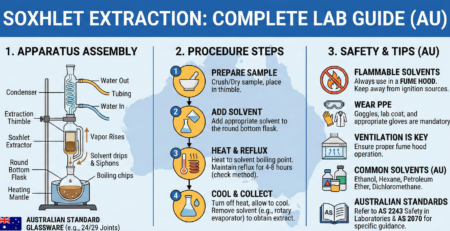
Soxhlet Extraction: Complete Lab Guide (AU)
Soxhlet extraction is a reliable, repeatable technique for pulling target compounds from a solid matrix using continuous solvent reflux and siphoning. In...
read more


