19
Feb
Reuse vs Disposable Labware in Wet Chemistry
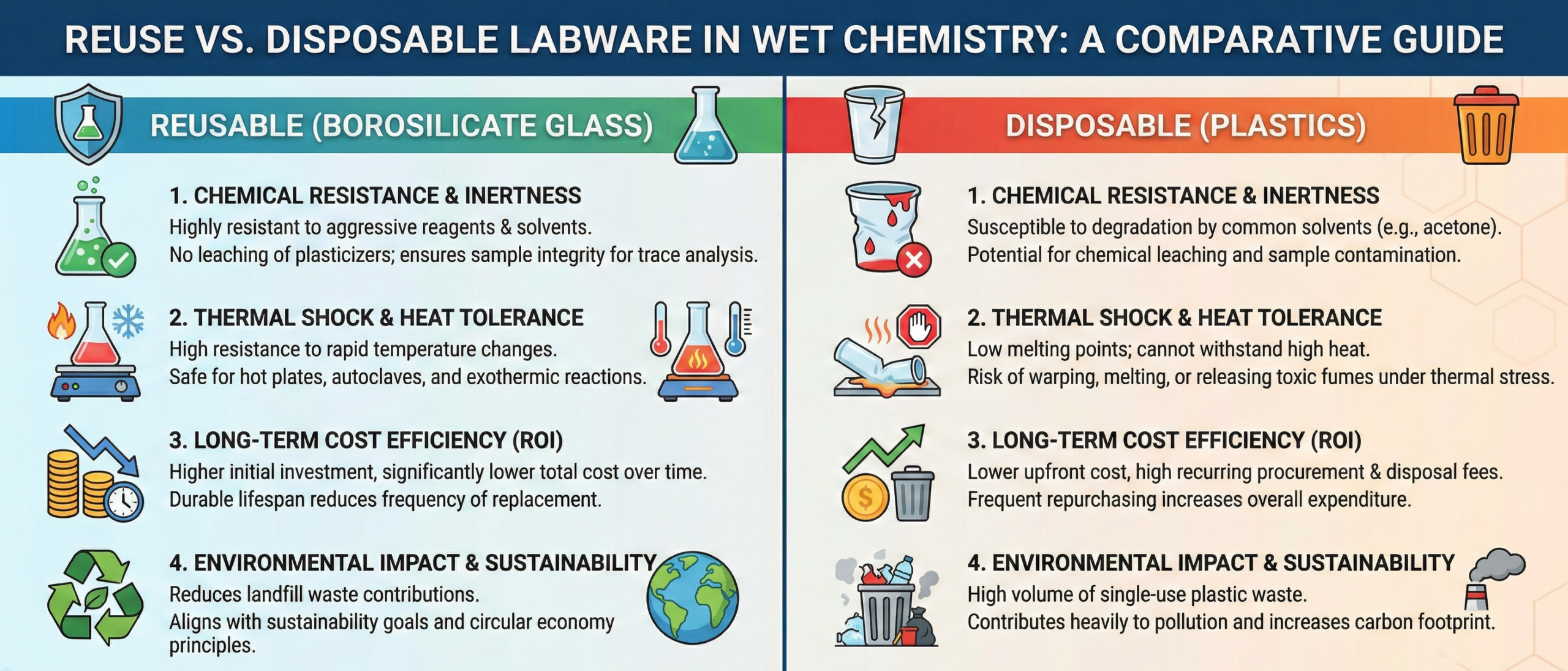
Wet chemistry labs constantly trade off between reusability, contamination control, cost, safety, and waste. The “best” choice is rarely absolute. It depends on your method sensitivity, solvents, turnaround time, and cleaning capability. Below is a practical, lab-ready framework you can use to decide what should be reusable glassware, what should be disposable plasticware, and where hybrids make sense.
What “wet chemistry” changes about the decision
Wet chemistry involves liquids, often corrosive, volatile, or contamination-sensitive. That makes four factors dominant:
- Chemical compatibility (solvents, acids, bases, oxidisers)
- Contamination risk (trace analysis, low ppb targets, memory effects)
- Thermal and mechanical stress (heating, cooling, vacuum, stirring)
- Cleaning capacity (time, validation, water quality, detergents, staffing)
When reusable labware is the better choice
Best reusable options
- BORO 3.3 glass beakers, flasks, condensers, funnels
- Volumetric glassware (Class A) for accuracy-critical work
- Sintered glass funnels for repeated filtration
- Glass reagent bottles for solvent storage
- PTFE components where chemical resistance is required
Choose reusable when you have:
High heat, reflux, or vacuum work
Reusable glassware handles thermal cycling and hotplate heating better than most plastics.
Aggressive solvents or oxidising conditions
Many plastics swell, stress-crack, or leach additives under strong solvents.
Accuracy or stability requirements
Volumetric glass is designed for precision and long-term dimensional stability.
A validated cleaning process
If you can reliably clean and verify cleanliness, reuse becomes economical and sustainable.
When disposable labware is the better choice
Best disposable options
- Pipette tips, transfer pipettes, syringes
- Centrifuge tubes and microtubes
- Sample vials for one-off submissions
- Filter units and membranes
- Gloves, wipes, swabs
Choose disposable when you have:
High contamination sensitivity
Trace metals, organics, and low-level analytical targets are vulnerable to cross-contamination. Single-use helps reduce “carryover”.
High throughput or time pressure
If cleaning is the bottleneck, disposables protect turnaround time.
Biohazard or unknown samples
Disposal reduces exposure and cleaning risk.
Inconsistent washing quality
If water quality, detergents, or staffing varies, cleaning becomes a source of error.
The real trade-offs in wet chemistry
Contamination and “memory effects”
Reusable glass can retain residues, especially with:
- oils, surfactants, polymers
- trace metals adsorbed to surfaces
- strongly coloured dyes and organics
Disposables reduce memory effects, but plastic can introduce its own issues:
- plasticisers, oligomers, additives
- leaching under solvents
- adsorption of analytes to plastic walls
Chemical compatibility
- Glass: strong general chemical resistance, but hydrofluoric acid is a critical exception.
- Plastics: excellent for some acids and aqueous work, less predictable with organics.
Rule of thumb: if your workflow uses strong organic solvents, high temperature, or vacuum, reusable glass is usually safer.
Total cost of ownership
Reusable labware cost is not the purchase price, it includes:
- labour to wash and dry
- detergents and water
- energy use
- breakage
- quality checks and rework
Disposables cost includes:
- unit cost per test
- storage and stockouts
- waste handling costs
- compliance requirements (where relevant)
Sustainability reality check
Disposable does not always mean “worse” if:
- washing consumes significant water and energy
- cleaning requires harsh chemicals
- your lab has low utilisation (glass sits unused but still needs validation)
Reusable is not automatically “greener” unless cleaning is efficient and controlled.Best practices if you reuse labware
- Standardise cleaning SOPs and document them
- Use deionised water of consistent quality
- Dry fully, moisture is a contamination source in many workflows
- Store in clean racks or sealed cabinets, not open shelves
- Inspect for chips, cracks, and etched surfaces that trap residues
- Separate glassware sets by method where contamination risk is high
FAQs
Is glass always better for wet chemistry?
Not always. Glass is excellent for heat and solvent resistance, but disposables can win for trace-level contamination control and throughput.
What causes most contamination in reusable labware?
Incomplete cleaning, poor drying, and storing clean glassware in open dusty areas. Residue “memory” can persist in etched or scratched surfaces.
Are disposable plastics safe with organic solvents?
Some are, many are not. Compatibility depends on polymer type, solvent, temperature, and time. If solvent strength is high or exposure is long, glass is safer.
How do I reduce waste without risking results?
Use a hybrid approach: reuse robust vessels and hardware, keep disposable contact items where contamination risk is highest (tips, filters, sample vials).
RELATED
Posts
19 Jul
Selecting a Benchtop Centrifuge in Australia for Real-World Lab Demands
Get More From Your Benchtop Centrifuge Budget
Choosing a benchtop centrifuge in Australia is not just about ticking a box on an equipment...
read more 10 Mar
Chemical Compatibility of Laboratory Plastics vs Glassware (AU)
Chemical compatibility is not a minor detail. It determines whether your container stays intact, whether your sample remains uncontaminated, and whether your...
read more 10 Mar
Why Volumetric Glassware Is Critical for Analytical Chemistry (AU)
Analytical chemistry depends on one thing more than most people realise: known, repeatable volumes. If your volumes drift, your concentrations drift. If...
read more 5 Mar
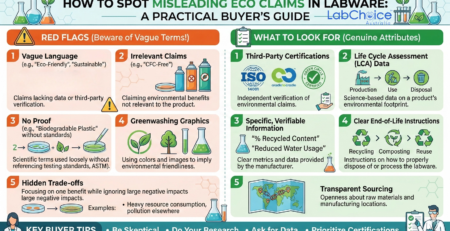
How to Spot Misleading Eco Claims in Labware: A Practical Buyer Guide (AU)
“Sustainable”, “eco-friendly”, and “green” labware claims are everywhere, but many are vague, unverified, or designed to sound better than they are. In...
read more 3 Mar
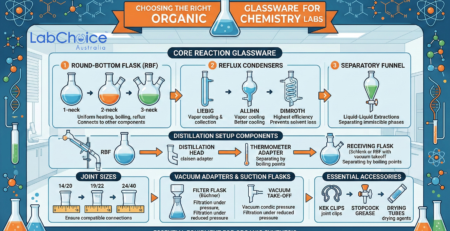
Choosing the Right Glassware for Organic Chemistry Labs (Australia)
Organic chemistry labs depend on clean reactions, controlled heating, reliable seals, and repeatable workups. The right glassware does more than “hold liquid.”...
read more 3 Mar
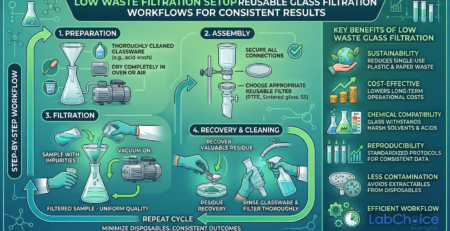
Low Waste Filtration Setup: Reusable Glass Filtration Workflows for Consistent Results (AU)
Filtration is one of the highest-frequency tasks in wet chemistry, materials, and teaching labs. It is also one of the fastest ways...
read more 27 Feb
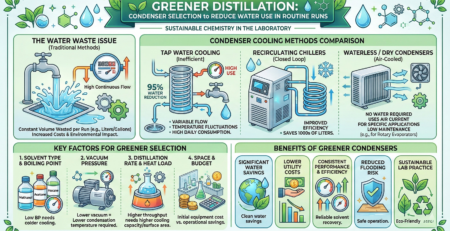
Greener Distillation: Condenser Selection to Reduce Water Use in Routine Runs
Routine distillation can quietly waste a lot of water, especially when condensers are run on continuous tap flow “just to be safe.”...
read more 26 Feb
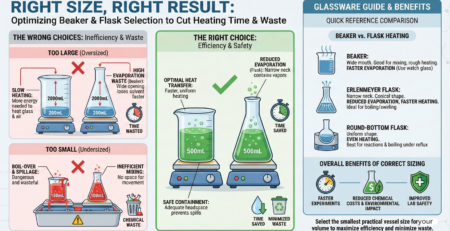
Right Size, Right Result: Choosing Beaker and Flask Sizes to Cut Heating Time and Waste
Choosing the correct beaker or flask size is one of the simplest ways to reduce heating time, solvent loss, and...
read more 25 Feb
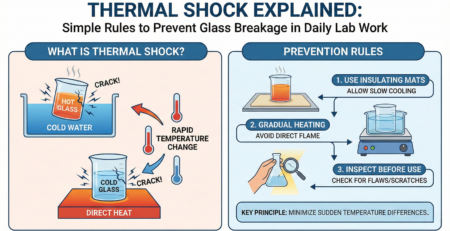
Thermal Shock Explained: Simple Rules to Prevent Glass Breakage in Daily Lab Work
Thermal Shock Explained
Thermal shock is one of the most common reasons laboratory glassware breaks, even when the glass looks perfect and...
read more 24 Feb
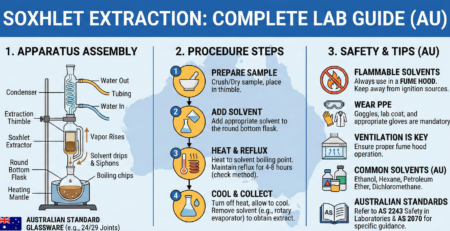
Soxhlet Extraction: Complete Lab Guide (AU)
Soxhlet extraction is a reliable, repeatable technique for pulling target compounds from a solid matrix using continuous solvent reflux and siphoning. In...
read more


