When working with liquids in the lab, clear results come from clean samples. That’s why filtration is such a key part of wet sample testing. Whether we’re teaching students, doing research, or running daily checks, we rely on the right filters to keep unwanted solids out of the way.
Lab filtration equipment in Australia comes in many forms, each helping us make sure liquids are ready for testing. From simple funnels to vacuum setups, this gear makes our work safer and more accurate. In this guide, we’ll cover what filtration equipment does, how it’s used, and what to keep in mind when choosing it for your lab.
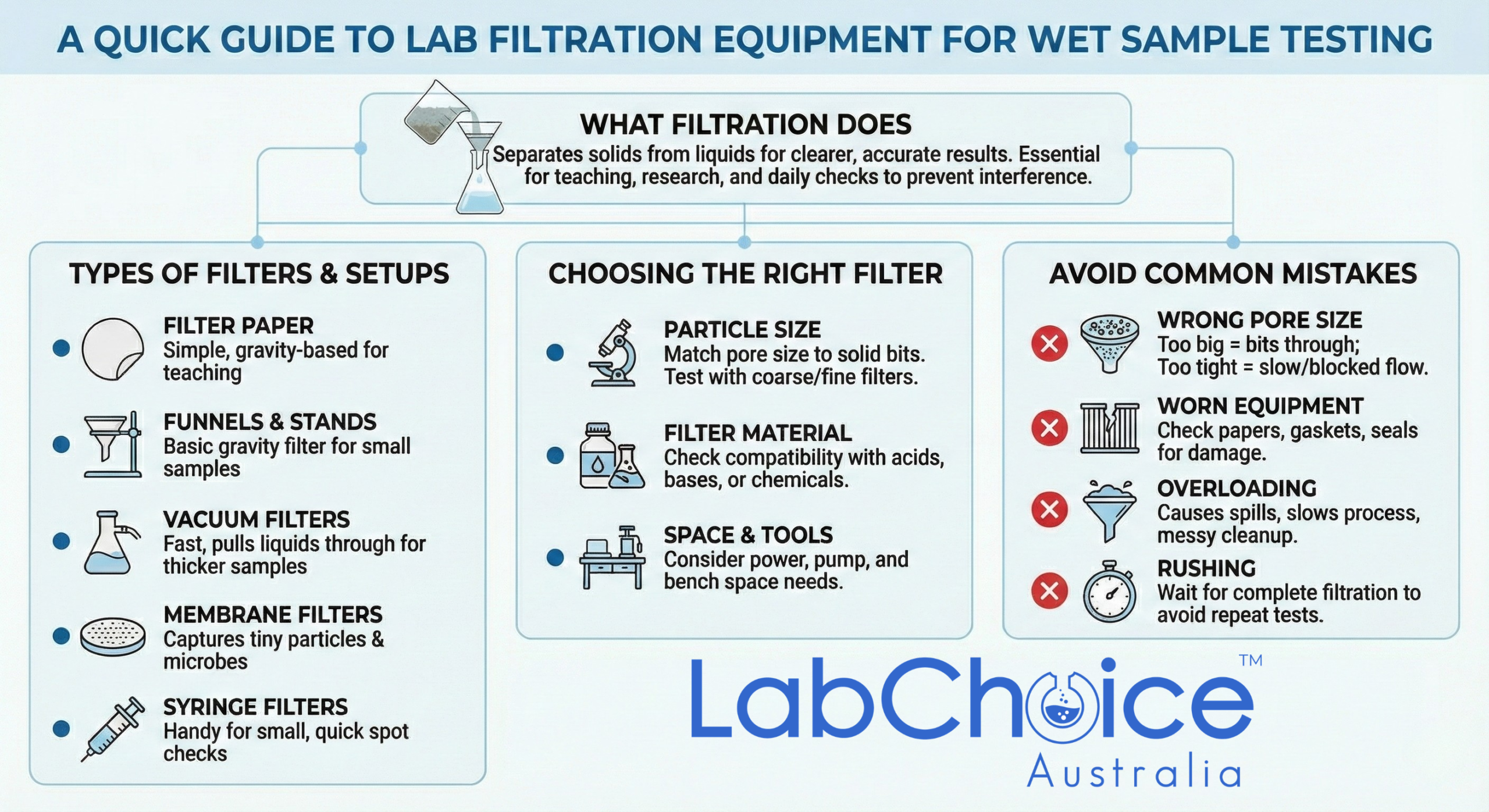
What Filtration Equipment Does in a Lab
Filtering helps separate solids from liquids so our samples are easier to test. It might not sound like a big step, but this part of the process can make or break a test result. If solid bits are left behind, they can throw off readings or interfere with equipment.
In day-to-day lab work, filtration is useful in plenty of simple ways:
• If we’re testing water from a dam or tank, filters help get rid of soil or algae.
• In school labs, filters let students see how clear water should look before testing pH.
• For research, any leftover particles from earlier stages need to be cleared to avoid changes in results.
Filters make it easier to focus only on what’s in the liquid. That saves us time and avoids confusion when we look at results. Even small changes in a sample can mess with data if the mixture hasn’t been properly handled. Whether you are just starting out or have a lot of experience in the lab, taking a bit more care with filtration pays off. Good filtration can mean the difference between repeating a whole experiment and getting the right answer the first time.
Types of Filters and Setups You Might See
Not all filtration tools are the same, and each works better for certain types of jobs. Here’s a quick look at common gear and when we might use each:
• Filter paper: Found in most school and teaching labs, simple and easy to use.
• Funnels and stands: Used with filter paper to form a basic gravity filter, great for small or slow-flowing samples.
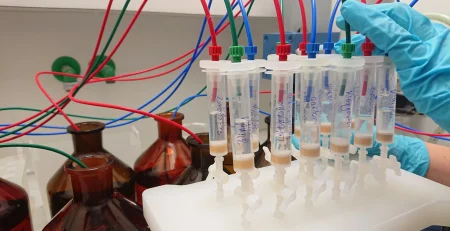
• Vacuum filters: Pull liquids through a filter fast, better for thicker liquids or when time matters.
• Membrane filters: Used when we need to capture very tiny particles or microbes.
• Syringe filters: Handy for small samples, often used in field work or quick spot checks.
In high school science rooms, we usually keep things simple so students can see how the process works. In research or industry settings, we might use powered filters or pressure systems that speed things up and handle more difficult samples. At LabChoice Australia, we stock a wide range of laboratory filtration equipment, including filter papers, membrane filters, vacuum filter assemblies, and filtration accessories, suitable for both teaching and advanced research needs.
Field work adds another angle. Portability and ease of setup often matter more than speed or automation. Simple handheld filters or pre-packed filter units are more common when space and power are limited. With these different options available, picking the right one can help you work more efficiently and keep results more reliable.
How to Choose the Right Filter for Wet Samples
Picking the right filter matters because each sample acts differently. What works for soft water might not work for sticky liquids or samples with thick clumps in them. A few things we always check when setting up:
1. Particle size: If what we’re removing is large and easy to see, a basic filter paper might be enough. If it’s fine dust or bacterial cells, we need finer filters or membranes. Remember, the size of what you are trying to remove will guide which filter works best. If you’re not sure, it’s a good idea to run a test with both coarse and fine filters.
2. Filter material: Some liquids don’t play well with certain materials. Strong acids, bases, or chemical mixes can wear out filters faster or damage them altogether. Plastic filters suit some needs, while glass or special coatings are needed for others.
3. Space and tools: Does the filter setup need a pump, stand, or power supply? Some workplaces only have limited bench space, so we often work around that by choosing smaller or simpler tools.
If we’re not sure yet how rough or runny a sample will be, starting with a basic test run helps. Trying one or two filter types can show us what’s likely to clog, leak, or leave bits behind. Even in the same lab, different projects might need new approaches. It always helps to talk with team members about what’s worked for them, especially if you’re new to a type of sample.
Common Mistakes That Can Affect Results
Getting clean results isn’t just about having filters, it’s about using them the right way. We’ve seen how easy it is to end up with strange results from small mistakes. Some of the most common issues include:
• Picking the wrong pore size: If the filter holes are too big, bits get through. If they’re too tight, flow slows down too much or blocks completely.
• Using worn equipment: Filters that tear, clog, or discolour are no help at all. We make a habit of checking filter papers, gaskets, and seals before starting any round of tests.
• Overloading: Piling too much into a filter slows everything down and risks spills or breakage. It also makes cleanup messy.
• Rushing the process: Filtration takes a bit of time. If we force it or skip steps, we just end up repeating whole tests later.
Simple habits, like waiting until a sample passes all the way through or swapping out filter paper between samples, can make a big difference to how reliable our results are. It’s better to take a little more time early than fix errors later on. When everyone in the lab remembers these habits, it helps keep equipment working longer and results more trustworthy. If something doesn’t look right while filtering, it’s always worth checking rather than rushing ahead.
Better Testing Outcomes Start with Better Prep
At LabChoice Australia, we know that having the right filtration setup can make all the difference for accurate results. Our filtration solutions include leading brands and models, covering the full spectrum of laboratory needs from routine school experiments to advanced industry testing. When wet sample testing is less of a guessing game and more of a streamlined, repeatable process, results are clearer and turnaround is faster.
No matter where we’re working, a school, a remote site, or a full-scale lab, matching filtration gear to the job helps us stay on track. Less time fixing problems means more time getting to the results we came for. Every time a filter does its job well, we get one step closer to clean, safe, and accurate lab testing.
At LabChoice Australia, we understand how vital it is to have the right filtration tools for your testing needs. Our extensive selection of lab filtration equipment in Australia is designed to help ensure precise results, saving you time and hassle in the lab. By choosing the correct filters, you enhance your lab efficiency and maintain the integrity of your work. Contact us today to discuss how we can support your laboratory’s filtration requirements with our top-notch equipment.