1 Sep

Reagent Bottles Explained: Narrow Neck vs Wide Neck, Amber vs Clear

Reagent bottles are essential in every laboratory for the storage and handling of liquids, powders, and solutions. Yet...
No Comments
1 Sep

Graduated Cylinders vs Volumetric Flasks: Which Gives More Accurate Measurements?

Accuracy is the cornerstone of reliable science. In Australian schools, universities, and quality control labs, two pieces of...
No Comments
1 Sep

Boiling Flasks: Flat Bottom vs Round Bottom – Which One Should You Choose?

Boiling flasks are a staple in laboratories, used for heating, mixing, and distillation. But the choice between flat...
No Comments
1 Sep

Sustainable Labware: Glass vs Plastic for Eco-Friendly Science

Sustainability is becoming a top priority for laboratories across Australia. With growing awareness of plastic waste and carbon...
No Comments
1 Sep

Autoclaving Laboratory Glassware: What Can and Can’t Be Sterilised

Autoclaving remains the gold standard for sterilisation in laboratories across Australia. By applying pressurised steam at 121–134 °C,...
No Comments
1 Sep

Round Bottom vs Flat Bottom Flasks: Choosing the Right Boiling Flask

Separatory funnels are indispensable for liquid–liquid extractions, a technique widely used in organic chemistry, pharmaceuticals, and educational labs....
No Comments
1 Sep

Desiccators in the Lab: Glass vs Plastic, Vacuum vs Plain

Moisture control is critical in laboratories, especially when working with hygroscopic materials, weighing samples, or storing sensitive reagents....
No Comments
1 Sep

Vacuum Filtration Setup: Buchner Flasks, Funnels, and Safety Tips

Vacuum filtration is a cornerstone technique in laboratories, used to separate solids from liquids efficiently. From chemistry classrooms...
No Comments
1 Sep

Amber Glass vs Clear Glass: When to Use Each in the Laboratory

Laboratory storage is more than convenience — the choice between amber glass and clear glass can determine whether...
No Comments
1 Sep

Class A vs Class B Glassware: Accuracy Standards Explained

Accuracy is the foundation of reliable laboratory results. Whether in schools, research institutes, or Australian quality control labs,...
No Comments

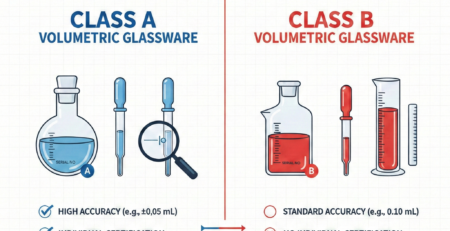
Class A vs Class B Volumetric Glassware

Volumetric glassware is manufactured to defined tolerances so you can measure and deliver volumes with predictable error. The “Class” tells...

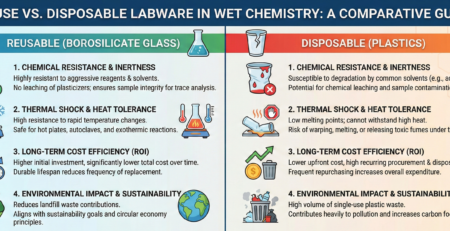
Reuse vs Disposable Labware in Wet Chemistry

Wet chemistry labs constantly trade off between reusability, contamination control, cost, safety, and waste. The “best” choice is rarely absolute....

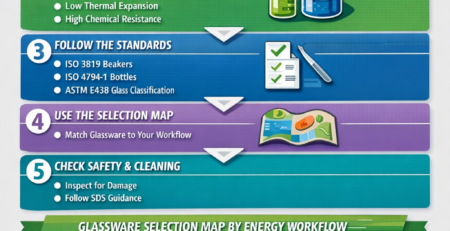
Sustainable Energy Laboratory Glassware: Full Buyer Guide for Australian Labs

Sustainable energy research labs push glassware harder than many “standard” chemistry workflows. Battery electrolytes, solar inks, hydrogen catalysts, biofuel samples,...
lab instruments

Looking for Lab Instruments for Sale in Australia That Actually Match Your Needs

Finding lab instruments that actually match the work being done is harder than it should be. Plenty of labs across...

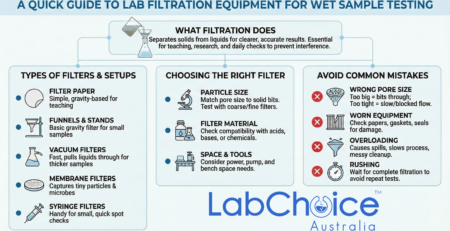
A Quick Guide to Lab Filtration Equipment for Wet Sample Testing

When working with liquids in the lab, clear results come from clean samples. That’s why filtration is such a key...

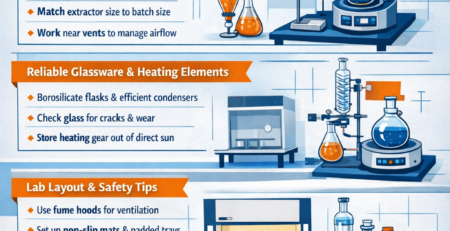
Which Extraction and Distillation Tools Suit Aussie Research Labs

Extraction and distillation are part of daily life in many Aussie research labs. Whether it is for...

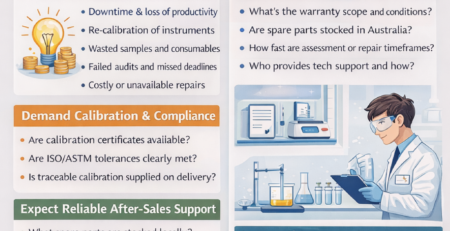
How to Choose Laboratory Equipment Suppliers for Long-Term Value

Outfitting a laboratory is not just a one-off purchase; it is a long-term commitment that shapes the quality, safety, and...

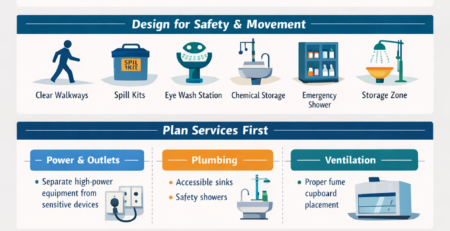
Why Chemistry Lab Layouts Depend on Your Equipment Choices

The layout of a chemistry lab isn't just about where the benches and cupboards go. It's often shaped by...

How to Buy Lab Equipment Online in Australia Without Guesswork

Shopping online for lab equipment is becoming much more common across Australia, especially for those who work in school science...

What Do Analytical Instruments Actually Do in an Australian Lab

Walk into any lab and you’ll probably notice a few quiet machines humming in the background. These are analytical instruments....

What Counts as Lab Consumables and Why They Run Out Fast

When you work in a lab, whether it’s in a busy school, a university science block or a clean industrial...
Glass

Pyrex and Borosilicate Glass, What’s the Difference

When you hear people talk about glassware in a lab, Pyrex and borosilicate usually...