4 Sep

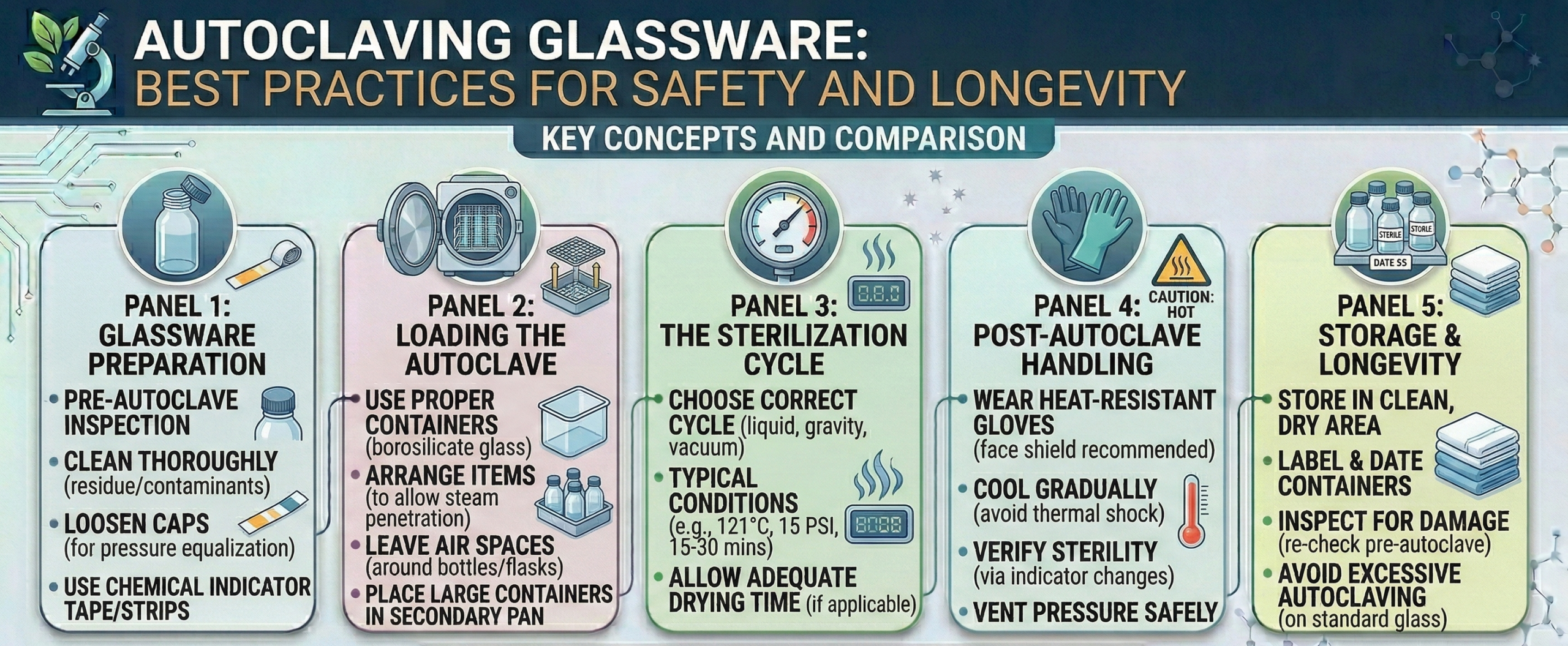
Autoclaving Glassware: Best Practices for Safety and Longevity

Autoclaving is the gold standard for sterilising laboratory equipment. Using high-pressure steam at 121–134 °C, it ensures...
No Comments
4 Sep

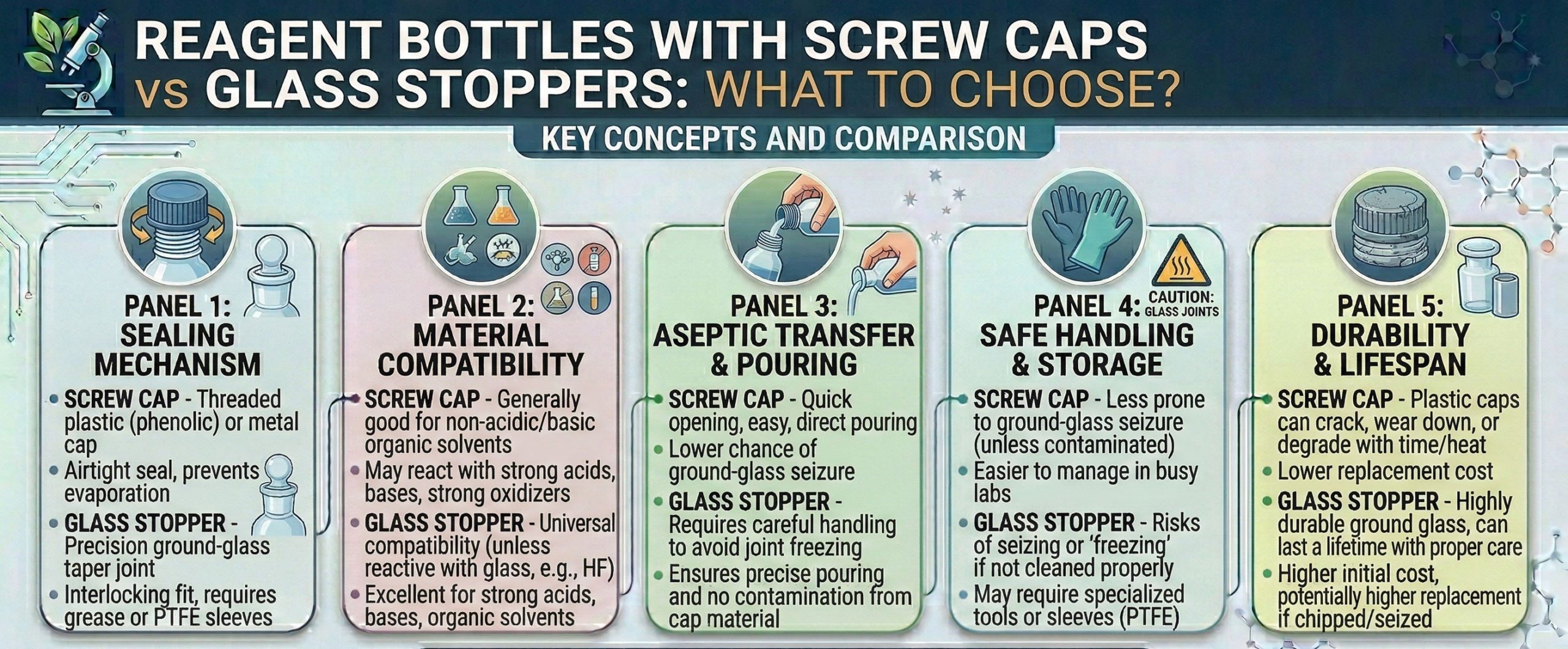
Reagent Bottles with Screw Caps vs Glass Stoppers: What to Choose?

Reagent bottles are essential for the safe storage of chemicals in laboratories. Available with either screw caps or...
No Comments
4 Sep

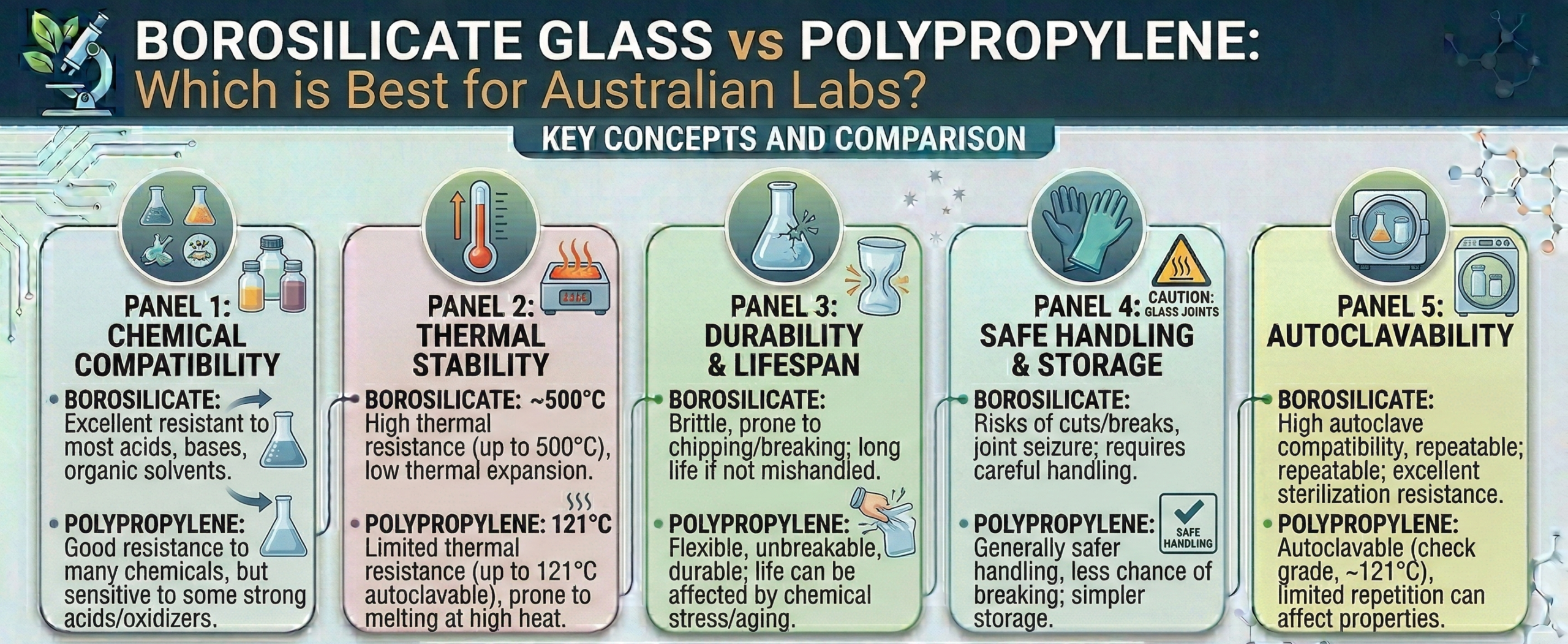
Borosilicate Glass vs Polypropylene: Which is Best for Australian Labs?

Laboratories rely on durable, accurate, and safe materials for experiments, storage, and teaching. Two of the most widely...
No Comments
4 Sep

Laboratory Funnels Compared: Dropping, Separatory, and Pressure Equalising

Funnels are versatile tools used across laboratories for transferring, separating, and controlling liquid flow. While simple glass funnels...
No Comments
4 Sep

Volumetric Flasks in Analytical Chemistry: Accuracy Standards Explained

In analytical chemistry, accuracy is everything. Whether preparing a standard solution or performing titrations, laboratories rely on volumetric...
No Comments
4 Sep

Vacuum Filtration in the Lab: Choosing the Right Buchner Flask and Funnel

Vacuum filtration is one of the most common separation techniques in laboratories, allowing solids to be quickly and...
No Comments
4 Sep

Glass Beakers vs Plastic Beakers: Accuracy, Safety, and Sustainability

Beakers are one of the most widely used pieces of laboratory glassware. Available in both glass and plastic,...
No Comments
4 Sep

Class A vs Class B Measuring Cylinders: Which is Right for Your Lab?

Measuring cylinders are essential tools for laboratories, providing a simple and reliable way to measure liquid volumes. But...
No Comments
4 Sep

Amber Glassware in the Lab: UV Protection and Chemical Stability Explained

Certain chemicals are highly sensitive to light and degrade rapidly when exposed. For laboratories in Australia, amber borosilicate...
No Comments
4 Sep

Sustainable Lab Practices with Glassware: Reducing Plastic Waste in Science

Sustainability is becoming a priority in laboratories across Australia. From universities to industry research facilities, reducing plastic waste...
No Comments

Storage Solutions in the Lab: Why Polypropylene Containers Outperform HDPE in Some Applications

Laboratories depend on reliable storage containers to protect chemicals, samples, and reagents. Two common plastics dominate lab storage — polypropylene...

Burettes with Glass Stopcock vs PTFE Stopcock: Choosing for Accuracy and Maintenance

Burettes are vital in titration, one of the most precise techniques in analytical chemistry. The stopcock — either glass or...

Dropping Funnels vs Pressure Equalising Funnels: When to Use Each

In organic chemistry and distillation, controlled reagent addition is critical for safety and accuracy. Two types of glass funnels —...

Reagent Bottles Explained: Narrow Neck vs Wide Neck, Amber vs Clear

Reagent bottles are essential in every laboratory for the storage and handling of liquids, powders, and solutions. Yet many labs...

Graduated Cylinders vs Volumetric Flasks: Which Gives More Accurate Measurements?

Accuracy is the cornerstone of reliable science. In Australian schools, universities, and quality control labs, two pieces of glassware are...

Boiling Flasks: Flat Bottom vs Round Bottom – Which One Should You Choose?

Boiling flasks are a staple in laboratories, used for heating, mixing, and distillation. But the choice between flat bottom and...

Sustainable Labware: Glass vs Plastic for Eco-Friendly Science

Sustainability is becoming a top priority for laboratories across Australia. With growing awareness of plastic waste and carbon impact, many...

Autoclaving Laboratory Glassware: What Can and Can’t Be Sterilised

Autoclaving remains the gold standard for sterilisation in laboratories across Australia. By applying pressurised steam at 121–134 °C, it ensures...

Round Bottom vs Flat Bottom Flasks: Choosing the Right Boiling Flask

Separatory funnels are indispensable for liquid–liquid extractions, a technique widely used in organic chemistry, pharmaceuticals, and educational labs. Choosing the...

Desiccators in the Lab: Glass vs Plastic, Vacuum vs Plain

Moisture control is critical in laboratories, especially when working with hygroscopic materials, weighing samples, or storing sensitive reagents. Desiccators —...

Vacuum Filtration Setup: Buchner Flasks, Funnels, and Safety Tips

Vacuum filtration is a cornerstone technique in laboratories, used to separate solids from liquids efficiently. From chemistry classrooms to pharmaceutical...

Amber Glass vs Clear Glass: When to Use Each in the Laboratory

Laboratory storage is more than convenience — the choice between amber glass and clear glass can determine whether your samples...