9 Sep

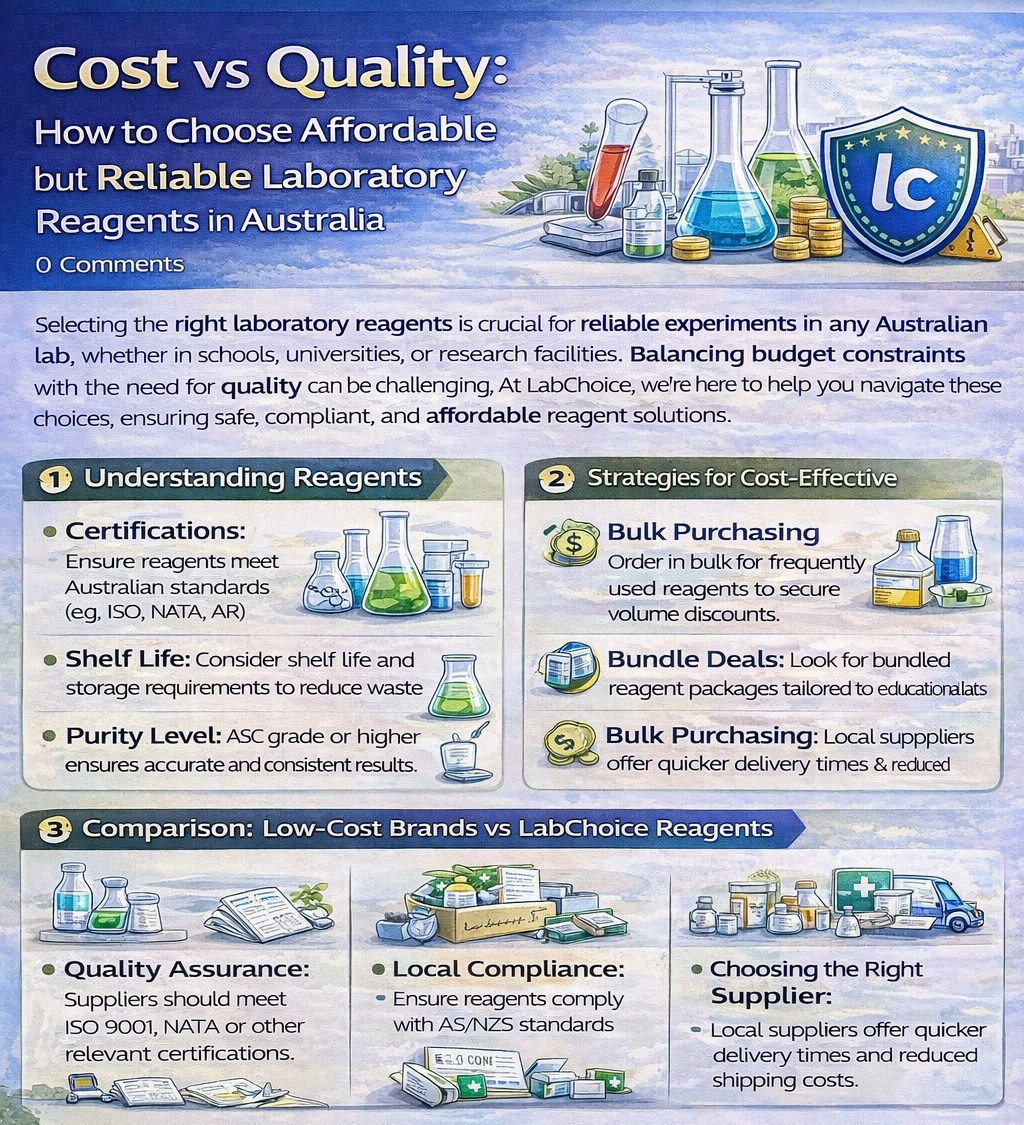
Cost vs Quality: How to Choose Affordable but Reliable Laboratory Reagents in Australia

Laboratory budgets are often stretched between equipment, consumables, and staff training. Reagents make up a significant portion of...
No Comments
9 Sep

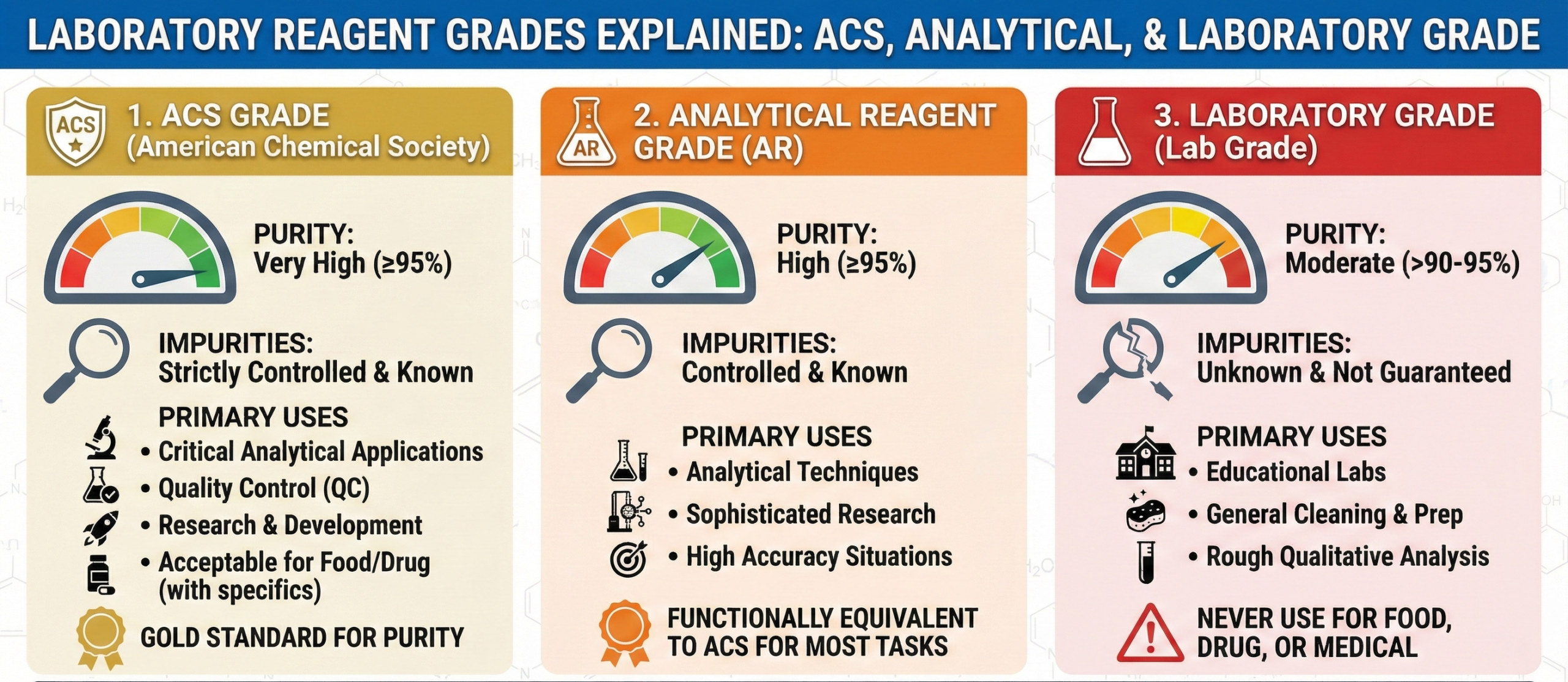
Laboratory Reagent Grades Explained: Analytical, ACS, and Laboratory Grade

The quality of laboratory reagents directly impacts the accuracy, reproducibility, and safety of scientific work. From high school...
No Comments
9 Sep

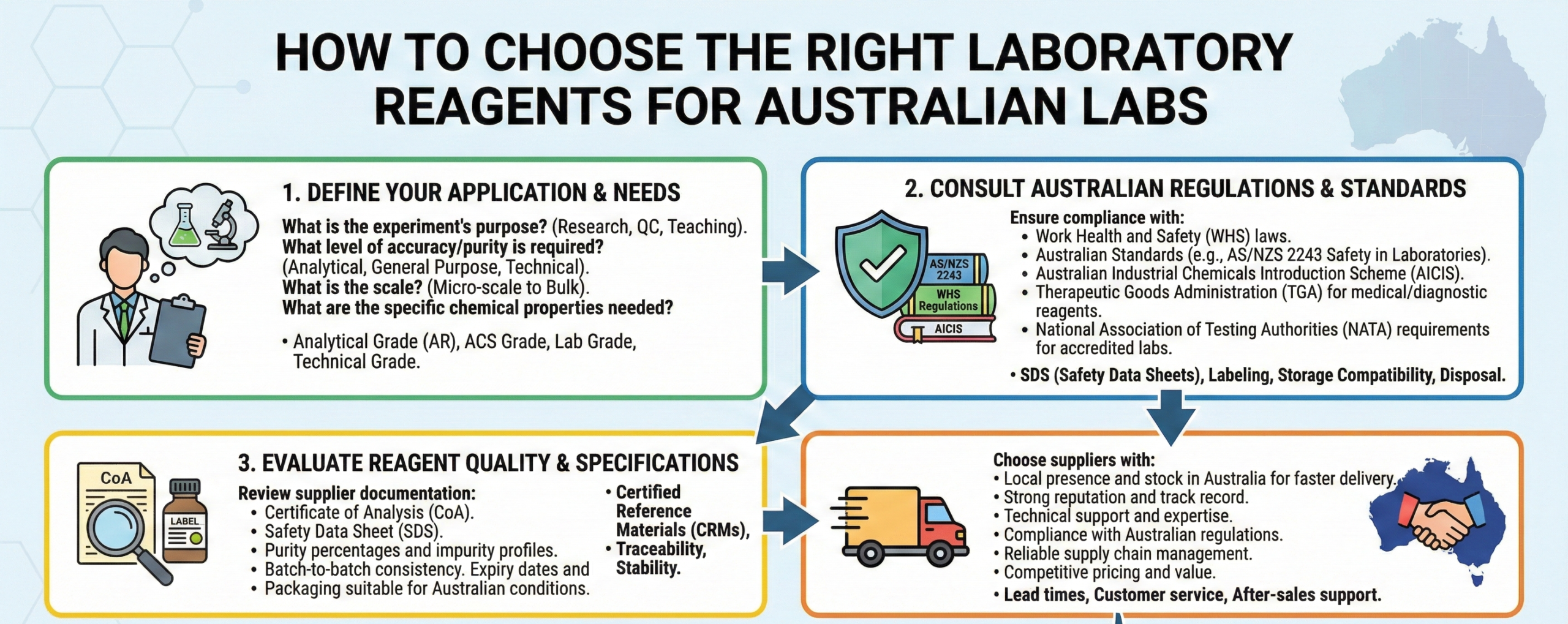
How to Choose the Right Laboratory Reagents for Australian Labs

Laboratory reagents are the foundation of every experiment. From simple teaching demonstrations to complex molecular diagnostics, the reliability...
No Comments
9 Sep

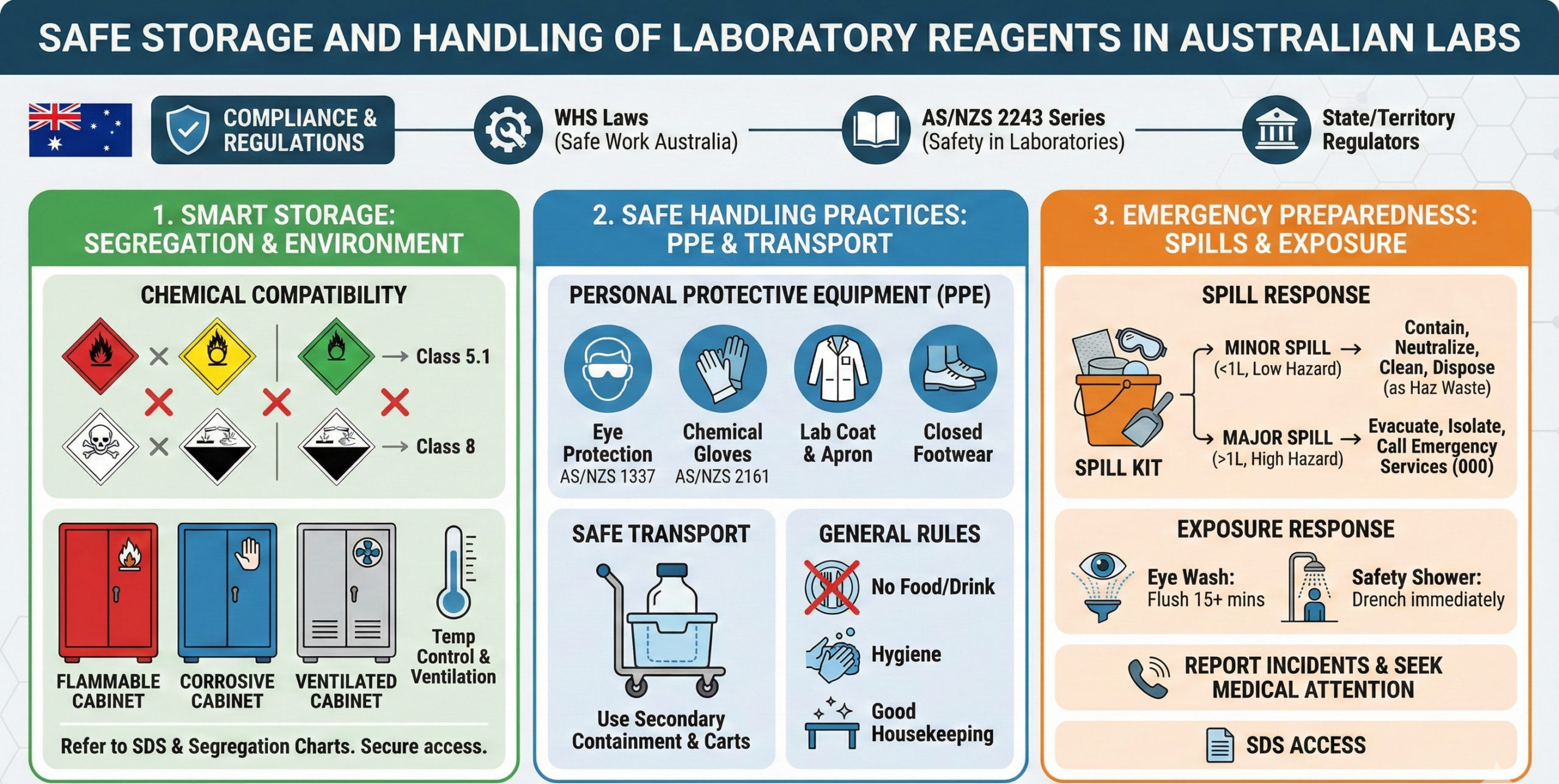
Safe Storage and Handling of Laboratory Reagents in Australian Labs

Laboratory reagents are essential for education, research, and diagnostics — but they also present significant safety risks if...
No Comments
9 Sep

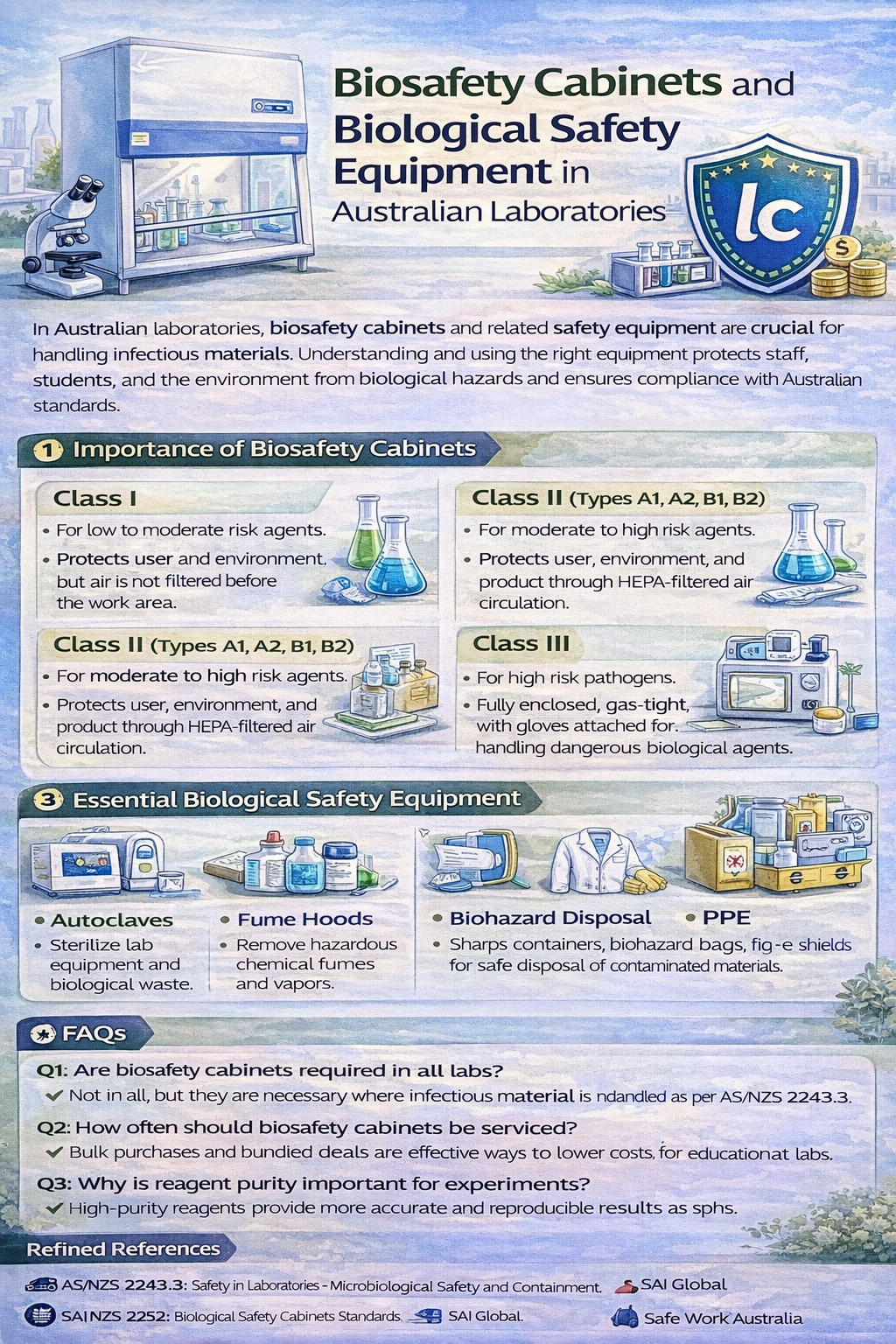
Biosafety Cabinets and Biological Safety Equipment in Australian Laboratories

Biological hazards are a serious concern in laboratories working with microorganisms, cell cultures, and clinical samples. Protecting staff,...
No Comments
9 Sep

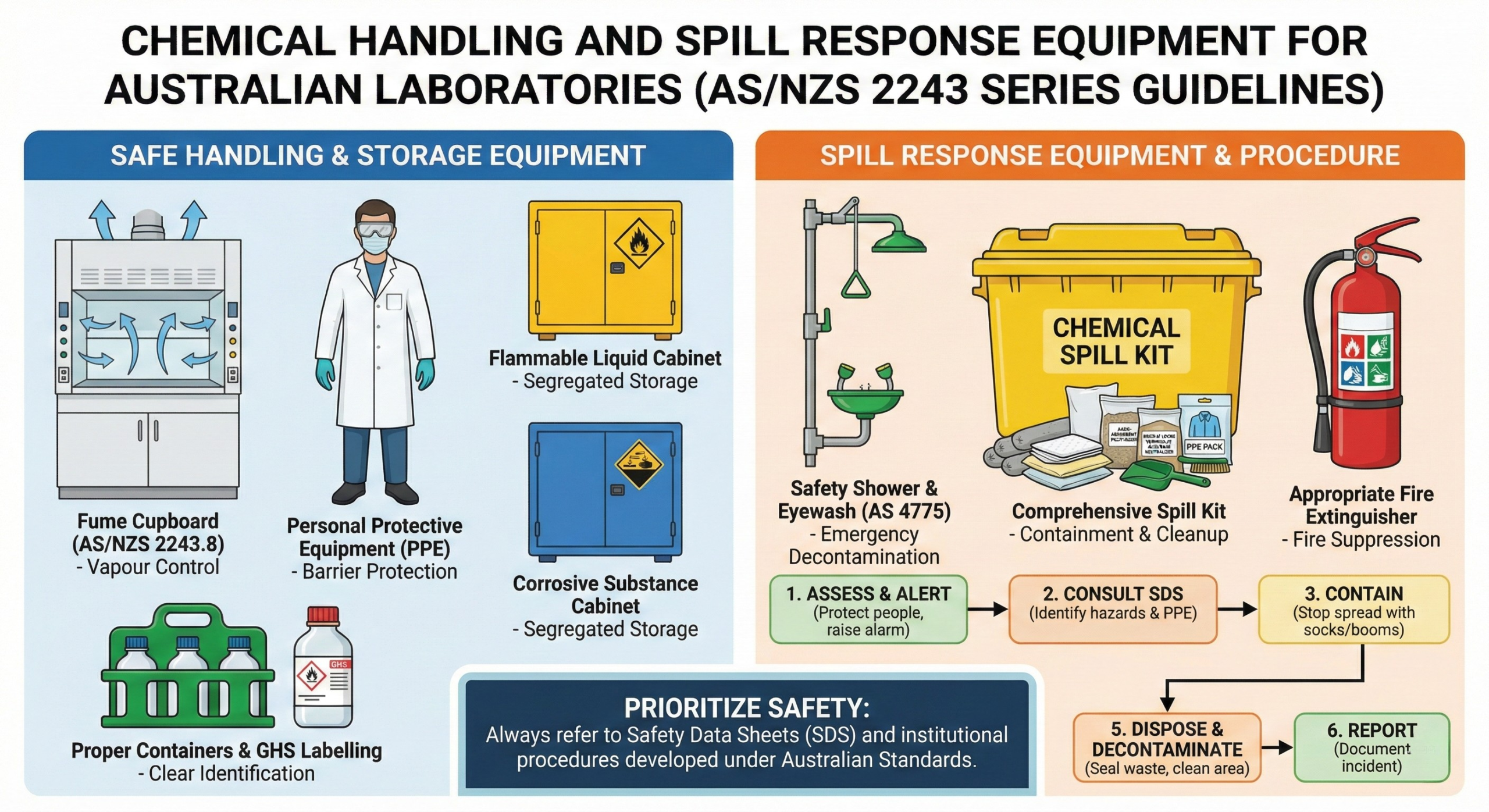
Chemical Handling and Spill Response Equipment for Australian Laboratories

Chemical hazards are one of the greatest risks in laboratories. Even a small spill can cause injuries, damage...
No Comments
9 Sep

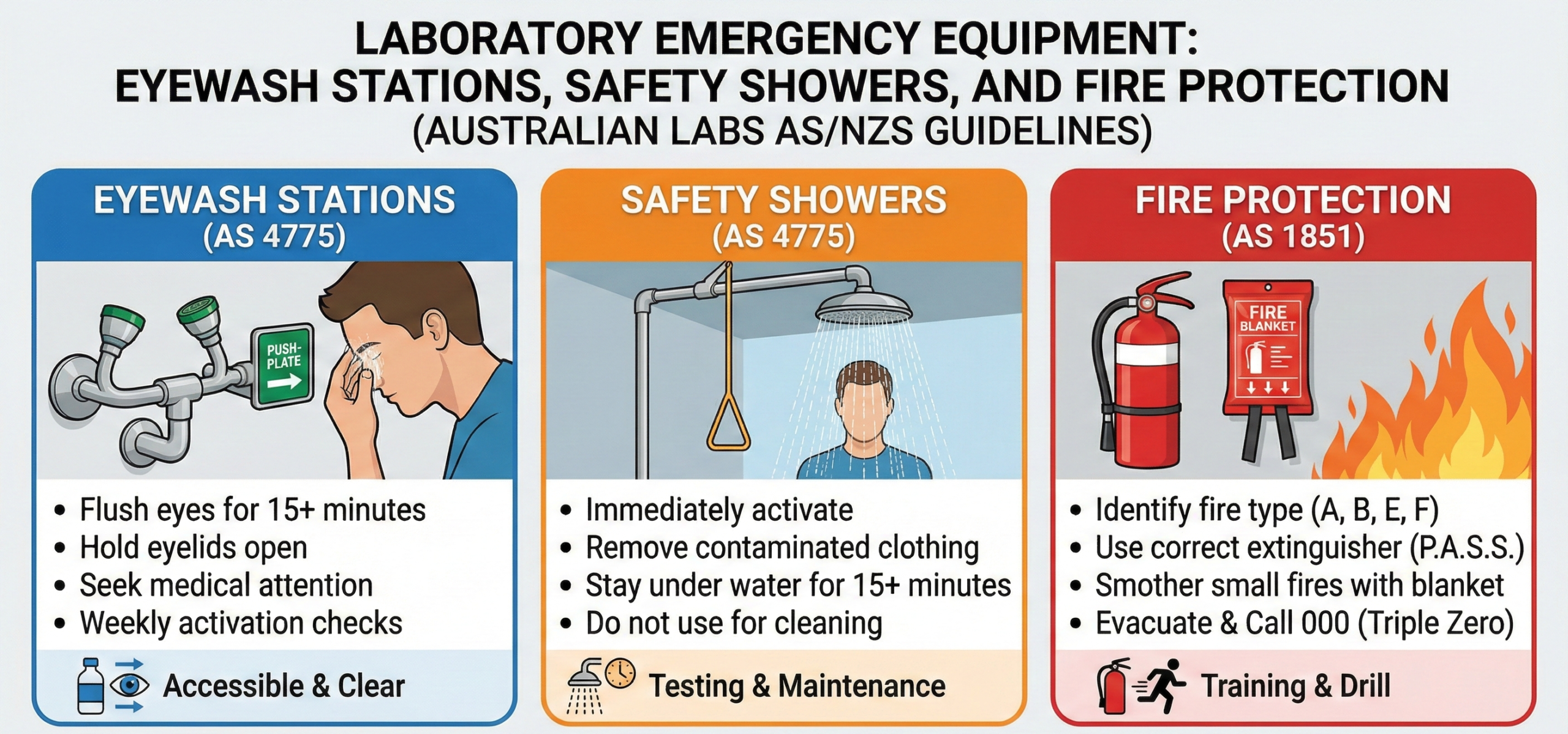
Laboratory Emergency Equipment: Eyewash Stations, Safety Showers, and Fire Protection in Australian Labs

Emergencies in the laboratory can happen without warning — from chemical splashes to fires. Preparedness is key, and...
No Comments
9 Sep

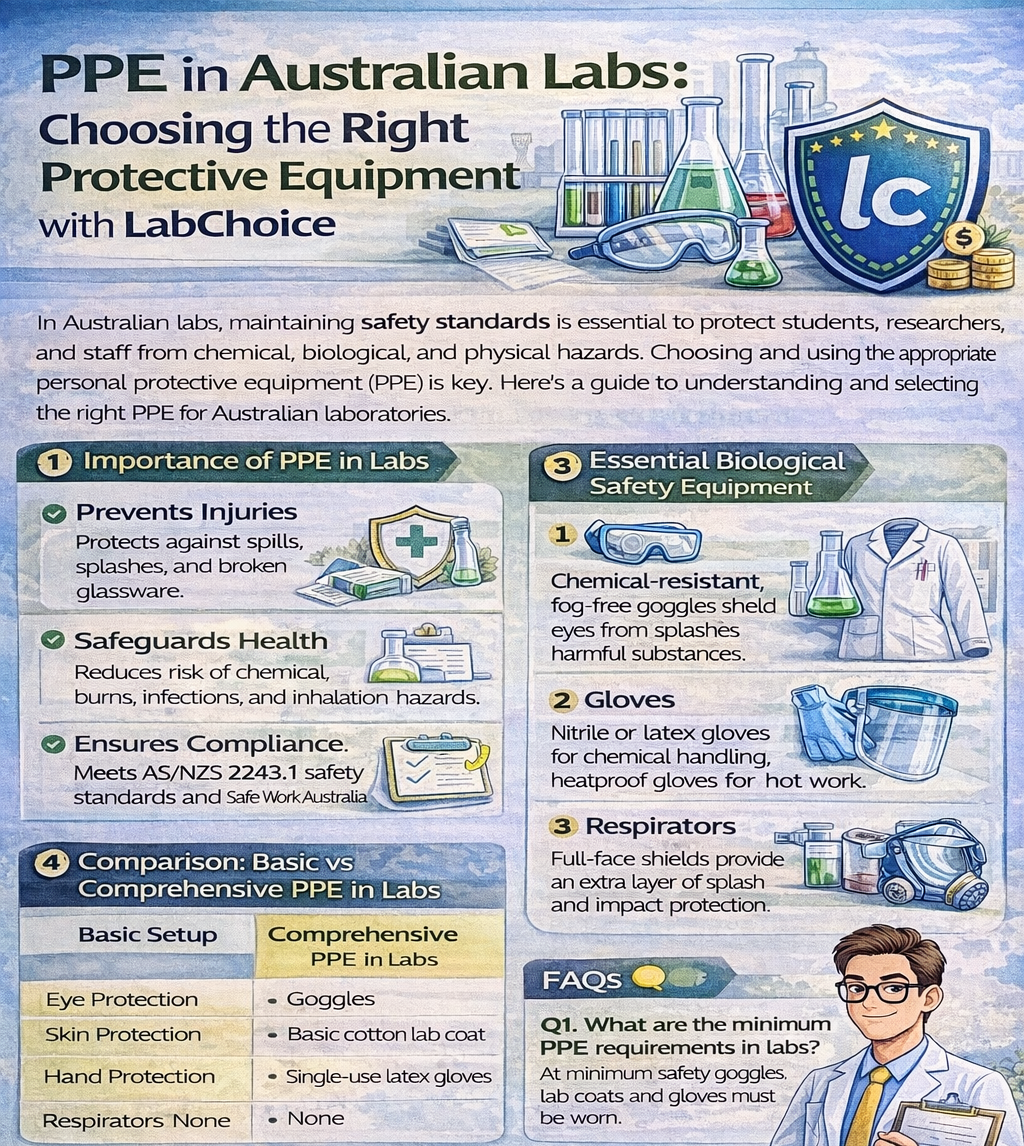
PPE in Australian Labs: Choosing the Right Protective Equipment with LabChoice

Personal Protective Equipment (PPE) forms the frontline defence in any laboratory. From handling corrosive chemicals to working with...
No Comments
9 Sep

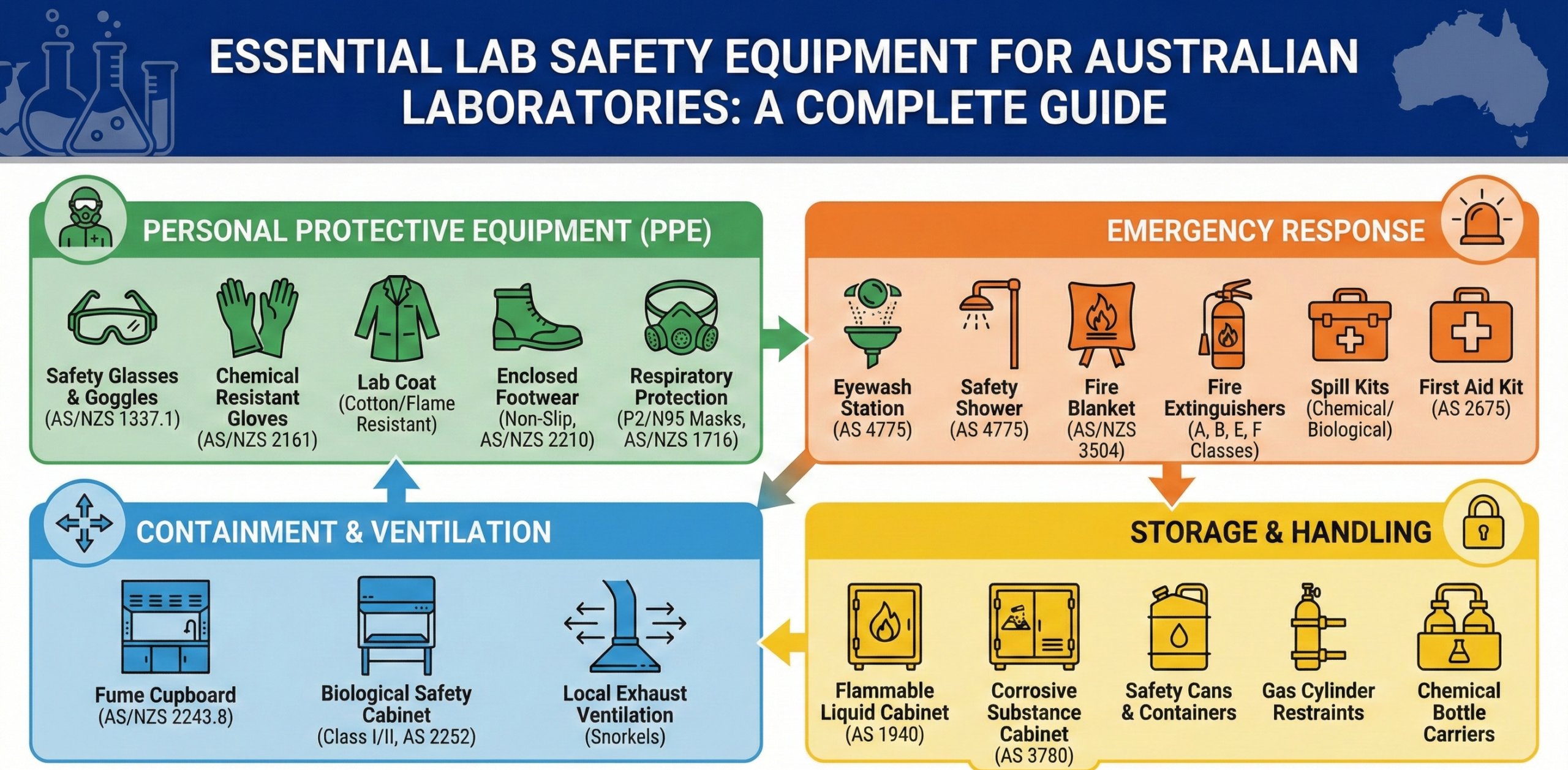
Essential Lab Safety Equipment for Australian Laboratories: A Complete Guide

Laboratories are environments of discovery and innovation, but they also present inherent risks. From chemical spills to biohazard...
No Comments
9 Sep

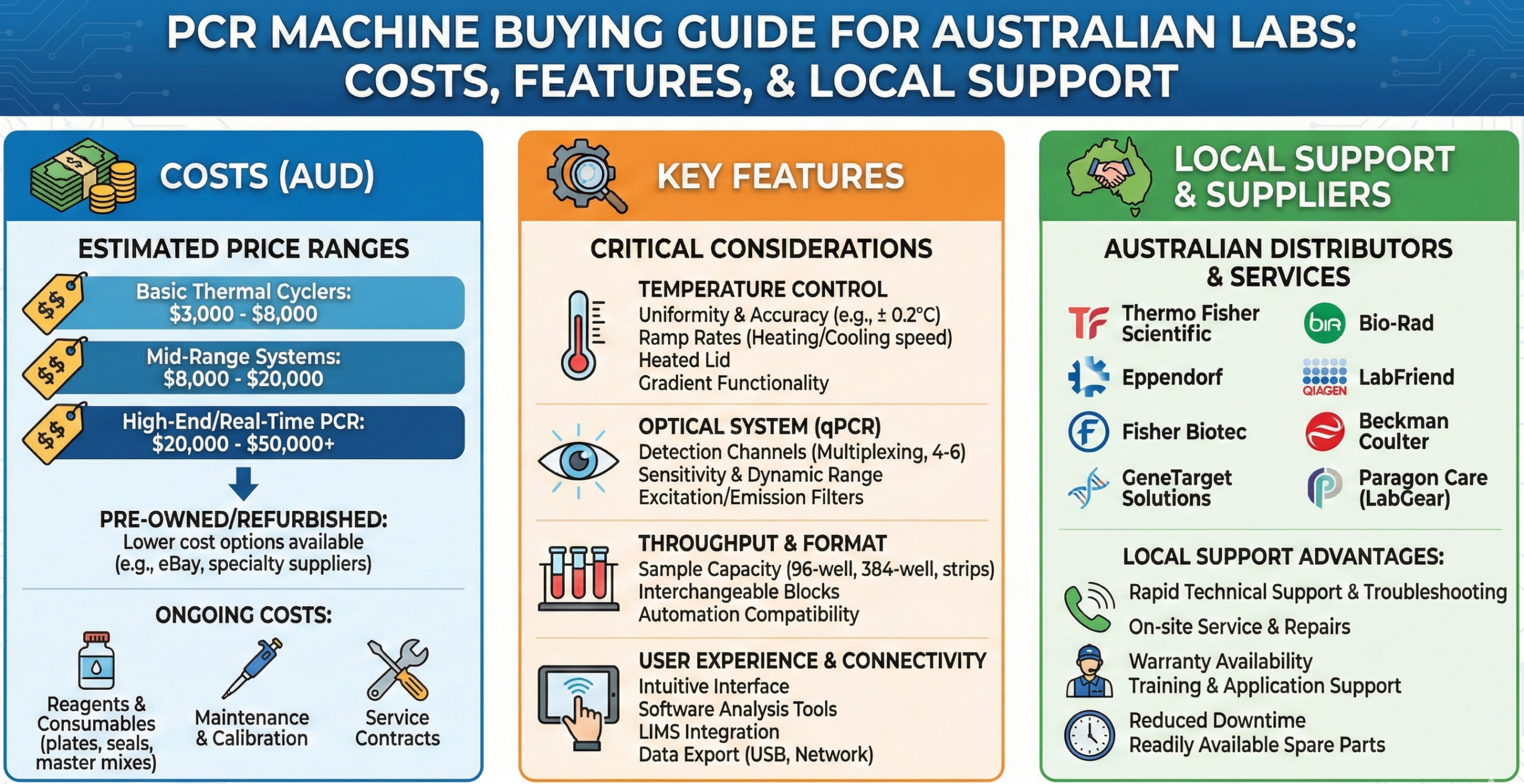
PCR Machine Buying Guide for Australian Labs: Costs, Features, and Local Support

Investing in a PCR machine is one of the most important decisions for an Australian laboratory. Whether used...
No Comments

Borosilicate Glass vs Polypropylene: Which is Best for Australian Labs?

Laboratories rely on durable, accurate, and safe materials for experiments, storage, and teaching. Two of the most widely used are...

Laboratory Funnels Compared: Dropping, Separatory, and Pressure Equalising

Funnels are versatile tools used across laboratories for transferring, separating, and controlling liquid flow. While simple glass funnels are common,...

Volumetric Flasks in Analytical Chemistry: Accuracy Standards Explained

In analytical chemistry, accuracy is everything. Whether preparing a standard solution or performing titrations, laboratories rely on volumetric flasks for...

Vacuum Filtration in the Lab: Choosing the Right Buchner Flask and Funnel

Vacuum filtration is one of the most common separation techniques in laboratories, allowing solids to be quickly and efficiently separated...

Glass Beakers vs Plastic Beakers: Accuracy, Safety, and Sustainability

Beakers are one of the most widely used pieces of laboratory glassware. Available in both glass and plastic, each type...

Class A vs Class B Measuring Cylinders: Which is Right for Your Lab?

Measuring cylinders are essential tools for laboratories, providing a simple and reliable way to measure liquid volumes. But not all...

Amber Glassware in the Lab: UV Protection and Chemical Stability Explained

Certain chemicals are highly sensitive to light and degrade rapidly when exposed. For laboratories in Australia, amber borosilicate glassware (BORO...

Sustainable Lab Practices with Glassware: Reducing Plastic Waste in Science

Sustainability is becoming a priority in laboratories across Australia. From universities to industry research facilities, reducing plastic waste is now...

Graduated vs Volumetric Glassware: Choosing the Right Tool for Precision

In every laboratory, accuracy in liquid measurement determines the reliability of results. Two key categories of glassware — graduated and...

Autoclaving Borosilicate Glassware: Safety, Standards, and Best Practices

Sterilisation is critical for laboratories across Australia, ensuring glassware and equipment are free from microorganisms. Borosilicate glassware (BORO 3.3) is...

Pycnometers: Measuring Liquid Density with Laboratory Accuracy

Pycnometers are precision instruments designed to measure the density of liquids with exceptional accuracy. Made from borosilicate glass (BORO 3.3),...

Desiccators in Research Labs: Vacuum vs Standard Models Explained

Desiccators are indispensable tools for protecting moisture-sensitive samples and reagents. By maintaining a controlled low-humidity environment, they preserve the stability,...