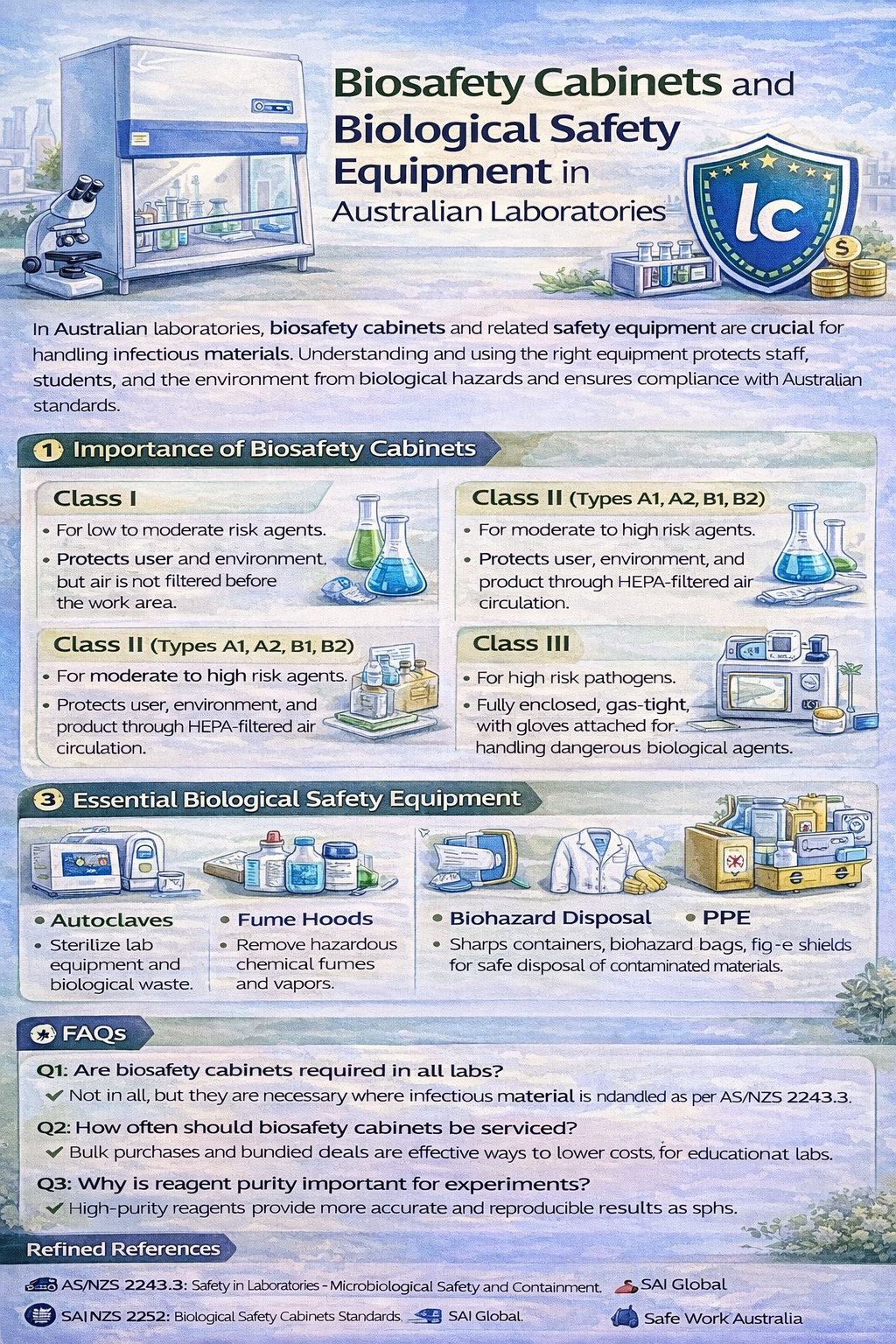
Biosafety Cabinets and Biological Safety Equipment in Australian Laboratories
Biological hazards are a serious concern in laboratories working with microorganisms, cell cultures, and clinical samples. Protecting staff,...
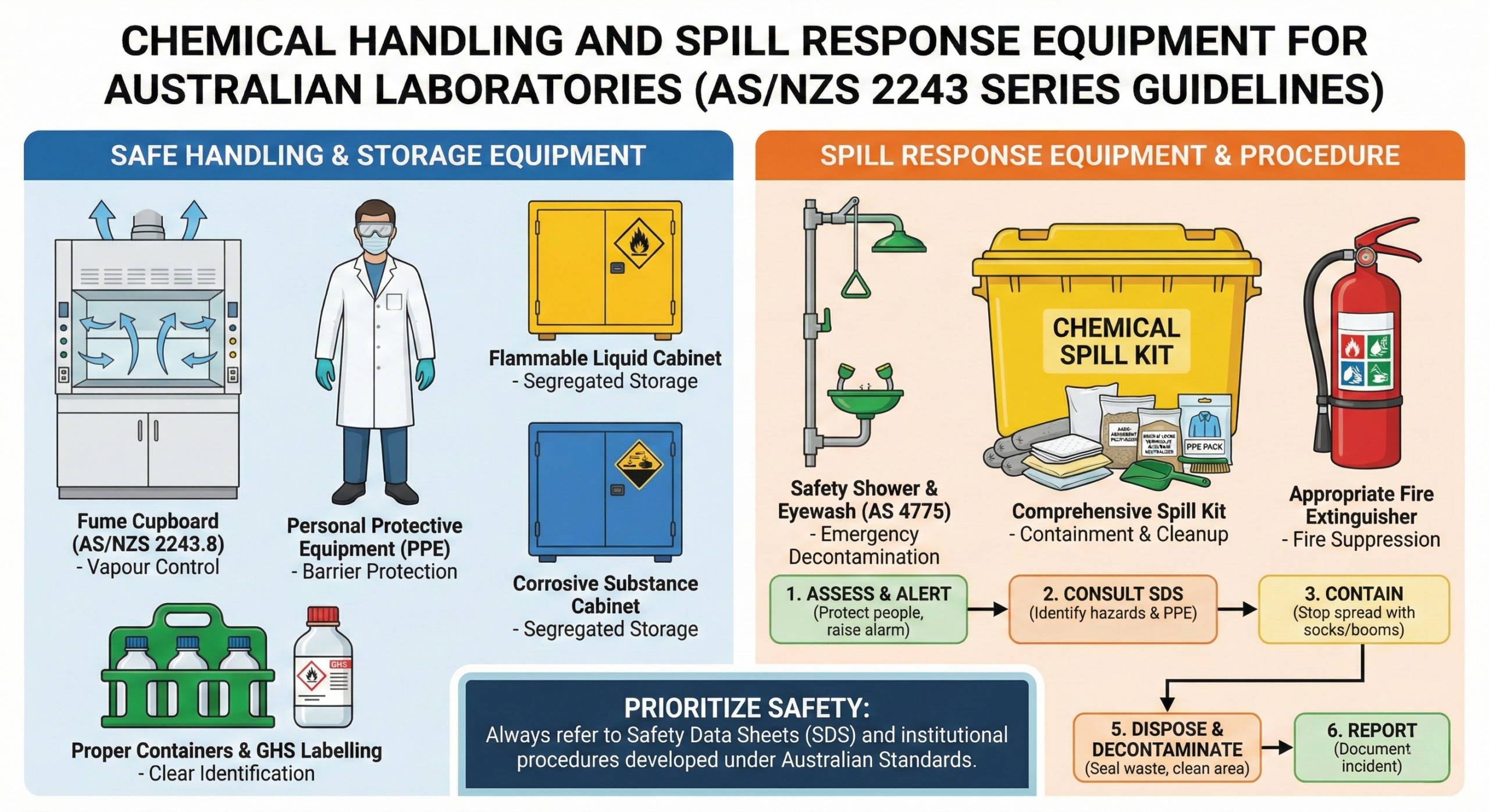
Chemical Handling and Spill Response Equipment for Australian Laboratories
Chemical hazards are one of the greatest risks in laboratories. Even a small spill can cause injuries, damage...
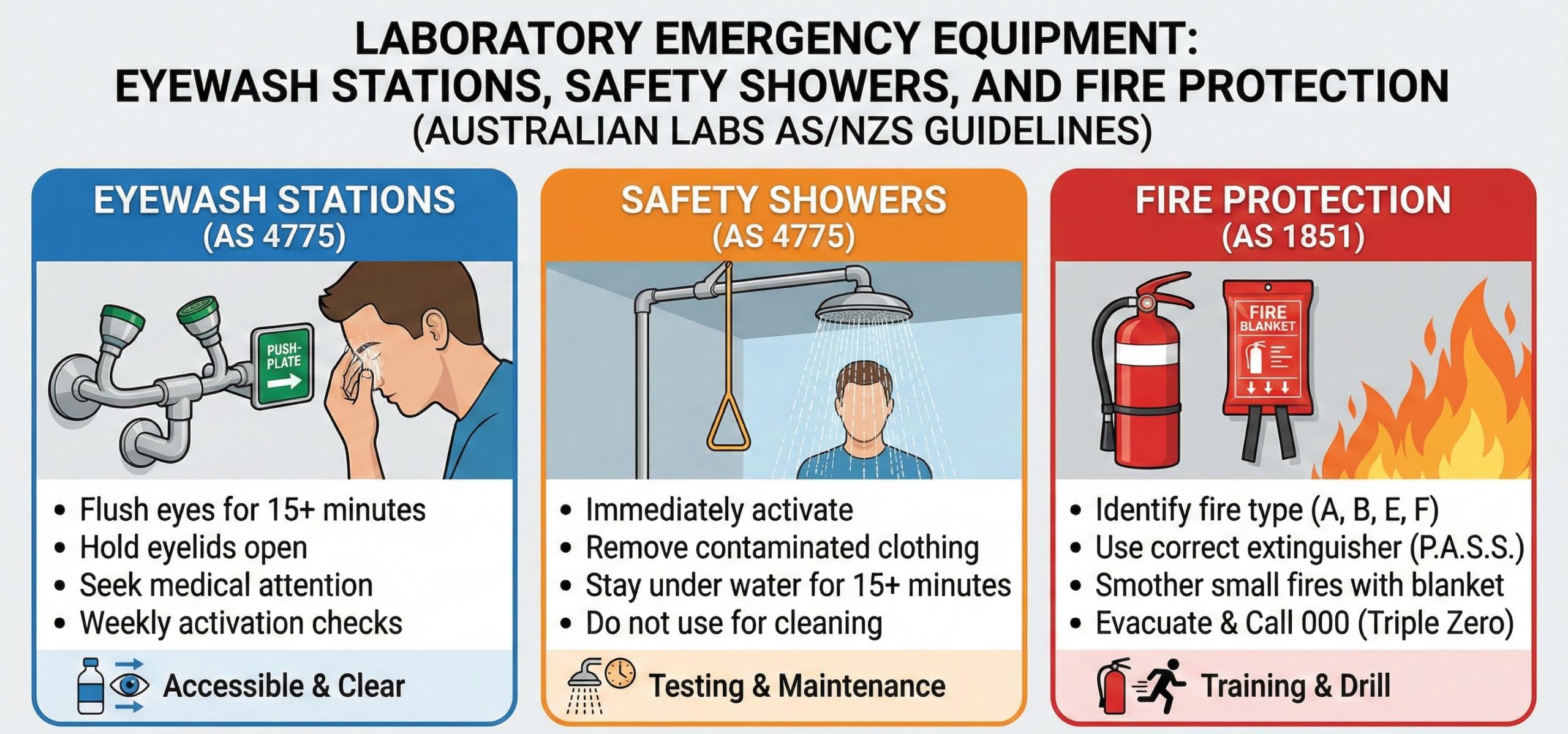
Laboratory Emergency Equipment: Eyewash Stations, Safety Showers, and Fire Protection in Australian Labs
Emergencies in the laboratory can happen without warning — from chemical splashes to fires. Preparedness is key, and...
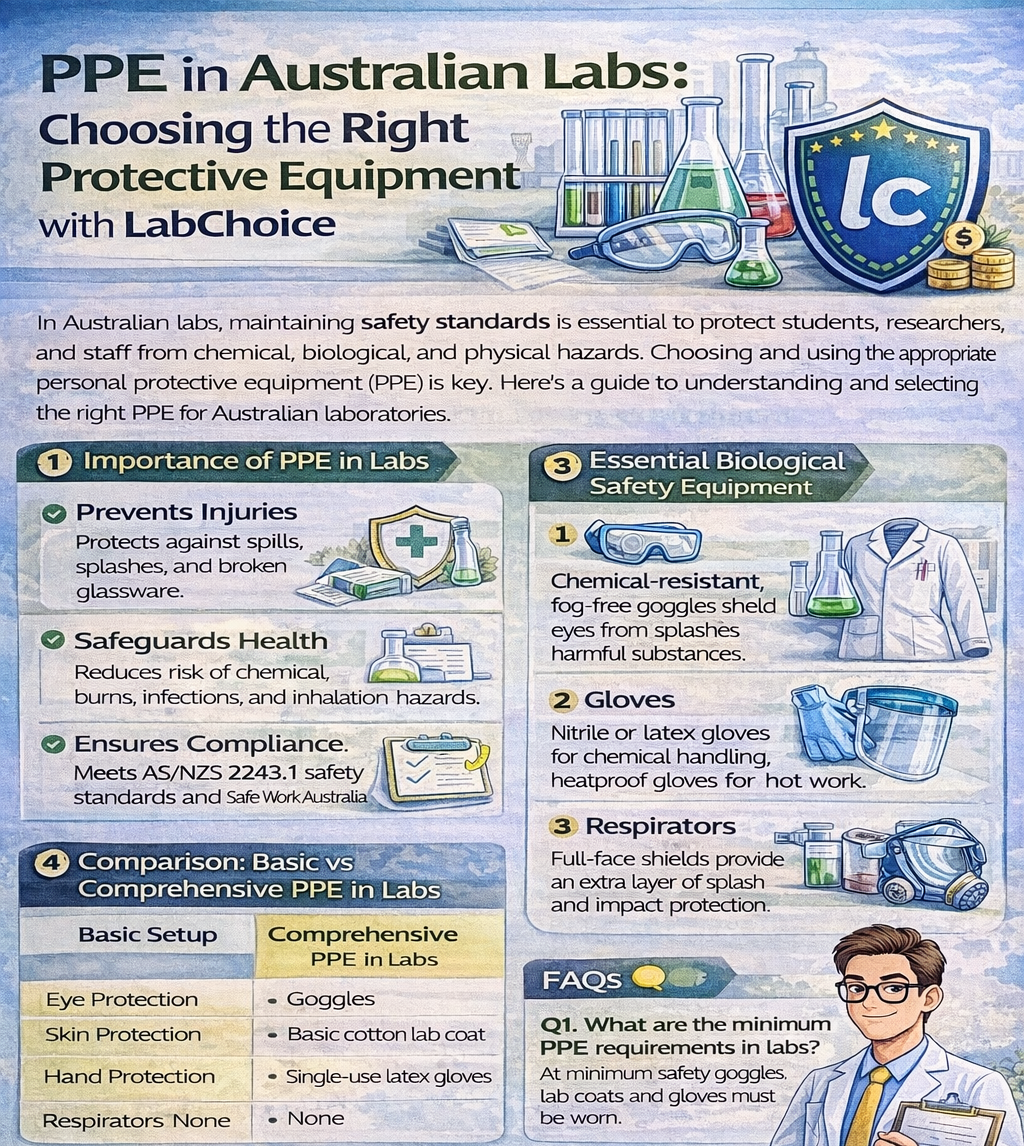
PPE in Australian Labs: Choosing the Right Protective Equipment with LabChoice
Personal Protective Equipment (PPE) forms the frontline defence in any laboratory. From handling corrosive chemicals to working with...
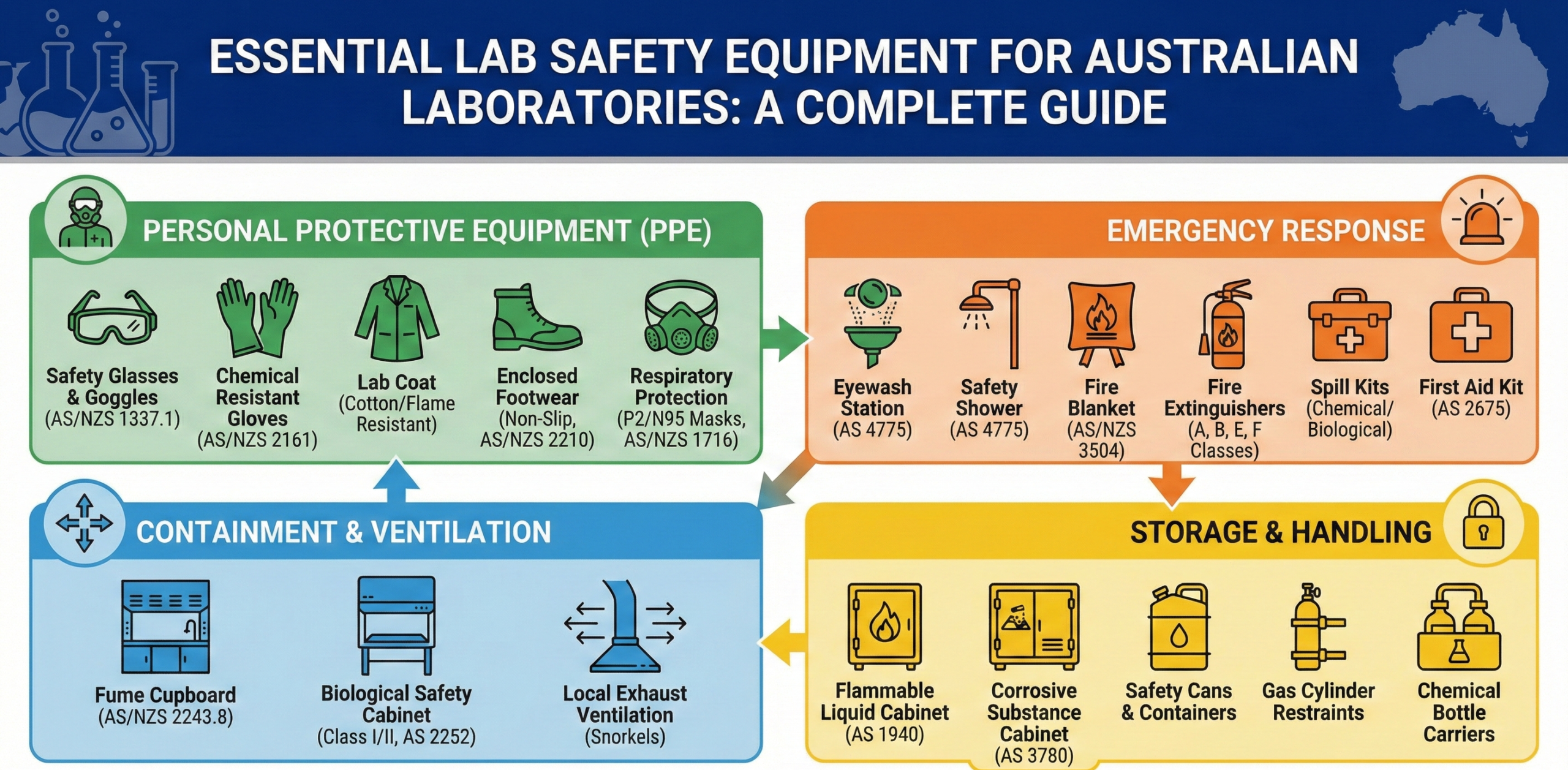
Essential Lab Safety Equipment for Australian Laboratories: A Complete Guide
Laboratories are environments of discovery and innovation, but they also present inherent risks. From chemical spills to biohazard...
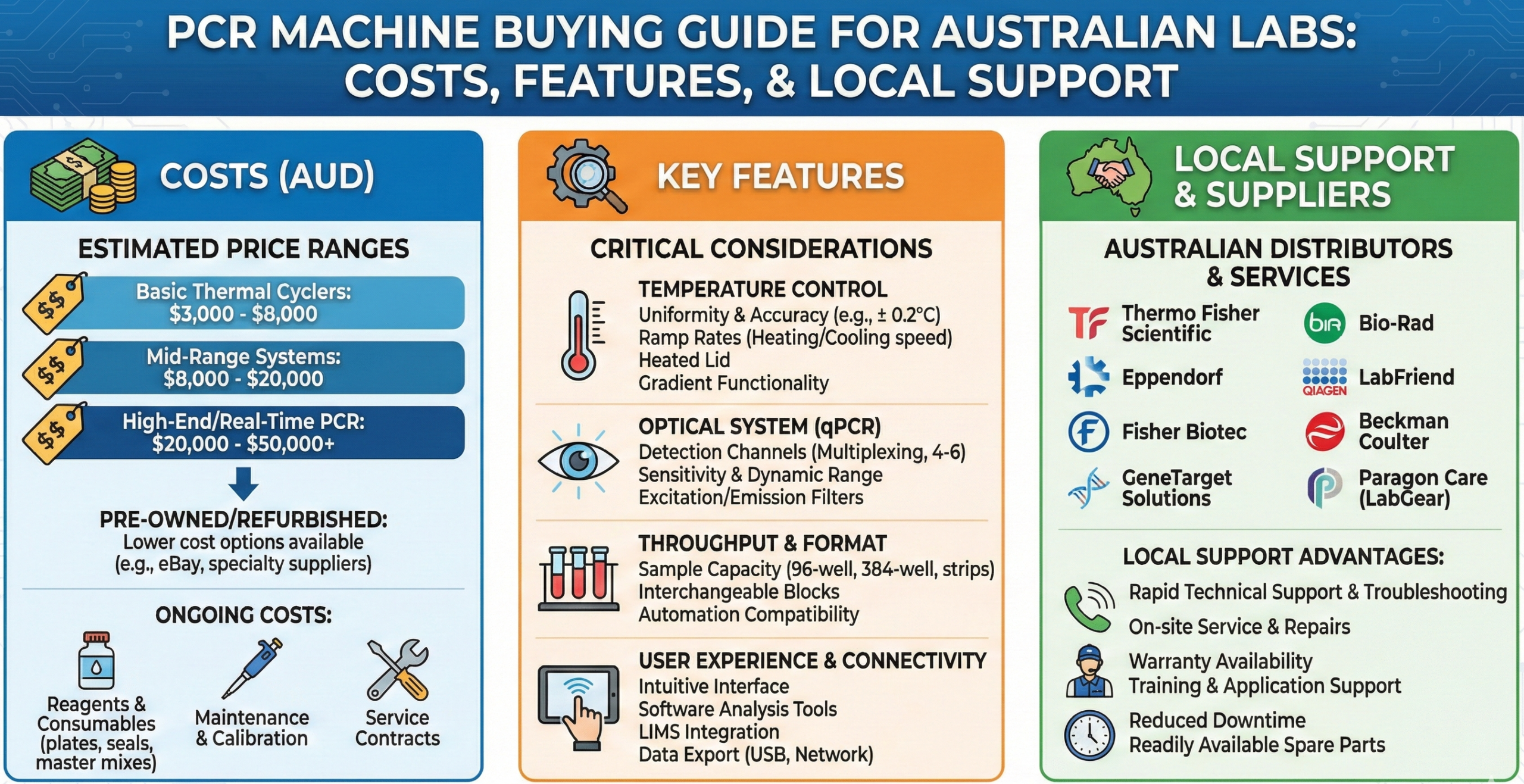
PCR Machine Buying Guide for Australian Labs: Costs, Features, and Local Support
Investing in a PCR machine is one of the most important decisions for an Australian laboratory. Whether used...
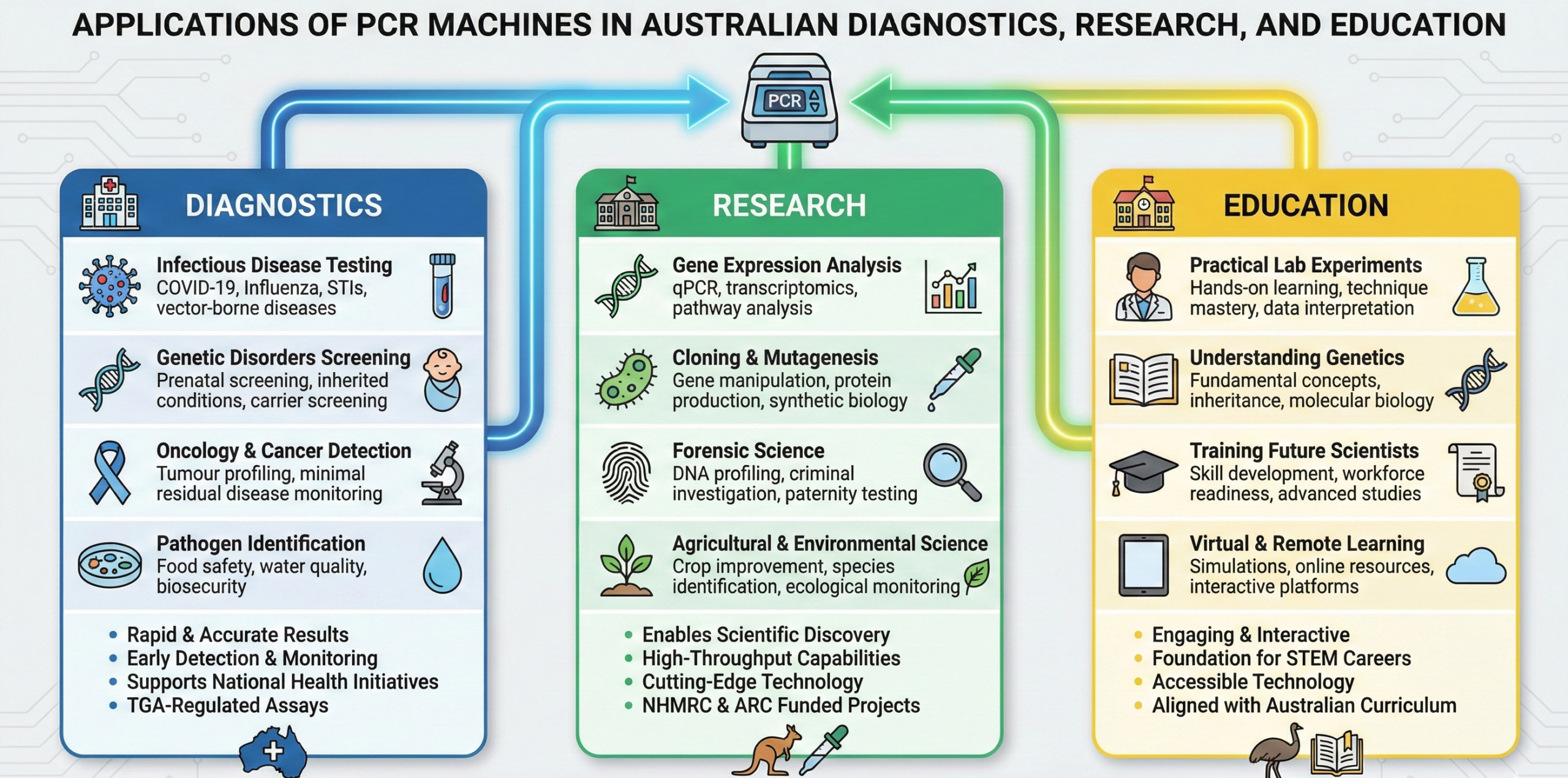
Applications of PCR Machines in Australian Diagnostics, Research, and Education
Polymerase Chain Reaction (PCR) has transformed science and medicine by enabling the rapid amplification of DNA. In Australia,...
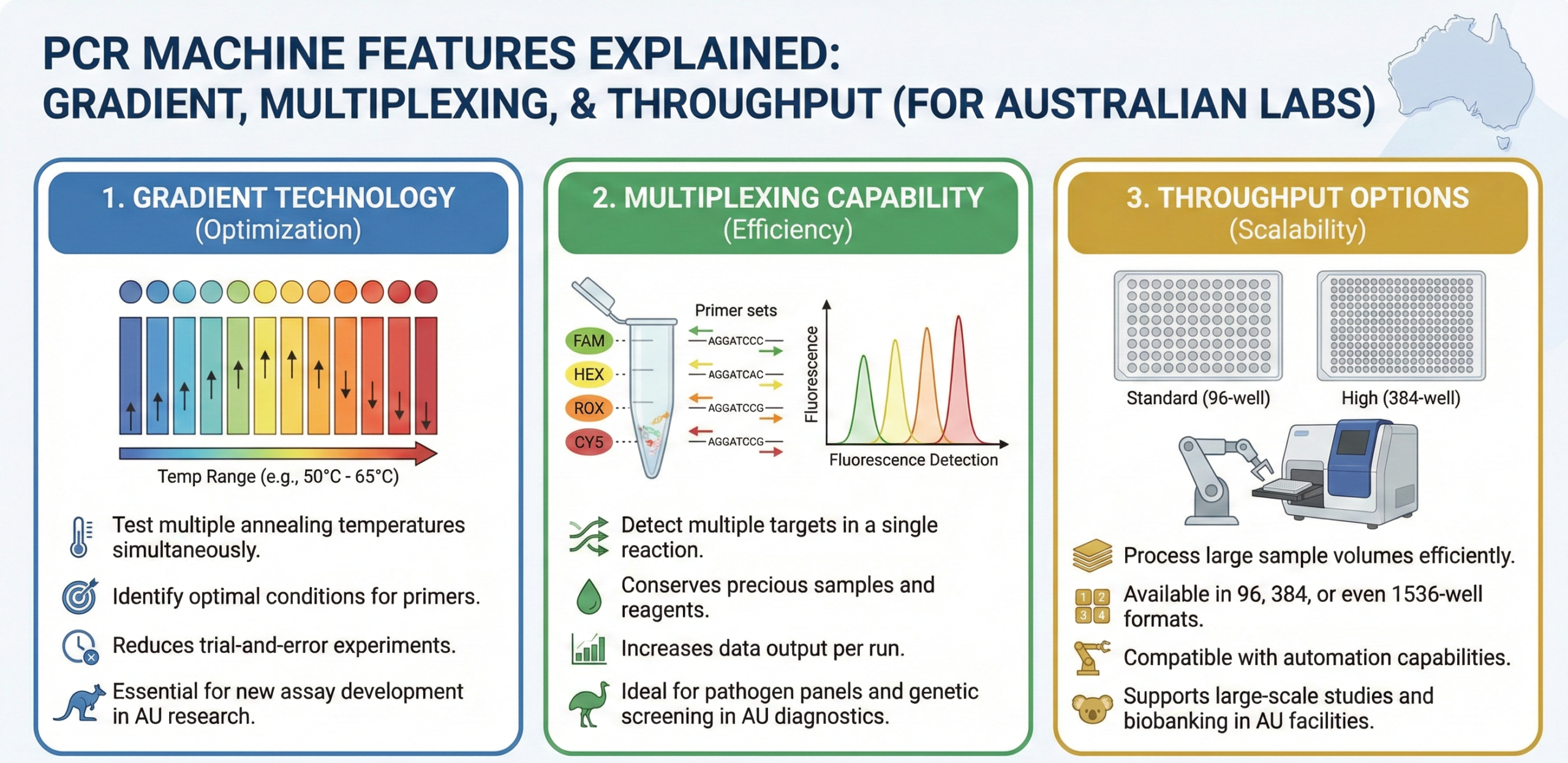
PCR Machine Features Explained: Gradient, Multiplexing, and Throughput for Australian Labs
The performance of a PCR machine depends not only on its build quality but also on the features...
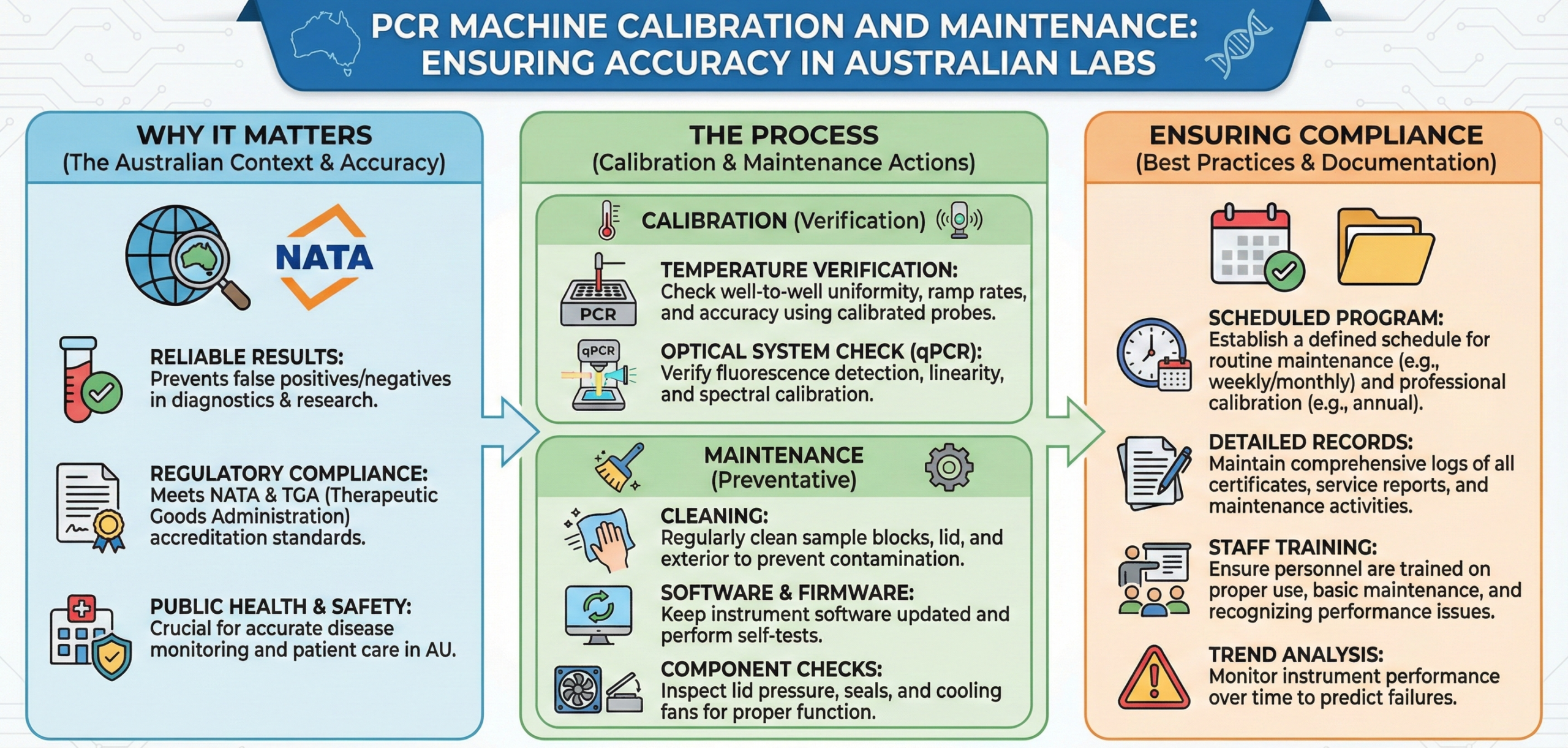
PCR Machine Calibration and Maintenance: Ensuring Accuracy in Australian Labs
PCR (Polymerase Chain Reaction) is central to molecular diagnostics, genetics, and quality control testing. Yet even the most...
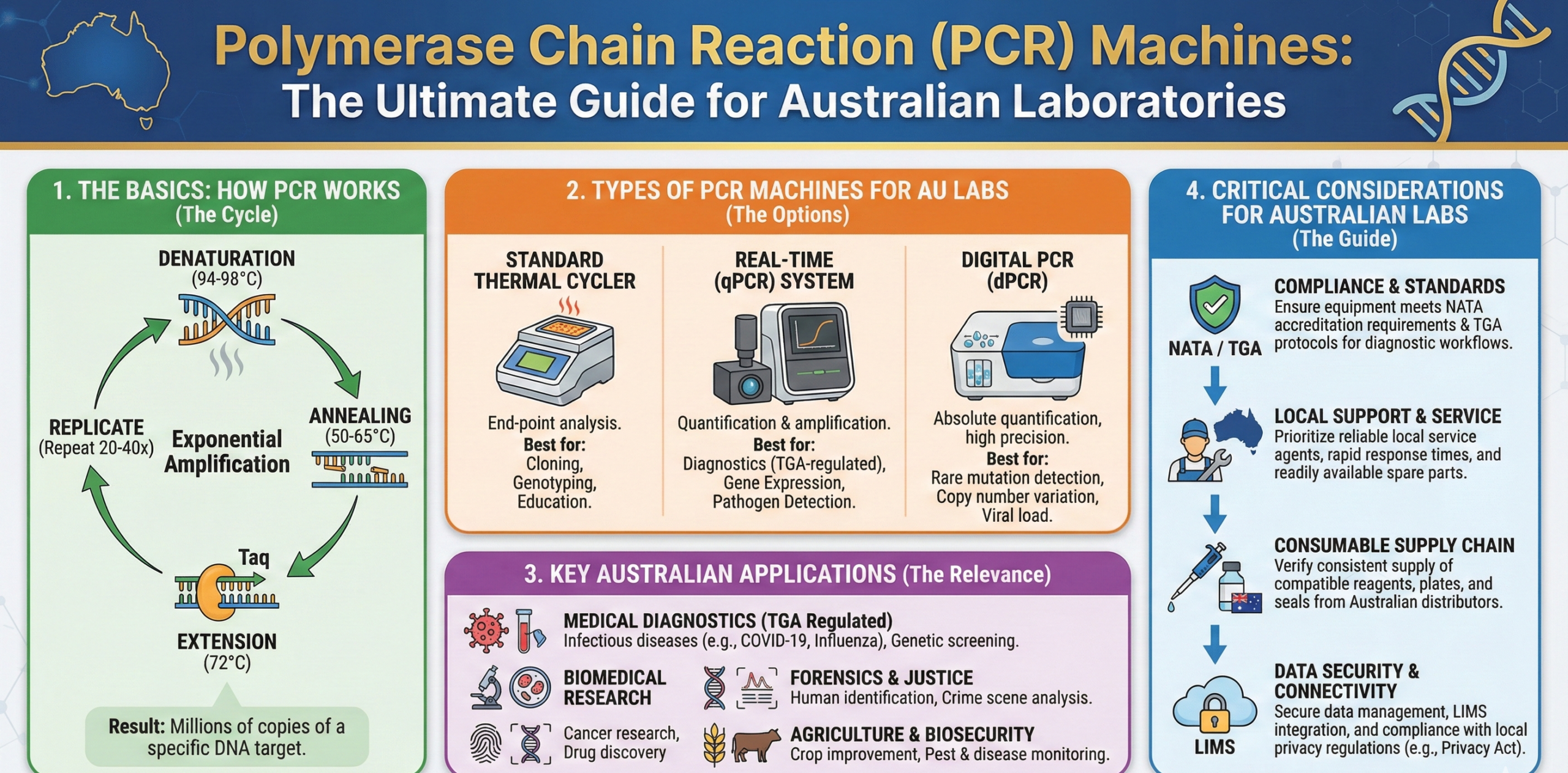
Polymerase Chain Reaction (PCR) Machines: The Ultimate Guide for Australian Laboratories
PCR machines rank among the most transformative tools in molecular biology, revolutionizing research, diagnostics, and biotechnology worldwide. For...