4 Sep

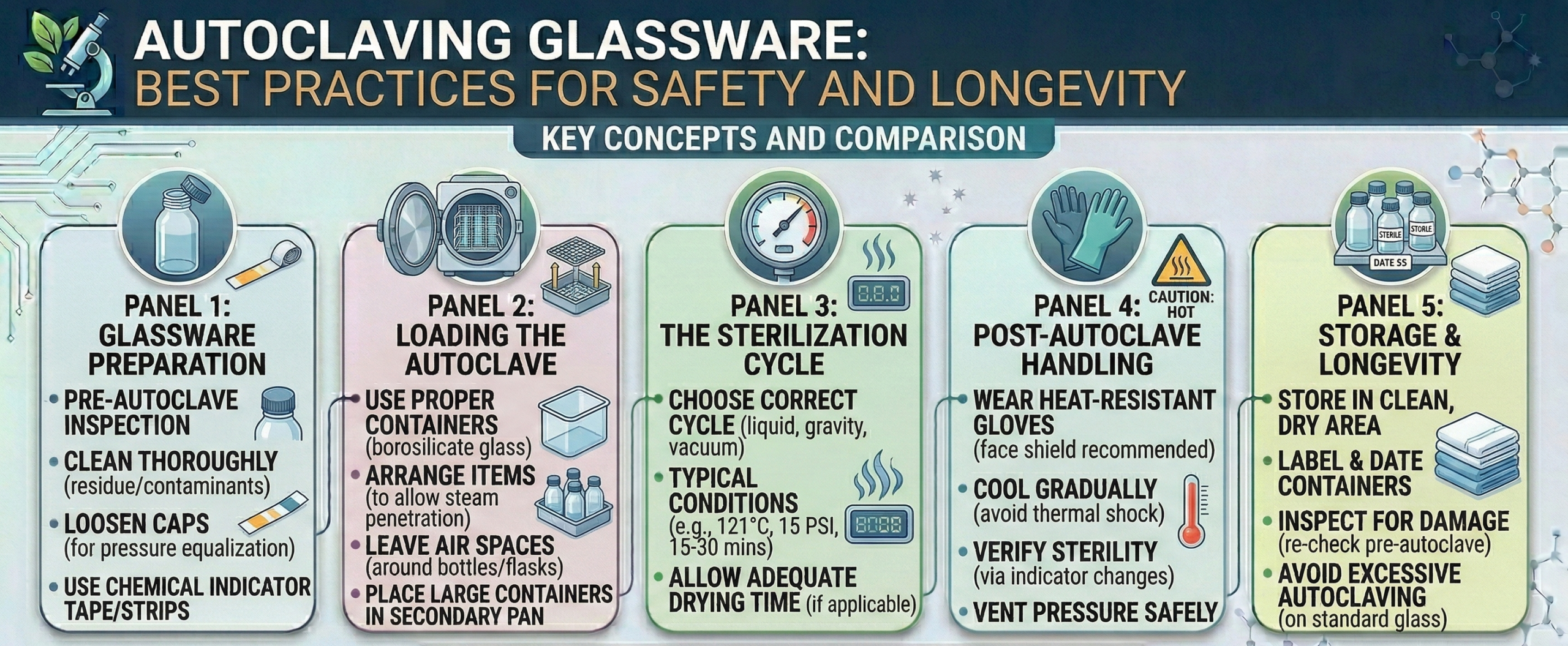
Autoclaving Glassware: Best Practices for Safety and Longevity

Autoclaving is the gold standard for sterilising laboratory equipment. Using high-pressure steam at 121–134 °C, it ensures...
No Comments
4 Sep

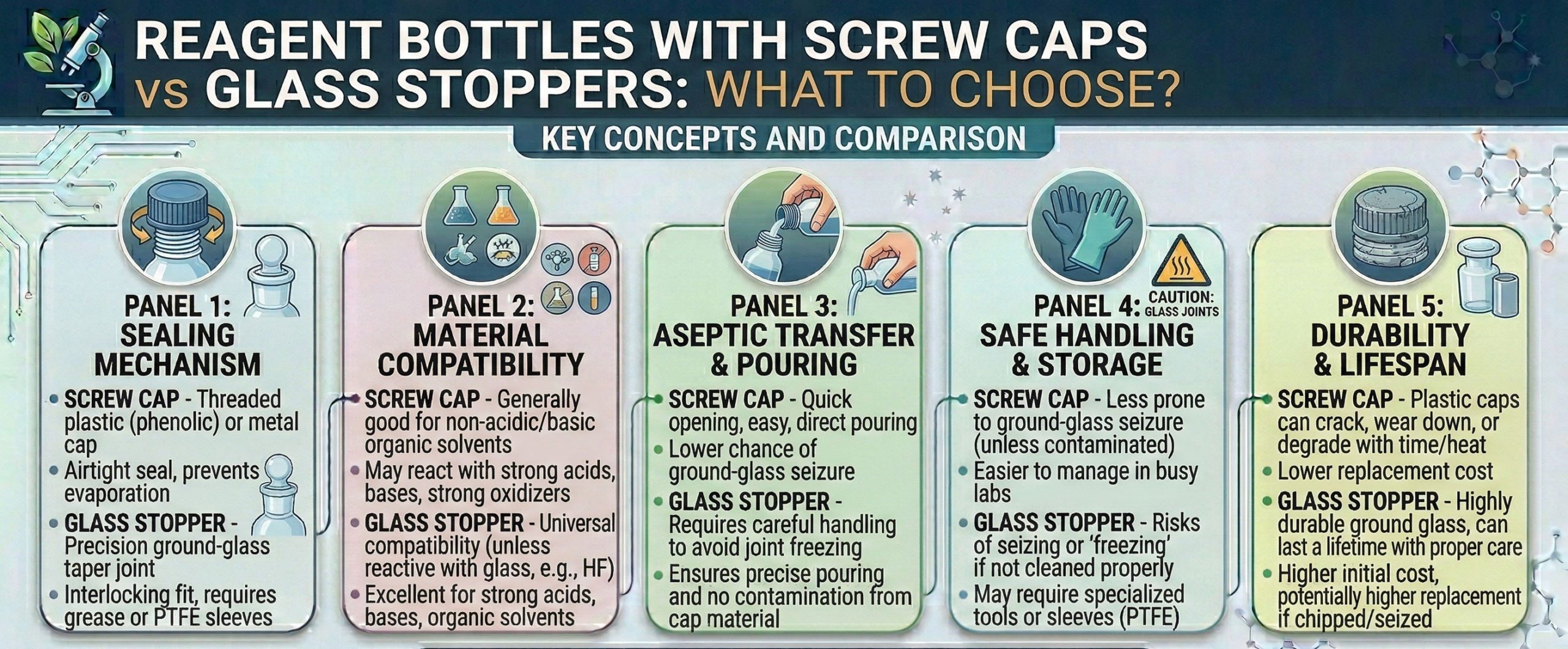
Reagent Bottles with Screw Caps vs Glass Stoppers: What to Choose?

Reagent bottles are essential for the safe storage of chemicals in laboratories. Available with either screw caps or...
No Comments
4 Sep

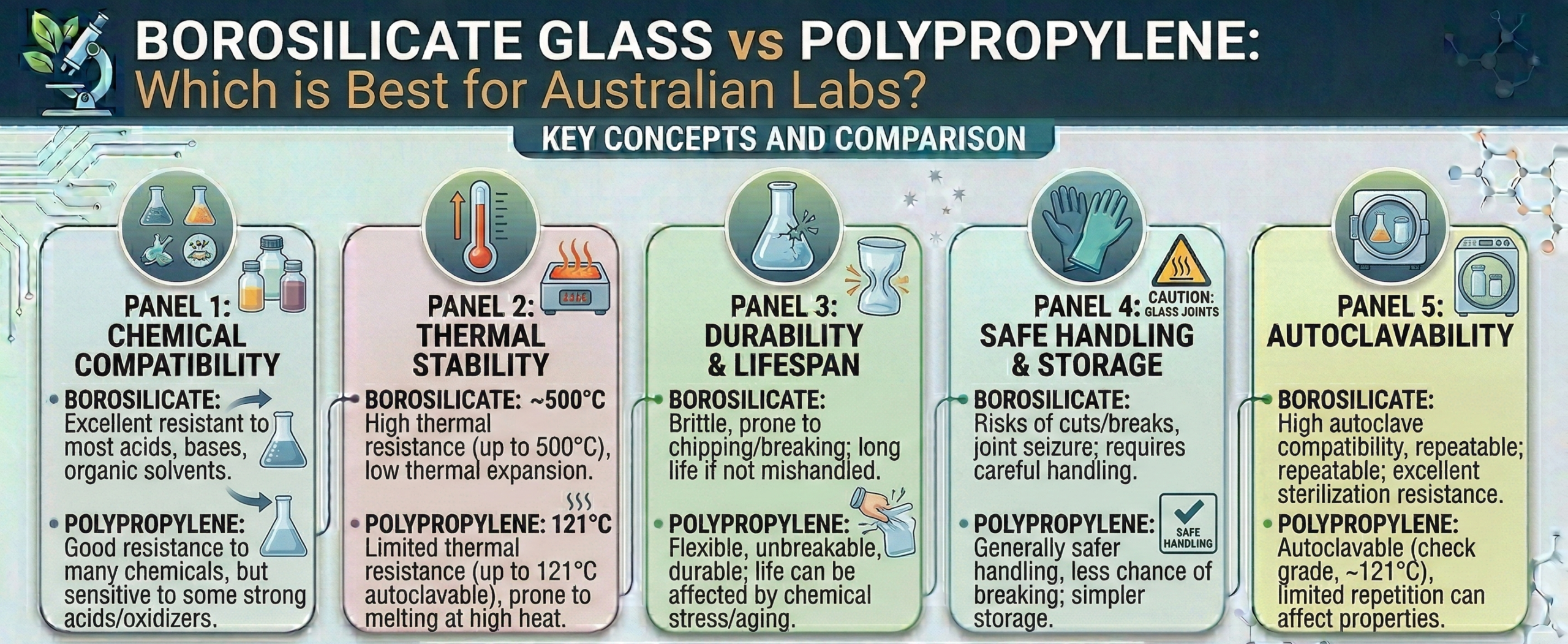
Borosilicate Glass vs Polypropylene: Which is Best for Australian Labs?

Laboratories rely on durable, accurate, and safe materials for experiments, storage, and teaching. Two of the most widely...
No Comments
4 Sep

Laboratory Funnels Compared: Dropping, Separatory, and Pressure Equalising

Funnels are versatile tools used across laboratories for transferring, separating, and controlling liquid flow. While simple glass funnels...
No Comments
4 Sep

Volumetric Flasks in Analytical Chemistry: Accuracy Standards Explained

In analytical chemistry, accuracy is everything. Whether preparing a standard solution or performing titrations, laboratories rely on volumetric...
No Comments
4 Sep

Vacuum Filtration in the Lab: Choosing the Right Buchner Flask and Funnel

Vacuum filtration is one of the most common separation techniques in laboratories, allowing solids to be quickly and...
No Comments
4 Sep

Glass Beakers vs Plastic Beakers: Accuracy, Safety, and Sustainability

Beakers are one of the most widely used pieces of laboratory glassware. Available in both glass and plastic,...
No Comments
4 Sep

Class A vs Class B Measuring Cylinders: Which is Right for Your Lab?

Measuring cylinders are essential tools for laboratories, providing a simple and reliable way to measure liquid volumes. But...
No Comments
4 Sep

Amber Glassware in the Lab: UV Protection and Chemical Stability Explained

Certain chemicals are highly sensitive to light and degrade rapidly when exposed. For laboratories in Australia, amber borosilicate...
No Comments
4 Sep

Sustainable Lab Practices with Glassware: Reducing Plastic Waste in Science

Sustainability is becoming a priority in laboratories across Australia. From universities to industry research facilities, reducing plastic waste...
No Comments

Dropping Funnels in Titrations: Accuracy and Safety Considerations

Dropping funnels are essential glassware in chemical laboratories, enabling controlled addition of liquids during titrations, extractions, and reactions. Constructed from...

Buchner Flasks and Filtration: Essential Guide for Australian Laboratories

Buchner flasks, also known as vacuum flasks or filter flasks, are core glassware in laboratory filtration systems. Constructed from thick-walled...

Reagent Bottles: Amber vs Clear Glass and When to Use Each

Reagent bottles are essential for safe storage and handling of chemicals in laboratories. Made from borosilicate glass (BORO 3.3), they...

Volumetric Flasks vs Measuring Cylinders: When Precision Matters Most

In every laboratory, accurate measurement of liquids is fundamental. While both volumetric flasks and measuring cylinders are made from borosilicate...

Separatory Funnels in Organic Chemistry: Choosing PTFE vs Glass Stopcocks

Separatory funnels are indispensable in organic chemistry, enabling liquid–liquid extractions with accuracy and safety. They are commonly made from borosilicate...

Borosilicate Measuring Cylinders: Accuracy, Class Standards, and Lab Applications

Measuring cylinders are fundamental glassware in every laboratory, ensuring accurate measurement of liquids across education, research, and industry. Made from...

Circular Economy in Science: Designing Labs for Reuse and Recycling

The concept of a circular economy is reshaping industries worldwide, and laboratories are no exception. Instead of relying on a...

Reducing Plastic Waste in Laboratories: Strategies for Sustainable Science

Laboratories worldwide are major contributors to plastic waste, with research showing they generate up to ten times more plastic waste...

Green Lab Certification: What Australian Laboratories Need to Know

As sustainability becomes a global priority, laboratories are being recognised not just for their research but also for their environmental...

Carbon Neutral Labs: How Universities Are Building Net-Zero Science Facilities

As Australia pushes towards net-zero emissions by 2050, universities and research institutions are leading the way with carbon neutral laboratories....

Water Conservation in Labs: Reducing Waste in Cooling and Washing

Water is one of the most overused resources in laboratories. From cooling condensers in chemistry experiments to washing glassware and...

Green Chemistry in Education: Teaching Sustainability in Australian Schools

Science education is no longer just about teaching reactions and formulas — it’s also about instilling sustainable practices. Green chemistry,...